Sunday, September 20, 2026
Saturday, September 19, 2026
Weather forces cancellation of Saturday's Party on the Pavement
According to a news release from DRC, the decision was made after consulting staff, entertainment and production partners, and reviewing weather alerts and forecasts.
"The combination of the current weather alerts, potential thunderstorms and lightning, and the inability to safely provide the entertainment and overall event experience we promised ultimately made this the responsible decision," the release said. "The safety of our vendors, entertainers, downtown businesses, staff and thousands of attendees has to come first."
DRC said that all vendors will receive full refunds of their vendor fees.
Friday, September 18, 2026
Thursday, September 17, 2026
Gas in Wisconsin has jumped 61 cents in just eight days
USA Today Network
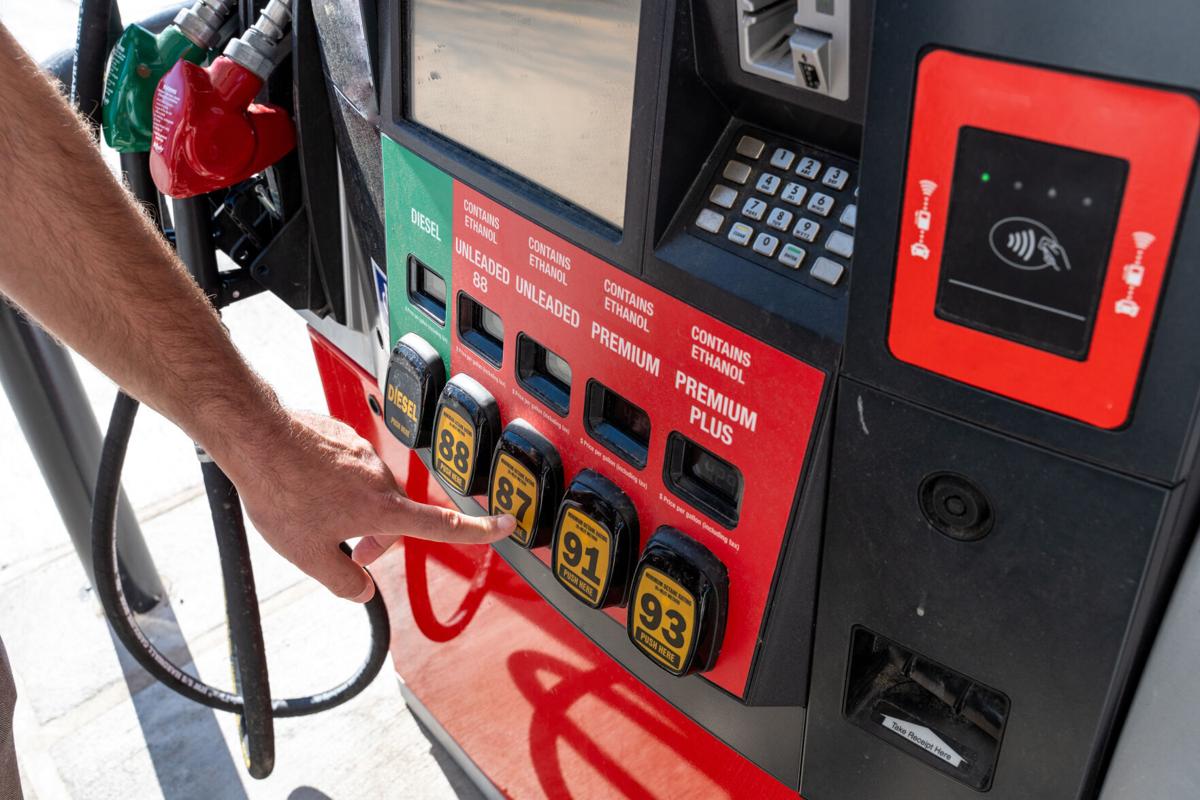 |
The average gallon of regular gasoline cost $4.34 across Wisconsin on Thursday, Sept. 17. That's 23 cents more than Wednesday's peak of $4.11. |
Another day, another gas price spike in Wisconsin.
While diesel gas hit another all-time record for the sixth day in a row — at $6.19 per gallon — the more drastic spike Thursday, Sept. 17, was a nearly $0.25 jump in regular-grade gasoline.
According to AAA, the average gallon of regular gasoline cost $4.34 across Wisconsin on Thursday, Sept. 17. That's 23 cents more than Wednesday's peak of $4.11. Both price points are the highest gas has ever been this late in the year.
Normally, gas retailers can start slashing prices by 10-15 cents as pumps switch to a cheaper winter blend of gasoline. Geopolitical factors in Iran, Saudi Arabia and Russia have reversed any potential gains in gas prices.
It's the second price spike in as many weeks. Wisconsin's average gallon of gas cost 61 cents less just eight days ago: $3.73 on Sept. 8 and $4.05 on Sept. 11 compared to Thursday's $4.34.
Northern counties have the most expensive gas right now. Iron County had the highest average on Thursday, clocking in $4.47 per gallon for regular gas. Wisconsin's cheapest counties are more scattered with Menomonee County hitting $4.10, Buffalo County to the west at $4.23 and Racine County in the southeast at $4.24 per gallon.
Across the various price spikes Wisconsin has had since February, gas experts maintain that the Strait of Hormuz must reopen, Russia must restart diesel exports and retailers need months of inventory recovery before any relief can be seen at the consumer pump.
According to crowdsourced data from GasBuddy, these were the cheapest gas pumps in the Racine area Sept. 16-17:
• Hometown: $3.79 per gallon, 600 4 Mile Road, Racine
• JD United Petroleum: $3.89 per gallon, 1530 Douglas Ave., Racine.
• Citgo: $3.89 per gallon, 1627 Washington Ave. Racine
• Kwik Pantry: $3.99 per gallon, 600 3 Mile Road, Racine
• Citgo: $3.99 per gallon, 3945 Erie St., Racine
• Mobil: $3.99 per gallon, 28407 N. Lake Drive, Tichigan
• Citgo: $3.99 per gallon, 8226 Big Bend Road, Tichigan
• Mobil: $4.09 per gallon, 717 S. Sylvania Ave., Sturtevant
• Citgo: $4.09 per gallon, 2101 Douglas Ave., Racine
• Hometown on Durand: $4.09 per gallon, 3818 Durand Ave., Racine
Party on the Pavement set for Saturday
Ryan Patterson
 |
The 23rd annual Party on the Pavement Street Festival will return to Downtown Racine on Saturday, Sept. 19. |
RACINE — The 23rd annual Party on the Pavement will take place from noon-7 p.m. Saturday in Downtown Racine.
The 12-block street festival, recognized as the Best in State by the Wisconsin Economic Development Corporation, according to a news release, includes several blocks downtown being closed to vehicle traffic.
Admission is free.
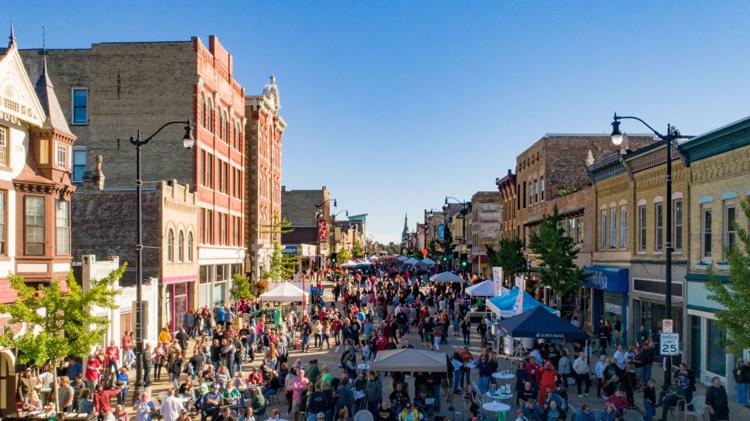 |
Twelve blocks of Downtown Racine will host the 23rd annual Party on the Pavement on Sept. 19. Submitted |
There will be many food, drink and shopping options available to buy.
Music at several stages will take place throughout the day, with genres including blues, rock, jazz and R&B.
A new event is live wrestling, which is scheduled to take place from 2-5 p.m. at the intersection of Main and Sixth Streets.
Sweatshop Movement will perform hip-hop and breakdance battles at the corner of Wisconsin Avenue and Sixth Street.
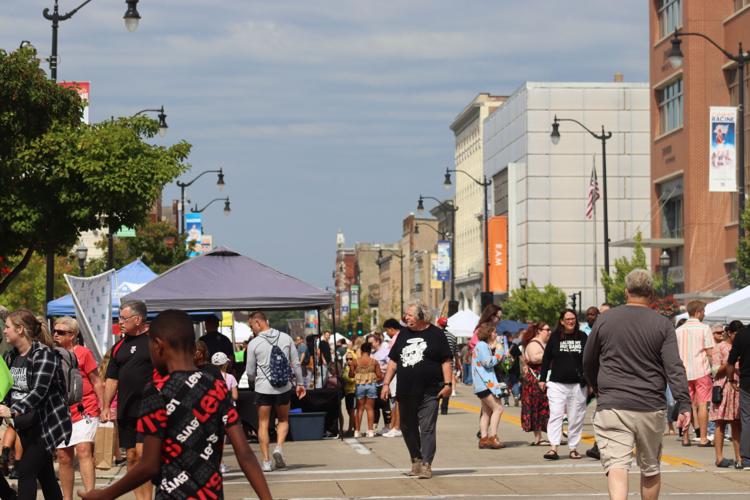 |
Party on the Pavement attendees enjoy the festivities on Main Street in 2023. The 23rd annual event will take place from noon-7 p.m. Saturday in Downtown Racine. |
The Division BMX Stunt Team is set to perform at the intersection of College Avenue and Sixth Street at 12:30 p.m., 2:30 p.m. and 4:30 p.m.
The Mini-German Fest at Sixth Street and Park Avenue will feature live Bavarian music, bratwurst, pretzels, schnitzel and German beers.
There will also be a classic car show on Sam Johnson Parkway, disc golf, axe throwing and a mechanical bull.

Trump lashes out at judges ruling against his priorities, pet projects
Scammers target Wisconsin Spectrum phone customers | FOX6 News Milwaukee
Wednesday, September 16, 2026
Tuesday, September 15, 2026
Monday, September 14, 2026
Sunday, September 13, 2026
Saturday, September 12, 2026
Friday, September 11, 2026
Parents, guardians concerned over man taking photos outside Racine middle school
Thursday, September 10, 2026
Wednesday, September 9, 2026
Tuesday, September 8, 2026
Wisconsin clerks sending mail-in ballots as Trump wages court fight
Molly Beck

MADISON - Nearly 50,000 mail-in ballots are en route to Wisconsin voters and three have already been returned as President Donald Trump seeks permission from the U.S. Supreme Court to upend the rules for absentee voting ahead of November's midterm election.
Trump on Sunday made a last-ditch appeal to the nation's highest court to allow his administration to implement new restrictions on mail-in voting − rules that would require absentee voters to be deemed eligible to receive ballots using a master list governed by the U.S. Postal Service and a barcode system.
As of Monday, 49,606 absentee ballots were mailed to voters or are ready to be mailed, according to the Wisconsin Elections Commission. That number doesn't distinguish between the number of labels that have been printed and ballots that have actually been mailed, according to the commission.
Don Millis, Republican chairman of the bipartisan state elections commission, said if the Supreme Court sides with Trump, voters who have not yet returned their ballots may decide to hand-deliver the ballots to clerks instead of trying to mail it back under the new rules because there's a chance the Postal Service may not deliver the ballot.
"If you're a clerk and you've received the ballot in mail, it's going to be counted," Millis said. "If you're a voter and you've not mailed your ballot in, you have to make a decision about what you're going to do."
Trump's appeal to the conservative-controlled U.S. Supreme Court came after a U.S. District Court Judge in Massachusetts on Friday extended an order blocking the Postal Service from implementing the new rules. The injunction was part of a lawsuit filed by a number of states, including Wisconsin.
John Sauer, U.S. solicitor general, said in the Sunday filing the extended injunction "risks sowing confusion and chaos."
"Once those ballot envelopes enter the mailstream, there is no retrieving them," Sauer wrote in the filing to the Supreme Court.
Millis said the administration's plan is going to "hurt Republicans more than it's going to hurt Democrats" because Democratic voters tend to live in cities, which have more options to return ballots.
"There's a saying that many people will say, just follow the science, right? ... and people who say that will often claim that those on the other side are letting their ideology get in the way. Well, that's what's happening with this rule."
"Someone's letting their ideology get in the way because in this attempt to go after probably a handful of non-citizens voting, you're going to end up screwing Republicans big time," he said. "And it's going to be Georgia in 2020 all over again, where the national party ended up giving two Democratic seats in the Senate to Georgia."
