Showing posts with label Assembly. Show all posts

Wednesday, August 5, 2026

Community celebrates National Night Out Tuesday

From The Journal Times.com:

Milana Doné


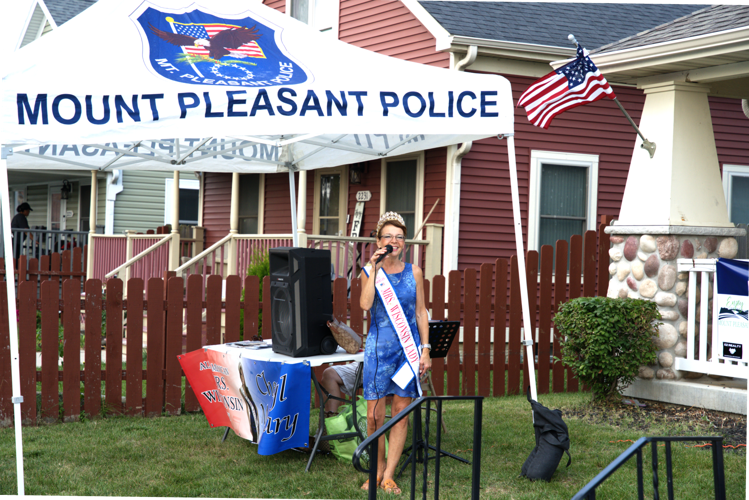
 RACINE — Racine County law enforcement agencies and community members gathered to celebrate police departments and the Sheriff's Office Tuesday evening as part of this year's National Night Out celebration. 

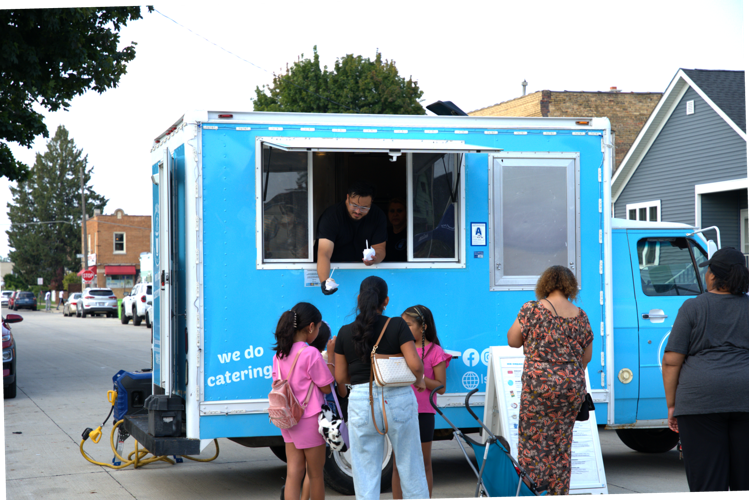
Monument Square was one location for festivities. Local organizations manned booths, and police officers and sheriff's deputies interacted with locals.

Racine Police officer Gabby Hood spoke to attendees, saying she has fond memories of growing up in Racine and attending National Night Out as a child.

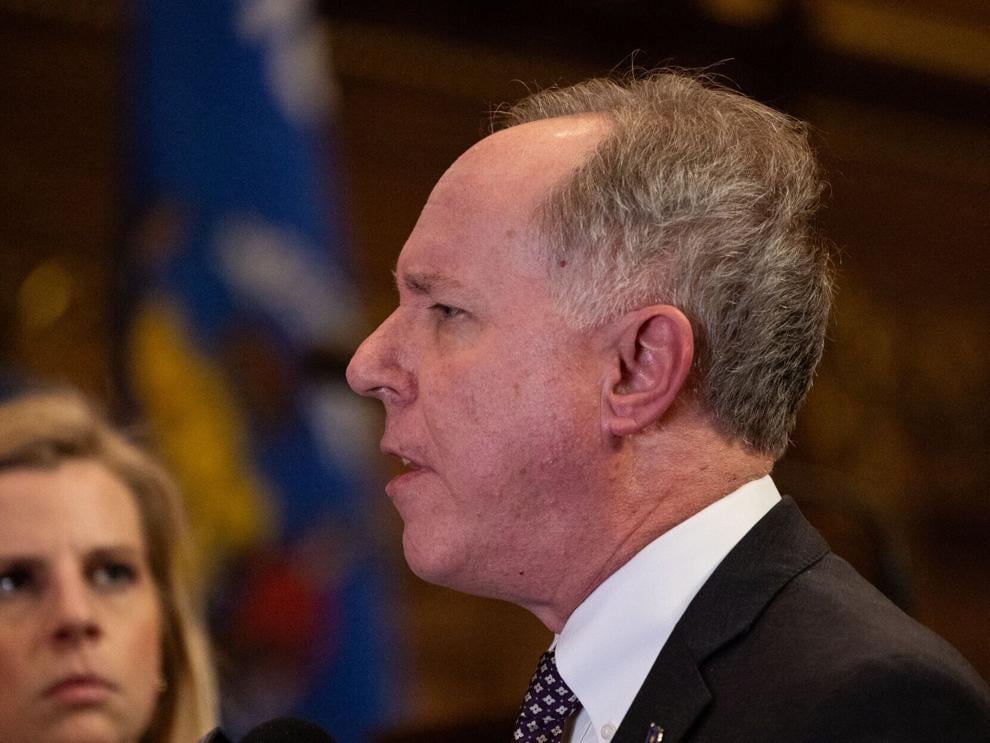
Representative Angelina Cruz for the Wisconsin State Assembly said community residents are more likely to help each other or call their local law enforcement for help if they know them.

"Communities are safest when neighbors actually know one another," she said.

From: https://journaltimes.com/news/local/article_e5c00961-46b2-4d9b-8d36-af0ca6c5b017.html#tracking-source=home-top-story

Thursday, June 11, 2026

2026 election: Here's who is running in districts representing Racine and Kenosha counties

From The Journal Times.com:

Holly Gilvary

The deadline for candidates to file for 2026 elections in Wisconsin was 5 p.m. June 1. The Wisconsin Elections Commission on June 9 officially confirmed the candidates who will be on the ballot.

The general election is scheduled for Nov. 3. Some races will require a primary, which will be Aug. 11.

Here's who is running for districts representing Racine and Kenosha counties.

Incumbents are denoted with (i).

U.S. Congressional District 1

Bryan Steil (Republican) (i)

Miguel Aranda (Democrat)

Mitchell Berman (Democrat)

Peter Burgelis (Democrat)

Lorenzo J. Santos (Democrat) 

State Senate District 11

Steven J. Doelder (Democrat)

Adam Duda (Democrat)

Nick Polce (Republican)

Ellen Schutt (Republican)

Sandy Wiedmeyer (Republican)

State Senate District 21

Jim Croft (Republican)

Trevor Jung (Democrat)

Wisconsin Assembly District 32

Greg Miller (Democrat)

Amanda Nedweski (Republican) (i)

Wisconsin Assembly District 33

Rick Bailey (Democrat)

Maria Elena Bisabarros (Democrat)

Rick Stacey (Republican)

Steve Wicklund (Republican)

Wisconsin Assembly District 62

Mike Bellagio (Republican)

Angelina M. Cruz (Democrat) (i)

Wisconsin Assembly District 63

Eddie Phanichkul (Democrat)

Robert Wittke (Republican) (i)

Wisconsin Assembly District 64

Ed Hibsch (Republican)

Tip McGuire (Democrat) (i)

Wisconsin Assembly District 65

Ben DeSmidt (Democrat) (i)

Valerie Kretchmer (Republican)

Wisconsin Assembly District 66

Gina Cefalu Paulick (Republican)

Greta Neubauer (Democrat) (i)

Wisconsin Assembly District 84

Chuck Wichgers (Republican) (i)

From: https://journaltimes.com/news/local/government-politics/elections/article_5557082b-e0e2-4684-a412-9d23ca8e9974.html#tracking-source=home-top-story


Monday, March 23, 2026

Evers signs bill that shores up FoodShare while banning sugary food

From JSOnline:

Jessie Opoien
Milwaukee Journal Sentinel


MADISON – Wisconsin will bar FoodShare recipients from using benefits to purchase candy and soft drinks under legislation signed Monday by Gov. Tony Evers.

The bill, which the Legislature sent to the governor with bipartisan support earlier this month, also provides funding and additional positions requested by Evers' administration to ensure the state is not penalized under new federal requirements implemented under President Donald Trump's "One Big Beautiful Bill" last year.

In a statement announcing he had signed the bill into law, Evers championed the approval of those resources for the state Department of Health Services but did not address the new restrictions on purchases for recipients of the Supplemental Nutrition Assistance Program.

"In spite of the chaos at the federal level and the continued attacks on our FoodShare program, I am proud of the work my administration has done over the past year to ensure our kids, families, veterans, and seniors across our state receive the resources they need to access basic food and groceries," Evers said in a statement. "As long as I am governor, I will continue to do everything in my power to protect Wisconsin families and taxpayers from the harmful decisions of the Trump Administration."

Evers' administration estimated last fall that Trump's sweeping tax and spending law would cost the state $284 million over the span of its enactment and in August requested nearly $70 million to cover the implementation of the new requirements for SNAP.

The federal program, administered at the state level and known as FoodShare in Wisconsin, provides low-income families with cash assistance to purchase certain foods at authorized retailers. It is subject to work requirements.

The federal law imposed new work requirements and shifted more of the administrative costs onto states. It also subjects states that make too many overpayment or underpayment errors to hundreds of millions of dollars in penalties.

The bill recently passed both chambers of the Legislature with bipartisan support, emerging from the Assembly with a 71-22 vote and the Senate with a 25-8 vote.

Under the bill, DHS must request a waiver from the federal government to enact the ban on sugary purchases. The federal government has approved similar waivers in nearly two dozen states, allowing them to implement these bans as two-year pilot programs.

Bill author Rep. Clint Moses, R-Menomonie, said the policy will redirect benefits toward healthy foods in an effort to improve health outcomes.

Under the bill, DHS will be required to contract with a nonprofit organization to develop a platform with a database of eligible products to be implemented by retailers. The bill requires nonprofit organizations to partner with a technology firm that is "experienced with this state's Medical Assistance enterprise data warehouse and data analytics reporting system" to administer the platform.

The database could include an optional public-facing inventory of eligible products under the law.

The DHS funds requested by the Evers administration were attached as an amendment to the bill as the Assembly neared the end of its work last month.

"I think people should have the ability to make those choices when they're getting their food, but at the end of the day (this funding) is the one that's really important," Evers told reporters March 18 in Milwaukee when asked about the funds being attached to the purchase restrictions. "So was happy to do that. It's one of those things that we call compromise in the Legislature and the governor's office, so this for sure takes precedent."

SNAP recipients living in Colorado, Iowa, Nebraska, Tennessee and West Virginia sued the U.S. Department of Agriculture earlier this month over similar purchase restriction policies implemented in their states.

In the lawsuit, plaintiffs argued they or their family members rely on the restricted foods to manage health conditions such as diabetes and allergies, or to obtain energy boosts needed in their daily lives.

The lawsuit said the federal government exceeded its legal authority by approving waivers without conducting "reasoned decision-making" and seeks to void the waivers.

Jessie Opoien can be reached at jessie.opoien@jrn.com.

From: https://www.jsonline.com/story/news/politics/2026/03/23/evers-signs-measure-that-shores-up-foodshare-while-banning-sugary-food/89287245007/

Thursday, March 19, 2026

Data center legislation falters as Wisconsin public opinion shifts

From JSOnline:

Jessie Opoien
Milwaukee Journal Sentinel

MADISON – Legislative efforts to regulate the boom of data centers in Wisconsin stalled in the state Senate, which failed to vote on any such bills before concluding its work for the year.

The Senate's inaction follows a dramatic tide shift in public opinion against these projects, with a Marquette University Law School poll last month showing 70% of Wisconsin voters believe the costs to the state outweigh the benefits.

Lawmakers in both parties have introduced bills aimed at legislating that balance, and the Assembly passed one such bill in January. While a Senate committee considered several of those proposals last month, none made it to the floor for a vote in the chamber's final scheduled votes for the year on March 17.

That could hurt Republicans on the ballot in November, Assembly Speaker Robin Vos, R-Rochester, warned at a WisPolitics Q&A event this week.

"I think it is absolutely sad the state Senate is not voting on data center regulation," Vos said. "That is a huge issue, probably bigger than most that I have seen in my 22 years."

Vos said Assembly Republicans will be able to say they did what they could to regulate data centers, but Republican senators up for reelection "who don't have that vote, I think they’re going to regret it" in the fall.

Republicans currently have an 18-15 majority in the Senate and a 54-45 lead in the Assembly. This fall, Democrats would need to pick up two seats to take the majority in the Senate, and five to earn a majority in the Assembly.

In October 2025, 55% of Marquette poll respondents said the costs of large data centers are greater than their benefits. Over a period of four months, opposition was up to 70%.

"Data centers are a big issue for almost every part of Wisconsin. It’s not partisan. Republicans, Democrats, independents are concerned that we need to have some sort of reasonable regulation," Vos told reporters while the Senate met.

Under the bill passed by the Assembly earlier this year, the state Public Service Commission would be tasked with ensuring no other ratepayers would absorb the costs of the construction or extension of electric infrastructure that primarily serves a data center. Any renewable energy facility that primarily serves a data center would be required to be located on-site.

The PSC testified that while the agency supports efforts to shield ratepayers from costs raised by data centers, the language of the legislation "would be challenging to implement."

The bill would also require any water used by data centers for cooling purposes to be used in a closed-loop system, or any other system that uses an equal or lesser amount of water. Each year, the operator of a data center would be required to report its annual water usage to the state Department of Natural Resources.

The bill would enact requirements for land restoration at the discretion of local government officials, including requiring data center operators to file a bond in advance with the DNR large enough to cover those efforts.

Developers would be required "to the extent possible" to "encourage" the hiring of Wisconsin workers for construction.

The Assembly bill passed 53-44 largely on party lines, with Rep. Lindee Brill, R-Sheboygan Falls, joining Democrats in voting no and Reps. Steve Doyle, D-Onalaska, and Jodi Emerson, D-Eau Claire, joining Republicans in support.

Democrats were generally critical of the GOP bill. Assembly Minority Leader Greta Neubauer, D-Racine, argued at the time of the Assembly vote that it would not adequately hold corporations accountable and would defer to fossil fuels over renewable energy sources by limiting where such facilities could be located.

Last month, the Senate Committee on Utilities, Technology and Tourism held a public hearing on a slate of bills aimed at regulating data centers, including the Assembly bill, a competing Democratic proposal and a bill that would ban nondisclosure agreements for data center projects.

When asked in the Marquette poll to identify possible benefits of data centers, voters put creating new jobs for technical workers at the top of the list. Voters identified high water usage and strain on local water resources as the top cost.

Jessie Opoien can be reached at jessie.opoien@jrn.com.

From: https://www.jsonline.com/story/news/politics/2026/03/19/data-center-legislation-falters-as-wisconsin-public-opinion-shifts/89212756007/
Wednesday, March 11, 2026

'PO'd' Evers vows to resist any FBI effort to seize Milwaukee ballots

From JSOnline:

Molly Beck
Milwaukee Journal Sentinel


MADISON - Wisconsin Gov. Tony Evers said his administration will resist any efforts by the FBI to seize voting documents if federal authorities expand their probe of the 2020 presidential election to Wisconsin.

Evers made his comments after the Milwaukee Journal Sentinel first reported a potential threat to Milwaukee voters' right to a secret ballot.

The FBI in recent weeks has seized voting data in two battleground states where President Donald Trump lost reelection in 2020. If the FBI takes its effort to relitigate the 2020 presidential election to Milwaukee County, federal authorities will be able to figure out how tens of thousands of residents there voted because of a state law that sets Wisconsin apart from other battleground states.

The law requires poll workers to affix a voter number to all absentee ballots counted in a central counting facility, which exist in Milwaukee and more than three dozen other Wisconsin municipalities.

And because Milwaukee election officials have not yet destroyed the 2020 presidential election ballots, those voter numbers could be matched against poll book information to determine which candidate voters picked that year if such voting documents are seized.

So far, there has not been any movement in Wisconsin by federal authorities on this front.

“In this state, Wisconsinites have a constitutional right to cast a secret ballot, and that’s something we take really seriously — even Kathy and I don’t always talk about who we vote for," Evers told the Journal Sentinel in a statement, referring to his wife.

"So, the idea that the state should somehow turn over sensitive voter information and documents that could enable the federal government to know how Wisconsinites voted and who they voted for is wrong, and we’ll continue fighting to protect Wisconsinites’ right to vote by secret ballot."

"We want to keep our elections safe and secure, and caving to the Trump administration’s demand will do the exact opposite. That’s something we’re going to fight all the way.”

The Democratic governor said he would sign a repeal of the state law that requires absentee ballots in central counting facilities to include a voter identification number given clerks' support for doing so.

But Assembly Speaker Robin Vos, R-Rochester, said he wants to keep the law in place as an added safeguard.

"It’s important we don’t eliminate any law that will prevent double voting or allow anyone here illegally to cast a vote," Vos said in a statement.

"Our number one priority should be keeping our elections secure and ensuring our citizens trust the system."

Senate Majority Leader Devin LeMahieu did not respond to questions about the matter.

State and local election officials were on alert Monday after the FBI issued a grand jury subpoena for voting information in Maricopa County, Arizona − the second battleground state where federal authorities have compelled the release of records related to the 2020 election.

In late January, federal investigators seized hundreds of boxes related to the 2020 election in Fulton County, Georgia.

Election officials are bracing for the probe to expand to Milwaukee, where Trump has repeatedly leveled baseless claims of fraud in the 2020 election − including on the night of the election, when it became clear Trump would lose.

'It gets me PO'd,' Tony Evers says of election conspiracy theories

"It gets me PO’d when President Trump lies and spreads baseless conspiracy theories about Wisconsin’s elections, because what he’s doing is attacking the integrity and hard work of Wisconsinites across our state," Evers said.

Absentee voting skyrocketed in the 2020 presidential election because of the advent of the coronavirus pandemic, which pushed people to avoid public places. In Milwaukee, nearly 180,000 people voted absentee.

Following Trump's loss, his campaign paid for a recount in the liberal Dane and Milwaukee counties and unsuccessfully sought to throw out all absentee ballots cast in those counties, which would have overturned the election result.

Trump continues to falsely claim he won Wisconsin's 2020 presidential contest, despite court rulings and audits showing otherwise.

Molly Beck can be reached at molly.beck@jrn.com.

From: https://www.jsonline.com/story/news/politics/2026/03/11/tony-evers-vows-to-resist-any-effort-to-seize-2020-milwaukee-ballots/89097930007/

Saturday, February 28, 2026

Wisconsin election officials recommend charges in Vos recall effort

From JSOnline:

Molly Beck
Milwaukee Journal Sentinel

MADISON - Wisconsin's top election officials are recommending criminal charges against more than a dozen people who helped carry out a failed recall campaign against Assembly Speaker Robin Vos.

The bipartisan Wisconsin Elections Commission on Feb. 27 notified 13 people that the six-member panel found probable cause they had violated election fraud laws while attempting to gather enough signatures to force a recall election against Vos.

Supporters of President Donald Trump sought to organize a recall election against Vos over the Assembly speaker's criticism of Trump and his unwillingness to break the law and undo the 2020 Wisconsin presidential election.

The commission said two recall volunteers likely violated state laws by listing false addresses on paperwork required to circulate petitions and 11 violated laws by submitting fraudulent signatures of voters in 2024.

The 13 people were notified Friday of the recommended charges that will be forwarded to the Racine County district attorney, according to the letter obtained by the Milwaukee Journal Sentinel. Most live out of state. Just one person has a Wisconsin address.

Wispolitics.com first reported on the letter.

Vos filed a complaint against the volunteers and recall campaign organizers, but the commission did not find sufficient evidence to show the recall leaders had violated state laws.

According to letter, Vos submitted "credible affidavits from several individuals who claim they did not sign the recall petition" but whose signature appeared on the petitions.

At the time, the recall committee blamed the forged signatures on "sabotage" and unidentified participants "recruiting individuals from outside Wisconsin."

The organizers ultimately were unsuccessful in triggering a recall election despite trying twice to do so.

Vos, 57, announced last week he would retire at the end of his current term representing Wisconsin's 63rd Assembly District.


Molly Beck can be reached at molly.beck@jrn.com.

Thursday, February 19, 2026

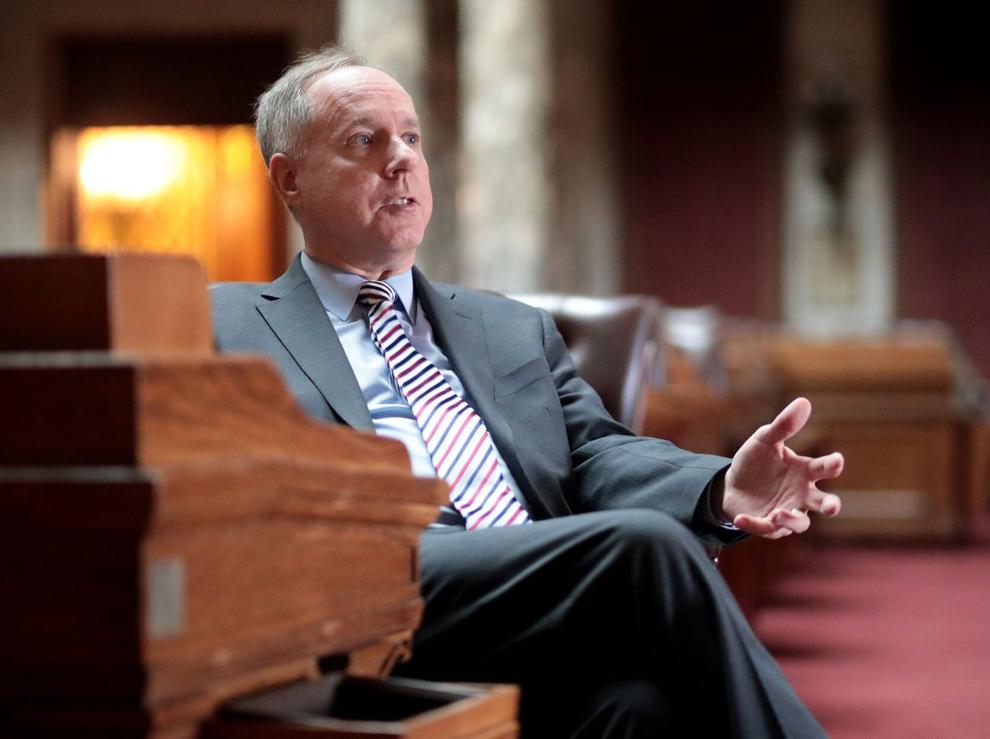
Robin Vos, state’s longest serving Assembly speaker, will not seek re-election

From The Journal Times.com:

MITCHELL SCHMIDT and KIMBERLY WETHAL Wisconsin State Journal


Assembly Speaker Robin Vos said Thursday he will not seek re-election next year, ending a more than decade-long career as one the the most influential Republicans in the state.

Vos, 57, the longest-serving Assembly speaker in state history, choked up as he addressed fellow lawmakers and staff on what is anticipated to be the Assembly’s final floor session of the year, saying his career has been “the greatest professional honor of my life.”

Assembly Speaker Robin Vos.

OWEN ZILIAK, STATE JOURNAL ARCHIVES

The Rochester Republican was first elected to the Assembly in 2004 and has represented portions of Racine and Walworth counties. He has led the chamber as speaker since 2013.

His tenure in the Assembly has spanned a plethora of notable moments in Wisconsin politics, including the passage of Republican then-Gov Scott Walker’s controversial Act 10, which dramatically limited collective bargaining powers in the state, and multiple high-stakes presidential elections.

Vos said the decision on whether to run again had been weighing on him for months, but having a mild heart attack in November was part of his decision. Vos is fine, he said, but it his doctor told him he needed to reduce his stress levels.

“Let me tell you, this job is stressful,” Vos said. “It was a sign from God that convinced me I needed to choose a different path.”

Vos told the Wisconsin State Journal at the end of December he would decide in February whether to pursue another term.

Vos’ retirement means that two of Wisconsin’s most influential politicians won’t be in the Capitol come January. Democratic Gov. Tony Evers, a longtime foil of Vos and his Republican agenda, announced his intent to retire in July, after this year’s budget was finalized.

Vos’ retirement means that two of Wisconsin’s most influential politicians won’t be in the Capitol come January. Democratic Gov. Tony Evers, a longtime foil of Vos and his Republican agenda, announced his intent to retire in July, after this year’s budget was finalized.

Assembly Speaker Robin Vos said the decision to retire had been weighing on him for months, but a mild heart attack in November helped him make the decision.

JOHN HART, STATE JOURNAL ARCHIVES

Evers said in a statement Vos’’ “retirement marks the end of an era in Wisconsin politics, and I’m grateful to have served as governor during Speaker Vos’ tenure.”

“Although we’ve disagreed more often than we didn’t, I respect his candor, his ability to navigate complex policies and conversations, and his unrivaled passion for politics,” Evers said.

“Being in public service is challenging and can be thankless work, most especially when you’re responsible for getting things done,” Evers added. “I understand that better than most. For your sacrifices and your service over the years, thank you, Mr. Speaker.”

Prior to joining the Assembly, Vos was a Racine County supervisor for 10 years. A graduate of UW-Whitewater, a relative powerhouse for churning out influential Wisconsin Republicans, Vos worked as a legislative assistant for Rep. Jim Ladwig, and his successor and wife, Bonnie Ladwig, as well as a district director for Republican U.S. Rep. Mark Neumann.

Outside of state government, Vos owns both a food processing company and a real estate company that largely rents student housing in Whitewater.

Vos’ decision comes as state lawmakers head into the November elections under new, more Democratic-friendly maps signed in early 2024. Vos was a key player in the legislative redistricting fights that took place in 2010, when GOP lawmakers used their legislative majorities to redraw the state’s congressional and legislative maps to favor Republicans. There are currently two legal challenges before the state Supreme Court, which holds a 4-3 liberal majority, seeking to redraw Wisconsin’s congressional boundaries.

Under new legislative maps, liberals are feeling especially bullish on their chances to wrest control of the state Senate and Assembly away from their Republican colleagues.

Republicans say the measures they’ve been able to get across Evers’ desk, including more than $1 billion in tax cuts in the state’s two-year spending plan, should encourage voters to keep the party in control of the Legislature in 2027.

The election also hosts the first open race for Wisconsin’s executive office in 16 years. Republican Congressman Tom Tiffany is the frontrunner on the GOP side, while more than half a dozen Democratic candidates are running.

Vos has often been a thorn in the side of both Evers and his Democratic colleagues in the Legislature due to his ability to lead the Assembly Republican caucus as one of the most influential conservatives in the Capitol. But he’s also clashed with members of his own party at times, including President Donald Trump.

While Vos hired former state Supreme Court Justice Michael Gableman in 2021 to lead a taxpayer-funded review of Wisconsin’s 2020 presidential election — following pressure from Trump to substantiate his baseless claims that the election had been “stolen.”

Trump lost to Joe Biden in Wisconsin by almost 21,000 votes that year, an outcome that has been substantiated through a recount, court decisions and multiple independent reviews.

The relationship between Gableman and Vos soured over the course of the seven-month review, with Vos ultimately firing Gableman in August 2022 and later calling him “an embarrassment to this state.

Vos closed out his speech saying he hopes the Legislature as an institution will remain strong, especially against the two other branches of government, and offered a reminder that the Legislature is not meant to be “fast, convenient, or easy.”

“I’ll miss the clowns, but not the circus,” Vos said, echoing Linda Upmeyer, former Speaker from Iowa, who said something similar upon her retirement in 2020.

From: https://journaltimes.com/news/local/government-politics/article_ed9c3052-2bc7-5e14-a242-88a0175195f4.html#tracking-source=home-top-story