KIMBERLY WETHAL
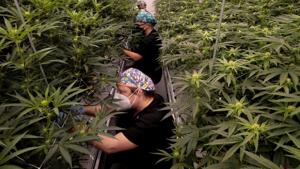
State Republicans are again attempting to legalize medical marijuana, reviving a long-sought effort to provide patients with chronic illnesses or pain another form of relief.
A bill authored by Sens. Patrick Testin, R-Stevens Point, and Mary Felzkowski, R-Tomahawk, and Rep. Patrick Snyder, R-Weston, would create a “tightly regulated” medical marijuana industry in Wisconsin, which is one of just 10 remaining states that do not allow for the medical use of marijuana. The bill would regulate the industry from seed to sale and ensure that product quality is consistent for customers, its authors wrote in a memo seeking cosponsors.
Because there are no state regulations for hemp-derived THC products, they can vary on how they’ll impact the body.
“There is no doubt that each and every one of us knows someone that has suffered through an illness and struggled to find a way to make it through each day,” the authors wrote. “Medicine is never one-size-fits-all, and it is time for Wisconsin to join the majority of the country in adding another option which may help patients find the relief they need.”
One significant aspect missing from this bill that was a dealbreaker last session was the creation of state-run dispensaries where people with severe chronic illnesses could go to receive smokeless marijuana products. That proposal died in the Senate after Republicans in that chamber said they could not get behind the idea of the state doling out marijuana.
The new proposal would allow people with chronic illnesses to get a prescription from their doctor for medical marijuana in a variety of forms. It would instruct the state Department of Health Services to create an Office of Medical Cannabis Regulation to manage the patient and caregiver registries and the Department of Agriculture, Trade and Consumer Protection to establish testing guidelines for cannabis products and oversee growing standards.
And growers and product processors would need to apply for an annual $10,000 permit and be residents of the state for at least 80% of the year. Anyone with financial ties to a cannabis testing facility would not qualify. Dispensaries, which would be private businesses, would need to pay a $5,000 permit fee.
In order for people to get a prescription for medical marijuana, which would cost $20 a year to stay on the registry, they would need to meet with a doctor with whom they have a “bona fide” relationship for an in-person evaluation. The bill would limit the qualifying medical conditions to those that are severe, including cancer, seizures, chronic pain, multiple sclerosis or any terminal illnesses with a prognosis of a year of survival or less, similar to previous bills.
Under the bill, judges would not be able to consider a valid medical marijuana prescription when deciding child support or placements, but they could still consider illegal marijuana use in those situations. And it would be illegal to discriminate against workers who use medical marijuana outside of work hours.
Gov. Tony Evers, who has advocated for the legalization of medical and recreational marijuana in his past two budgets, hasn’t yet reviewed the proposal and couldn’t say whether he’d support it, a spokesperson said. Spokespeople for Assembly Speaker Rep. Robin Vos, R-Rochester, and Senate Majority Leader Sen. Devin LeMahieu, R-Oostburg, did not respond to requests for comment.
Bills to legalize medical marijuana have repeatedly failed to make it to the finish line in recent years. In 2019, the topic resurfaced after nearly a two-decade hiatus with a bipartisan bill; in the years since, lawmakers have largely agreed on the need for medical marijuana but disagreed on how to best regulate it.




 Posts
Posts


No comments:
Post a Comment