Saturday, March 7, 2026

Monday, February 16, 2026
Midwest grocery prices tick up as egg prices fall nationally, report says
Maia Pandey
The cost of groceries has been ticking up in the Midwest, but there's at least one bright spot nationwide: egg prices have recovered after hitting all-time highs in 2025.
In January, Midwest grocery prices were up 0.4% from December 2025 and up 2.4% from a year earlier, according to the latest Consumer Price Index report. The increase comes after last month's report showed Midwest grocery prices remained stable toward the end of 2025.
Nationwide, the cost of food at home increased by 0.2% last month. That's down from a 0.7% increase in December 2025, meaning grocery prices rose at a slightly slower pace in January. Egg prices in particular were down by more than two dollars in January when compared to a year earlier.
Here's the latest on Midwest grocery prices, including why egg prices are finally dropping.

Are groceries getting more expensive in the Midwest?
Aside from fruits and vegetables, the price of all other Midwest groceries rose over the past year, according to the Consumer Price Index report released Feb 13.
In addition to Wisconsin, the Bureau of Labor Statistics includes Illinois, Indiana, Iowa, Kansas, Michigan, Minnesota, Missouri, Nebraska, North Dakota, Ohio and South Dakota in its Midwest region analysis.
Here's how much grocery prices changed last month in the Midwest:
- Cereal and bakery product prices dropped by 0.1% from December 2025 but were still up by 2.4% from January 2025
- Meat, poultry, fish and egg prices rose by 0.2% from December 2025 and by 3.8% from January 2025
- Dairy product prices rose by 2.7% from December 2025 and by 0.4% from January 2025
- Fruit and vegetable prices dropped by 1.6% from December 2025 and by 2.9% from January 2025
- Nonalcoholic beverage prices rose by 0.8% from December 2025 and by 2.1% from January 2025
- Alcoholic beverage prices rose by 0.5% from December 2025 and by 1.6% from January 2025
Egg prices coming back down after bird flu outbreak
Though meat, poultry, fish and egg prices were still up slightly in the Midwest, egg prices nationally are finally recovering after hitting record levels in early 2025 due to the highly pathogenic avian influenza, or bird flu, outbreak.
The national Consumer Price Index indicates the average cost for a dozen Grade A eggs in the United States was $2.58 in January 2026, compared to $4.95 in January 2025. In March 2025, average egg prices hit a record high of $6.23.
Wholesale egg prices have also dropped nearly 90% over the past seven months, USA TODAY reported. Bird flu is still present in the U.S., but much of the egg industry is now facing an oversupply problem, with some farmers selling eggs at below production cost.
How much do Wisconsin residents spend on groceries?
Despite increasing grocery prices in the region, Wisconsin residents rank in the middle of the pack in terms of how much they're spending on groceries, according to a Feb. 12 analysis by WalletHub, a personal finance website
The report compared the cost of commonly purchased grocery items against the median household income in each state. In Wisconsin, residents likely spend 1.97% of their monthly income on groceries, or 27th-highest of all the states, WalletHub found.
The U.S. Census Bureau's median income data on Wisconsin says that would amount to about $1,526 annually, or $127 monthly, spent on groceries.
Mississippi residents tend to spend the largest portion of their income, 2.6%, on groceries, and Massachusetts spends the least at 1.51%, WalletHub reported.
Wednesday, December 3, 2025
Saturday, November 8, 2025
Wednesday, October 15, 2025
Highly Pathogenic Avian Influenza confirmed in Racine County
Milana Doné
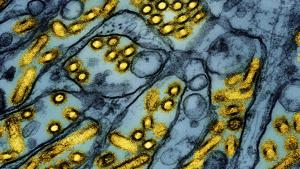
MADISON — The Wisconsin Department of Agriculture, Trade and Consumer Protection has identified a case of highly pathogenic avian influenza in a backyard poultry flock in Racine County.
The DATCP reported eight infected poultry in Franksville. Birds at the site were depopulated to prevent the spread of the disease, according to a DATCP news release.
Highly Pathogenic Avian Influenza (H5N1 HPAI) viruses are highly contagious and often fatal to domestic poultry. Caused by influenza type A viruses, the disease varies in severity depending on the strain and species affected.
The HPAI H5N1 virus has circulated in both wild and domestic birds in North America since December 2021. Since that time, the H5N1 virus also has affected other species, including mammals. To date, Wisconsin has not identified an H5N1 infection in dairy herds in the state.
The disease can be spread by contact with infected birds, commingling with wild birds or their droppings, equipment or clothing worn by anyone working with the animals.
According to the Centers for Disease Control and Prevention, the threat to the general public remains low as there is currently no known person-to-person spread.
The DATCP urges all livestock owners to implement strong biosecurity measures to protect their flocks and herds from the disease, including washing hands, disinfecting equipment, restricting access to animals and separating new additions to the flock or herd for at least 30 days.
Poultry owners are asked, when possible, to keep their birds indoors.
When HPAI H5N1 is diagnosed in a backyard poultry flock, risk factors are evaluated and a 6.2 mile surveillance zone may be implemented, without movement restrictions for surrounding poultry premises, according to the DATCP.
To help producers determine if their poultry are located within an active control area or surveillance zone, poultry owners are encouraged to use DATCP’s mapping tool.
State law requires that all livestock owners register where their animals are kept. Registration helps animal health officials communicate with flock and herd owners during disease outbreaks.
To report increased mortality or signs of illness among domestic birds, dairy cattle, or other animals, contact DATCP by following the instructions on the Animal Disease Reporting webpage.
For updates about how the virus is affecting domestic birds in Wisconsin, and to find resources on protecting Wisconsin poultry, visit DATCP’s HPAI in Poultry webpage.


 Posts
Posts

