Friday, February 28, 2025

MN "on Notice" by US Attorney General for Letting Trans Students Play in Sports | Lakeland News
Thursday, February 27, 2025
Teachers Gone Wild: Former Kenosha substitute teacher charged with 17 felonies alleging inappropriate messages to student
Alec Johnson
A former substitute teacher is facing 17 felony charges accusing him of sending inappropriate messages to a student.
Alexander Poyner, 32, of Kenosha was charged Feb. 25 in Kenosha County Circuit Court with 14 counts of sexual misconduct by school staff or volunteer. Each count carries a prison term of up to 3½ years in prison, a fine of up to $10,000, or both. Poyner was also charged with three counts of exposing a child to harmful descriptions. Each of those charges also carries a prison term of up to 3½ years in prison, a fine of up to $10,000 or both, according to the criminal complaint.
The court denied a request by Poyner's attorney, Benjamin Schwarz, to dismiss 16 of the charges. Schwarz did not respond to a reporter's request for comment.
According to the criminal complaint:
A 15-year-old student at Kenosha Bradford High School reported to school administration Oct. 28, 2024, that they had been receiving concerning messages on Instagram from Poyner, a former substitute teacher in the district. The student had originally reached out to Poyner to ask why he had been fired from teaching at the school. The student said Poyner told them that it was "too bad he was straight and too young" and made references to P. Diddy. Because of these statements, the student stopped messaging with Poyner, the complaint said.
A detective found that the messages sent to the student were "sexual in nature and explicit in content, with many of the messages having a sexual undertone, sexual context, or used in a way that was consistent with 'sexual humor,'" the complaint said.
When questioned by police in November 2024, Poyner admitted it was "probably unprofessional" for him to be communicating with the student. He described his conversations with the student as "dancing around the line" that some would consider "inappropriate." Poyner also said he was ashamed of what he did and said he had no intentions of doing anything sexual with the student and that "he did not intend for the messages to be construed in a sexual manner," the complaint said.
The complaint noted that Poyner was employed at Kenosha Bradford High School as a substitute teacher from October 2020 to April 2024.
He had also been a substitute teacher in the West Allis-West Milwaukee School District from September 2021 to October 2024, when he was placed on administrative leave due to an internal investigation alleging misconduct. He resigned nine days after being put on leave, while the investigation was ongoing, superintendent Tarrynce Robinson told police. The district did not immediately respond to a reporter's message.
Poyner also worked in the Nicolet Union High School District in September 2024, the complaint said. According to a statement from the district to a reporter, the district used Poyner as a substitute for four nonconsecutive days in September and October 2024 but stopped using him as a substitute after learning of an investigation by the Wisconsin Department of Public Instruction. A spokesperson for the DPI said it was investigating Poyner's licensure.
"Based on the information currently available to us, including our conversations with the Kenosha Police Department, it is our understanding that the situation was isolated and does not affect any Nicolet students," the statement said.
In an email to a reporter, Kenosha Unified School District communications officer Tanya Ruder said Poyner resigned in April 2024. Ruder declined to provide further details, calling his resignation "a personnel matter."
Ruder also provided an emailed statement from the district.
"Kenosha Unified is committed to hiring the most qualified teachers and staff to support our students. Our extensive interview process includes thorough reference checks and criminal background checks to ensure we select the best candidates. However, if an individual has not been convicted of a crime and a past employer does not disclose concerning information, there may be no way for us to be aware of their intentions," the district's statement said. "The safety of our students is our top priority. We appreciate those who bring concerns to our attention, as this allows us to conduct thorough investigations in accordance with local and federal laws while adhering to state statutes. We are dedicated to maintaining a safe learning environment and will continue taking all necessary steps to protect our students."
Poyner made an initial court appearance Wednesday, where bail was set at $50,000. He is scheduled for a March 5 preliminary hearing, according to online court records.
Contact Alec Johnson at (262) 875-9469 or alec.johnson@jrn.com. Follow him on X (Twitter) at @AlecJohnson12.
Most Gen Zers avoid random phone calls: Study | NewsNation Live
Wednesday, February 26, 2025
Racine County seeing colder, drier winter
Annie Pulley
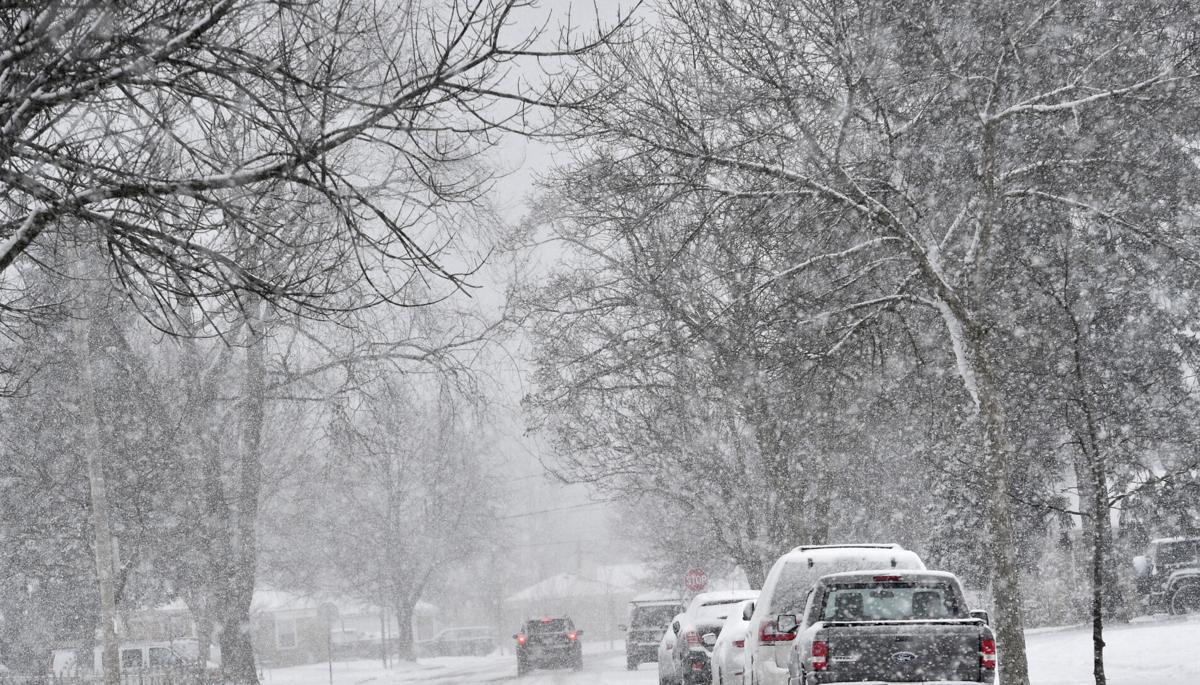 |
Despite February snow storms, Racine County is seeing a drier winter than typical, according to the National Weather Service. |
RACINE COUNTY — Just as warmer weather begins to thaw the county, season-end data points to a cooler and dryer winter so far.
Denny VanCleve, a meteorologist with the National Weather Service in Milwaukee/Sullivan, explained that, as of late February, this winter has been somewhat colder and more dry. That doesn’t mean the county won’t catch up to normal totals, he said.
Data from a station in Racine shows that the county has seen 16.5 inches of snow this winter. Milwaukee has so far seen 24.6 inches, but the normal value for Milwaukee snowfall is 38 inches.
VanCleve said that Racine County data may be less reliable than Milwaukee’s totals because the Racine station doesn’t collect data as frequently, which may partially explain the gap between Racine and Milwaukee snowfall.
In January 2025, Racine saw 4.8 inches of snow compared to the normal count for January, which is about 13.3 inches.
And it’s not just southeastern Wisconsin. Madison has so far seen 19.9 inches of snow whereas its normal value is 40.1. Last year, the capital city had seen 32.8 inches of snow by this time last year.
But the season’s not quite over, VanCleve said.
“It really doesn’t take much to catch up,” he continued. “Certainly the door’s open solidly through March.”
If snowfall totals remain low, however, there may be less risk of spring flooding but increased risk of long-term drought conditions as well as conditions more prone to fire.
The winter overall, VanCleve said, will probably work out to be one or two degrees below normal.
Temperatures in the Milwaukee region this February were 5.9 degrees below the monthly normal. Similarly, January saw temperatures 2.7 degrees below normal. December, however, was more than three degrees above normal.
La Niña wind conditions over the Pacific Ocean, which generally have a cooling effect on the northern hemisphere’s winter, may have have mildly affected temperatures and precipitation in southeastern Wisconsin, VanCleve said.
A colder winter, though by only a few degrees, is quite a different story from this time last year.
Both Milwaukee and Madison made warm weather records last winter.
Overall, however, the trend leans toward warmer and not cooler winters.
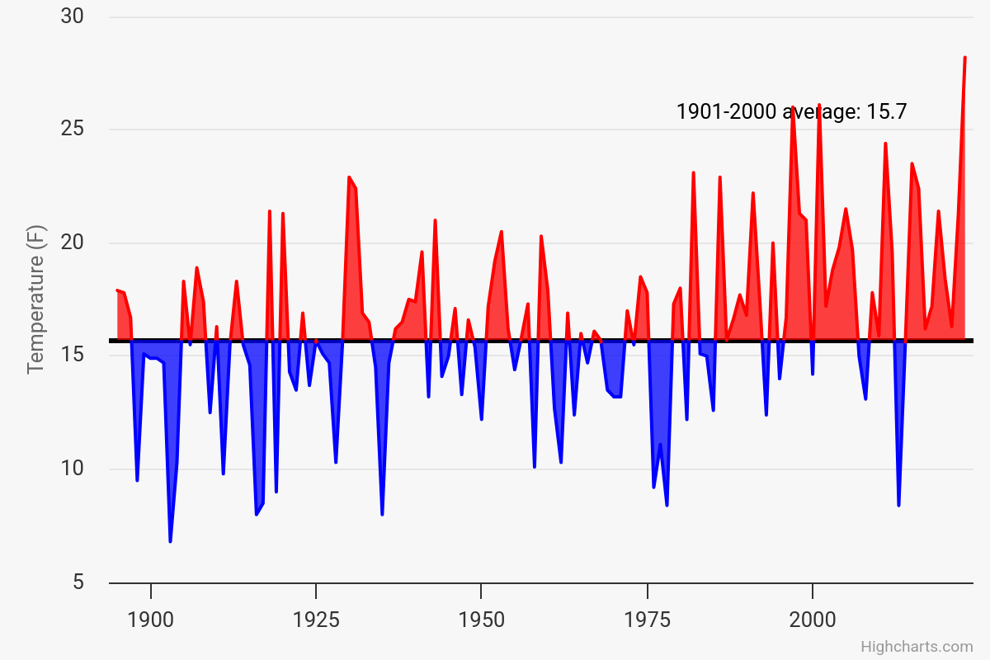 |
Average winter temperatures in Wisconsin from 1895 to 2023. Graph by the Wisconsin State Climatology Office. |
“We continue to, as a globe, as a nation, run warmer than average,” he said.
Top Republican Robin Vos weighs in on tax cuts, being 'tight' with Trump and 'inseminated people'
Molly Beck
MADISON - Republicans who control the state Legislature will pursue their own plan to overhaul the state's system of corrections and seek a "broad-based" tax cut outside of the state budget process instead of supporting the Democratic governor's proposals, Assembly Speaker Robin Vos said.
In a Tuesday event hosted by Wispolitics.com in Madison, the state Legislature's most powerful Republican lawmaker said Gov. Tony Evers' 2025-27 state budget spends too much and is not "realistic."
Here are takeaways from Vos' appearance:
Vos blasts provisions replacing 'mother,' 'father' to account for same-sex couples

Evers has faced heavy criticism from Republicans and some Democrats over a proposal in his two-year state budget plan to change language in state law related to same-sex couples and the process of having a baby through in vitro fertilization, sperm donors or the use of surrogates.
Evers proposes to swap out "husband" and "wife" for "spouse." In areas of state law related to same-sex couples and legal rights to children they choose to have through in vitro fertilization, sperm donors or surrogates, Evers proposes replacing "woman," "mother" and "wife" with versions of "person who is inseminated," or "inseminated person." On Tuesday, Vos blasted the provisions and dismissed the idea that statutes needed to change to address situations involving fertility treatments for same-sex couples.
"There's no court case out there. There's no issue that this was trying to solve. There wasn't somebody who came and lobbied and said, 'Wow, if we don't fix this IVF problem that we just discovered, like over the weekend, that all of a sudden we're going to have to have a problem.' This is what they came up as an explanation for something that is stupid," Vos said.
"It's really one of those times where you have an answer to a problem that nobody agrees exists," Vos said. "It's really made Wisconsin a national embarrassment."
Evers defended the provisions in an appearance Monday in Wausau, saying they are meant to provide legal clarity for same-sex couples in the process of growing families through sperm donors or surrogates.
"What we want is legal certainty that moms are able to get the care they need," Evers said, according to WSAW. "That's it. End of story."
“What the Republicans say is a lie, so of course I'm pretty (pissed off) about that,” he said. “It gives people using IVF legal certainty … Moms are moms. Dads are dads.”
Republicans will seek tax cut outside of the state budget process
Vos also said Tuesday his caucus and Senate Republicans were meeting Tuesday to hash out what kind of tax package they would release ahead of the state budget.
Lawmakers and Evers have about a $4 billion budget surplus to spend. Vos said Republicans are seeking a tax cut across the state's tax brackets.
"I want tax cuts that people can actually feel," Vos said.
Evers' spending plan would cut income and sales taxes by $900 million and take steps to lower local property taxes by more than $1 billion. In separate provisions, the plan would raise state taxes by $3.3 billion for a net increase of $2.4 billion. One measure would create a new top income tax bracket for the ultra wealthy in Wisconsin.
By pursuing a tax cut through a separate bill, Republicans are eliminating the chance that Evers could again sign a budget into law that includes a Republican-authored tax cut and be able to campaign on doing so should he run for re-election in 2026.
Republicans unlikely to support Evers' plan to close Green Bay prison, overhaul others
Vos said Tuesday he won't get behind a $500 million plan put forward by Evers to close the Green Bay-area prison and overhaul others while expanding early release programs for non-violent offenders with less than two years left in their sentences.
Vos said because Evers did not include Republicans in drafting the plan, he would deliver to Evers their own plan.
"I have a feeling that those of us who have an interest in some kind of corrections reform will get together, we will come up with our own package, we'll present it to the governor and say, 'here it is,'" he said.
Robin Vos is now 'tight' with Trump
President Donald Trump once helped fund a challenge to Vos following the 2020 election over Vos' refusal to try to overturn Trump's loss, which would have been illegal and impossible.
But now, the two are "tight," Vos said.
"I am a team player. The president is the president. It is good for Wisconsin to have Republicans who have relationships with him. I want to make sure that the good things that he is doing have a direct benefit for the people of Wisconsin, and ultimately, I think we all benefit from that," Vos said.
Vos at one point in 2023 called the nomination of Trump as the GOP presidential candidate a "suicide mission" for Republicans but reversed course after it became clear Trump would be the nominee and endorsed him.
Vos has been a target of Trump since 2021 when he refused to take steps to overturn Trump's loss in Wisconsin and withstood a primary challenge Trump helped fund, leading Vos to pledge to try "as hard as I can" to ensure Trump did not secure the GOP nomination.

Molly Beck can be reached at molly.beck@jrn.com.
Milwaukee residents were surveyed on the city's police. Here's the main takeaways
David Clarey

Reckless driving is still a top concern among Milwaukee residents, and they're not happy with how the city has responded to the crisis, according to the latest study weighing public opinion of the Milwaukee Police Department.
That’s among the findings of the Milwaukee Police Satisfaction Survey, which asked over 1,000 residents to answer questions on their feelings about the department. Residents stubbornly remained mixed on police, with overall satisfaction largely remaining the same from prior versions of the survey.
The survey inquired on other topics as well, like what demographic groups are most and least satisfied or how those with crime interactions feel. Milwaukee’s Fire and Police Commission, the oversight body for the city’s police and fire departments, discussed the survey at a February meeting.
“I think there are some encouraging findings,” said Bree Spencer, the vice-chair of the Fire and Police Commission at the meeting.
The Milwaukee Police Department declined an interview on the survey. A department spokesperson said the police appreciated the feedback and its “main priority is the public’s safety and their concerns.”
Here’s what to know about this year’s report:
Community satisfaction with police remains mostly unmoved in Milwaukee from 2022, despite crime rates falling in recent years.
The survey found that 36% of residents were either “not at all satisfied” or “not very satisfied” with the city’s police, meaning about two-thirds of the city were somewhat satisfied. That essentially mirrored the last time the survey was conducted and was worse than the prior 2019 survey.
The survey polled groups across various demographics. Most satisfied were those 60 and older, baby boomers, while people between the ages of 30 to 44, millennials, were least satisfied.
Satisfaction among Black and other nonwhite residents increased in this year’s survey, however white residents declined for the third straight iteration of the report.
The figures come as violent crime has slowed in Milwaukee in recent years but still outpaces pre-COVID-19 crime.
Violent and property crimes – things like homicide, burglary and theft which are known as Part I crimes by FBI data standards – dipped 4% from 2023 last year. With that, a decline in homicides and nonfatal shootings were among the most significant, down 23% and 24%, respectively.
That puzzled some at the hearing.
“We’re looking at crime statistics … going down,” said Ruben Burgos, a commissioner on the oversight committee. “And yet our satisfaction has stayed the same. Shouldn’t that be changing, I would think?”
The perception of police visibility declined from 2022, while a heavy majority of residents would prefer police to be visible.
The survey asked a series of questions based on police visibility as well, ranging from how visible police were to how visible police should be.
A total of 50% of respondents said police were “not very visible” or “not at all visible.” With that, 91% of survey respondents said they would prefer police to be visible to some level.
“This has been a consistent finding over many waves of the survey. The data has never supported the assertion that some of these groups do not want the police in their neighborhood,” said Joseph Cera, the research director for Neighborhood Analytics, the organization which assisted in conducting the survey.
This change is part of a continuing trend of past waves of the survey, the report said.
Reckless driving remains a persistent problem for Milwaukee residents
Reckless driving continues to be a major concern of Milwaukee residents.
Only 3% of residents said they didn’t have concerns about the issue. Meanwhile, 88% of residents rated it at the highest level of concern and another 9% were “somewhat concerned.”
That dissatisfaction continued over how the city’s police handle the issue as well, with 64% of residents displeased.
That findings come after Milwaukee saw over 14,000 crashes in both 2023 and 2024 and 66 people killed by car crashes last year, according to Milwaukee Police Department traffic data.
The city continues to attempt to combat the issue.
Recent road construction projects intended to deter speeding and other reckless driving behaviors have had positive early impacts, city data has shown.
Meanwhile, city policymakers and authorities announced in October plans to more stringently cite and prosecute reckless drivers.
Inequities in police behavior reported
While police satisfaction increased with minority residents in Milwaukee, the survey found “patterns of inequity.”
“Black and other nonwhite residents are more than three times more likely to report having been searched or patted down during their most recent police-initiated contact when compared to white residents,” the report said.
Inequities have long been a concern for Milwaukee police.
Most notably, the 2018 Collins Settlement was brokered following the department being sued for its stop-and-frisk practices. The lawsuit it came from accused the Milwaukee Police Department of routinely stopping thousands of minorities without cause or suspicion.
The settlement required police to provide increased documentation for things like traffic stops, field interviews and other police interactions.
There was a reported increase in non-reporting of crimes to MPD
One of the report’s striking findings was an increase in non-reporting of crimes.
Compared to the last time the survey was reported, 33% of respondents who were the victim of one crime did not report it to police. In 2022, the last time the survey was taken, that figure was 13%.
Reasons for this included the belief police would not or could not help and it would be too much of a “hassle” to report the crime. A total of 46% of respondents said they did not report the crime because they didn’t expect to be treated fairly by police.
Those responses were not considered “statistically significant” increases over prior surveys, Cera said.
David Clarey is a public safety reporter at the Milwaukee Journal Sentinel. He can be reached at dclarey@gannett.com.
Tuesday, February 25, 2025
Maine high schooler on transgender athlete controversy: 'It never should have happened'
Tom Barrett says European leaders worried about Biden's capacity long before election exit
Molly Beck
Barrett, a former longtime mayor of Milwaukee who was appointed to the ambassadorship by Biden in 2022, said for the first time Sunday that he shared those concerns.
"There was a feeling that his heart was in the right place, that he wanted to maintain this strong relationship, but there was a lot of concern about whether, physically, he was up to the job," Barrett said in an interview with WISN-TV.
Barrett returned to Milwaukee last month after a three-year tenure as America's top diplomat in Luxembourg.
Biden, 82, faced public calls to drop his bid for a second term in June after a disastrous debate performance against President Donald Trump. During the debate, Biden's voice was hoarse and raspy as he stumbled over words. At one point, the former president appeared to lose his train of thought.
Barrett said he did not watch the debate because of his concerns over Biden's physical state but did not witness any stumbles in person.
"To this moment I haven't watched that debate because I just had concerns," Barrett said. "Now I'll say that the interactions that I had with him during my time as ambassador, which were few — but two or three — he was sharp as a tack."
"So, clearly, there was something that was going on there. I did not sense in the one-on-one interactions that there was an issue, but there may have been."
Barrett said his job was made easier once Biden dropped out of the 2024 presidential race and was replaced with then-Vice President Kamala Harris.
"In some ways it made it easier because that was off the table," Barrett said when asked if concerns among European leaders over Biden made his job as ambassador difficult. "And with Vice President Harris in the race, I think that there was hope and there was enthusiasm for her, quite honestly, in Europe, that she could win the race."
"There was always this fear with President Trump," Barrett said. "The fear was there, and it was not below the surface."
Barrett said last week in an appearance at the Rotary Club of Milwaukee that European leaders are concerned their relationships with the U.S. are "fraying" after the election of Trump.


 Posts
Posts

