Thursday, September 17, 2026

Tuesday, September 15, 2026
Friday, September 11, 2026
Saturday, June 20, 2026
Wednesday, April 8, 2026
Sunday, April 5, 2026
Reminder: Spring election is Tuesday, April 7
Holly Gilvary
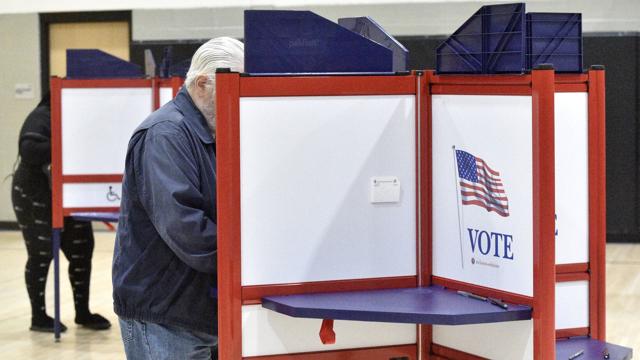
RACINE COUNTY — Wisconsin’s 2026 spring election is set for Tuesday, April 7.
In addition to the statewide Wisconsin supreme court justice race, Racine County residents will vote on County Board supervisors, and some municipal and school board races.
Two Racine County supervisor districts, Districts 3 and 8, have contested races this spring.
Polls are open from 7 a.m. to 8 p.m.
For polling places and ballot information, visit myvote.wi.gov.
Wednesday, January 14, 2026
Wednesday, October 22, 2025
Racine man charged with stalking Wisconsin Supreme Court chief justice
CHRIS RICKERT
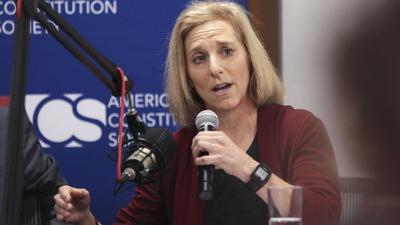
A Racine man has been charged with felony stalking for sending a number of increasingly aggressive emails to Wisconsin Supreme Court Chief Justice Jill Karofsky.
The nine emails Ryan T. Thornton, 37, of Racine, sent Karofsky between Aug. 2 and Oct. 1 refer to her as a derogatory term for a person with intellectual disabilities, advise her to “eject yourself from office” and threaten to make her home address public, among other things, according to a criminal complaint filed Monday.
They were sent in conjunction with about 15 emails and 70-plus threatening calls to the state’s Office of Lawyer Regulation, which handles complaints about Wisconsin lawyers and judges and whose decisions are ultimately subject to the approval of the state Supreme Court, the complaint says.
Investigators found that Thornton was upset with a lawyer who represented him in a 2019 criminal case and unhappy that the OLR had not taken action against him.
According to the complaint:
State Capitol Police talked to Thornton in August, when they asked him to stop contacting the OLR and Karofsky, and Thornton agreed to do so.
He didn’t, and Karofsky told police that she felt intimidated by the emails to the extent that she was sometimes afraid to get her mail from her front door. She said that she asked for police escorts to her seats at recent Milwaukee Brewers and Wisconsin Badgers games.
Karofsky told police that she’d received numerous threats since first becoming a Dane County Circuit Judge in 2017, but “that she had never had someone continuously send emails to her after being told to stop by police.”
In a difficult-to-follow interview with Capitol Police at the Racine County Jail on Oct. 9, Thornton said the OLR was staffed by a “bunch of criminals,” complained that his former attorney had an 11-page manifesto concerning him, and complained that OLR Director Timothy Samuelson and Karofsky have a 250-page appendix related to his case.
He also said he believes there is a state conspiracy to drive up property taxes and that hospitals and probate courts are “getting paid for people to die.”
“‘Tell Jill, man, she better start running or something for the hills of the feds because it’s a conspiracy,’” he told police.
Online court records show Thornton’s only past felony conviction was for strangulation and suffocation in a domestic abuse case from 2019 in Racine County. His bail in the stalking case was set at $85,000 on Monday.
Tuesday, October 21, 2025
Racine man charged with stalking Wisconsin Chief Justice Jill Karofsky
Molly Beck
MADISON - A Racine man has been charged with stalking Wisconsin Supreme Court Chief Justice Jill Karofsky in recent weeks.
Ryan Thornton, 37, appeared in Dane County Circuit Court on Monday, Oct. 20, after being arrested by Wisconsin Capitol Police over a series of alleged threatening remarks aimed at Karofsky through dozens of phone calls and emails.
According to the criminal complaint, Thornton began sending emails to Karofsky in August, shortly after the Office of Lawyer Regulation rejected Thornton's petition for discipline against an attorney who represented him in another case for which Thornton was found guilty by a jury of domestic abuse-related charges.

Prosecutors allege Thornton called the Office of Lawyer Regulation staff more than 70 times, at times making threatening comments to staff members, and at one point asked for Karofsky's home address.
In one email, Thornton allegedly said, "Please EJECT YOURSELF FROM OFFICE," according to the complaint. In another, he allegedly told Karofsky to call the police.
"Call the capital police Jill … what a democrat idea tho," he allegedly wrote.
When Thornton was arrested, prosecutors allege he said, “That bitch is going down," “(Expletive) that bitch" and "If this is because of Jill, she is going down.”

When a Capitol Police officer asked how Karofsky was involved in his dispute with the Office of Lawyer Regulation, Thornton allegedly said he did not know and it "must be some type of female that is preventing him from talking to OLR," investigators paraphrased in the complaint.
"The defendant believed that Chief Justice Karofsky or a female must be in control of OLR," the complaint says.
Karofsky told investigators the ordeal has forced her to take extra security precautions and that she fears for her safety, according to the criminal complaint.
"Chief Justice Karofsky stated that every time she gets an alert on her door bell, she checks it, thinking maybe it is a possible security concern," investigators wrote. "Chief Justice Karofsky stated that she is afraid to get her mail from her front door."
Police officers also have escorted Karofsky to her seat at recent baseball and football games, according to the complaint.
If convicted, Thornton faces nearly four years in prison and $10,000 in fines.
Tuesday, July 8, 2025
Wisconsin Supreme Court rules Evers can ban conversion therapy, reins in power of the Legislature
Anna KleiberLaura Schulte
In a 4-3 ruling July 8, the liberal-controlled court ruled that thelgbtq Republican-controlled legislative committee's rejection of a state agency rule that would ban the practice of conversion therapy for LGBTQ+ people was unconstitutional, clearing the way for the state to institute a ban on the discredited practice in which counselors instruct gay patients to change their sexual orientation.
The ruling could have sweeping implications for the interaction between the Legislature and the governor's office, as it determines whether the legislative committee can continue to block rules created by the governor's office, rather than going through the full Legislature to create policy.
In the majority opinion, Chief Justice Jill Karofsky called the abilities exercised by the Republican-controlled Legislature to halt administrative rules indefinitely unconstitutional and said the committee was exercising its powers without a check.

But, she noted, the Legislature can create rules and laws through the legislative process.
“…the Legislature retains power over the administrative rulemaking process regardless of our determination here,” she said. “The Legislature created the current process. It alone maintains the ability to amend, expand, or limit the breadth of administrative rulemaking in the other branches — as long as it adheres to the constitution.”
The lawsuit was brought by Evers against the Legislature's Joint Committee for the Review of Administrative Rules — a powerful Republican-controlled panel in charge of approving state agency regulations — after the committee blocked the provision barring conversion therapy in the state twice.
In a statement, Evers celebrated the victory and said Republicans for years have been allowed to overstep their power and cause gridlock by holding up administrative rules.
"It’s pretty simple — a handful of Republican lawmakers should not be able to single-handedly and indefinitely obstruct state agencies from doing the people’s work," he said in a news release.
“Wisconsinites want to protect our constitutional checks and balances. Today’s Wisconsin Supreme Court decision ensures that no small group of lawmakers has the sole power to stymie the work of state government and go unchecked. This is an incredibly important decision that will ensure state government can do our important work efficiently and effectively to serve Wisconsinites across our state."
Attorney General Josh Kaul, a Democrat, also championed the decision.
“This decision will mean a fundamental change — for the better— in how Wisconsin state government works. No longer will a small group of legislators be able to block or suspend common-sense administrative rules indefinitely," he said in a news release. "Instead, rules that protect Wisconsinites will be able to be adopted without being subject to an unconstitutional legislative committee veto.”
Assembly Speaker Robin Vos, R-Rochester, said the decision "strips the Legislature of its check and balance powers" and "bestows even more power to the executive branch," criticizing the court for removing oversight.
“For decades, case law has upheld the constitutionality of the legislative rules committee to serve as a legitimate check on the powers of the Governor and the overreach of the bureaucracy. Today’s decision overrules those cases," Vos said in a statement. "As Justice Rebecca Bradley said in her dissent, ‘Progressives like to protest against ‘kings’ – unless it is one of their own making.’”
Justice Brian Hagedorn both concurred and dissented with the opinion of the liberal majority of the court.
While he suggested it was time to “rethink the administrative state,” he said the majority went too far, arguing against a portion of the ruling.
“In my judgment, this cries out for judicial humility and restraint,” he said. “We need not sidestep this issue, but we should proceed with caution, going only as far as we must to decide it correctly.”
Justice Annette Ziegler, in a dissenting opinion, called the majority’s ruling “a misguided quest to restructure and unbalance our state government.”
She argued that legislative power was being narrowed with the ruling, while giving the executive branch — the governor and agencies — an outsized ability to legislate.
“Now is not the time to unleash a sea change in the law regarding how our state government is structured, and there should never be a time to unequally apply the constitution,” she said.
In her separate dissent, Bradley quoted singer Bruce Springsteen, saying, “A king ain’t satisfied ‘til he rules everything.”
She said that while the majority holds the Legislature to constitutional rules of lawmaking, the executive branch is allowed to exercise its power “unfettered and unchecked.”
“The majority imperils more than the structural separation of powers (if that isn’t bad enough),” she said. “If the courts continue to consent to the redistribution of constitutional powers between the branches, then all constitutional provisions are susceptible to revision by the government, and the governed have lost their ability to govern themselves.”
The ruling comes as a national battle over LGBTQ+ rights heats up, with the nation's highest court upholding Tennessee's ban on gender affirming care for minors in June.
In Wisconsin, Evers has vetoed Republican bills targeting transgender athletes to push back on anti-LGBTQ+ efforts in the state.
While the state's highest court did not say how they would ultimately rule when it heard oral arguments in January, questions from the court's four liberal justices indicated the majority did not agree with the Legislature's decision to give power to a legislative committee to block statewide rules implemented by the executive branch.
"They are acting as the body that was elected," said Justice Rebecca Dallet, who is part of the court's liberal majority, during oral arguments. "This structure is a few people who get all the power to make a decision about what happens to what an agency does with their rulemaking."
Environmental groups also applauded the ruling and suggested its impact is broader than the issue at hand of banning conversion therapy.
Midwest Environmental Advocates, in a news release, pointed to the 2020 decision of the JCRAR committee to weaken monitoring requirements for "forever chemicals" implemented by the Department of Natural Resources.
That decision, the release said, has allowed a company in northeastern Wisconsin to continue to discharge the toxic chemicals, which have been linked to cancer and fertility issues, to the Marinette Wastewater Treatment Plant.
“In the past, small groups of legislators have been able to block the implementation of popular environmental protections passed by the full legislature and signed by the governor,” said Tony Wilkin Gibart, executive director of MEA. “This process violated basic constitutional principles and was often exploited by polluters and industry groups to effectively repeal environmental laws—outcomes they could never achieve through the normal legislative process.”
Anna Kleiber can be reached at akleiber@gannett.com.
(This story has been updated to add new information.)
Wednesday, July 2, 2025
Civil War-era law doesn't ban abortion, Wisconsin Supreme Court rules
MITCHELL SCHMIDT
Marking a major win for abortion rights advocates across Wisconsin, the state Supreme Court on Wednesday issued a split decision repealing the state's Civil War-era law that had widely been interpreted as a near-complete abortion ban.
The 175-year-old law was deemed unenforceable following the 1973 Roe v. Wade decision established abortion as a constitutional right, but remained in state statute. In the summer of 2022, the U.S. Supreme Court's decision in Dobbs v. Jackson overturned Roe, leaving Wisconsin's 1849 law, which lists killing a fetus as manslaughter unless the procedure was conducted in order to save the mother's life, on the books.
But in a 4-3 ruling, the Wisconsin Supreme Court's liberal majority ruled the 1849 law had been "impliedly repealed" by a host of changes enacted by the state Legislature in the years that followed Roe, including a 1994 state Supreme Court ruling that found the law only applied to somebody killing a fetus by assaulting its mother, not abortions.
"Plaintiffs filed this lawsuit seeking a declaration that (state statute) — a statute dating back to 1849 that criminalizes the intentional destruction of an unborn child — does not ban abortion," Justice Rebecca Dallet wrote in the majority opinion.
"We conclude that comprehensive legislation enacted over the last 50 years regulating in detail the 'who, what, where, when, and how' of abortion so thoroughly covers the entire subject of abortion that it was meant as a substitute for the 19th century near-total ban on abortion," Dallet wrote.
Dallet was joined in the ruling by her liberal colleagues, justices Ann Walsh Bradley, Jill Karofsky and Janet Protasiewicz. Conservative justices Annette Ziegler, Rebecca Bradley and Brian Hagedorn dissented in the ruling.
Writing in dissent, Ziegler offered a scathing review of the decision, which she called "a jaw-dropping exercise of judicial will, placing personal preference over the constitutional roles of the three branches of our state government and upending a duly enacted law."
"The majority’s analysis is fundamentally flawed, and the majority is compromised when it comes to the issue of abortion," Ziegler wrote.
After Roe was struck down, Democratic Attorney General Josh Kaul asked a Dane County Circuit Court judge to declare the 1849 law didn’t apply to abortion. Kaul argued the law conflicted with later, more permissive abortion laws and court decisions.
In December, Dane County Judge Diane Schlipper concurred, finding that the law only applied to feticide.
Attorneys for Sheboygan County District Attorney Joel Urmanski, a Republican, asked the state Supreme Court to rule on the matter. Urmanski has said he believes the law, which is titled “Abortion,” also covers the procedure.
But members of the court’s 4-3 liberal majority said the law has been overtaken by subsequent laws and doesn’t allow for a host of circumstances, including pregnancies resulting from rape or incest, fetal abnormalities or when the health of the mother is in danger.
Dallet noted in the ruling the Legislature "as the peoples’ representatives, remains free to change the laws with respect to abortion in the future."
Wisconsin Democrats quickly praised the decision, with Sen. Mark Spreitzer, D-Beloit, calling it "a critical step forward."
"I look forward to working with my colleagues to bolster the fundamental healthcare rights of Wisconsinites and to ensure they have access to the reproductive healthcare they need," he said.
Rep. Lindee Brill, R-Sheboygan Falls, accused the court's liberal majority of handing down "a reprehensible, partisan decision."
"Judges should make decisions based on the law and the facts of the case, not their personal political opinions," Brill said.
Wednesday, April 2, 2025
Tuesday, April 1, 2025
Monday, March 31, 2025
Sunday, March 30, 2025
Appeals Court rejects AG Josh Kaul's effort to block Elon Musk payments to Wisconsin voters
Molly Beck
MADISON - A panel of state appeals judges on Saturday rejected an effort by Attorney General Josh Kaul to block Elon Musk from paying voters in Wisconsin ahead of a pivotal state Supreme Court election on Tuesday.
A Madison-based state appeals court on Saturday declined to quickly intervene in an event Musk planned to hold Sunday during which he initially said he would pay two voters each $1 million and later backtracked and said the money would go to people who signed a petition to oppose judges who rule against President Donald Trump.
The appeals panel rejected a motion filed by Kaul late Friday seeking emergency relief after a Columbia County circuit judge rejected hearing Kaul's lawsuit against Musk before Sunday, according to Kaul.
Now, Kaul may ask the state Supreme Court to step in before Sunday but a spokesman for Kaul did not immediately say whether the Democratic attorney general planned to ask the high court.
In the order from the appeals court, the judges wrote Kaul had not filed or supported his request properly, which forced them to deny the request.
In a since-deleted post on X, Musk said he would hold an event Sunday in Wisconsin and hand out $1 million checks to voters "in appreciation for you taking the time to vote."
But after election experts and Democrats raised questions about whether the offer violated the state's election bribery laws, Musk deleted the post and said he would instead be handing over the checks to two people who would serve as spokespeople for his "Petition In Opposition To Activist Judges." The new post also no longer said attendance would be limited "to those who have voted in the Supreme Court election," as the original post had stated.
"To clarify a previous post, entrance is limited to those who have signed the petition in opposition to activist judges," Musk wrote. "I will also hand over checks for a million dollars to 2 people to be spokesmen for the petition."
Musk, a close ally of Trump, has poured about $20 million into the race to back conservative Supreme Court candidate Brad Schimel through spending from his own coffers and via two outside groups.

Schimel has sought to distance himself from Musk's event in recent days.
"We have no plans to be there. We have a very aggressive campaign calendar," Schimel told reporters Friday. "I have no idea what he's doing. I have no idea what this rally is."
Liberal Supreme Court candidate Susan Crawford called Musk's activities "immoral" on Saturday.
Kaul's lawsuit seeks a restraining order barring Musk "from any further promotion of the million-dollar gifts" to attendees of the planned Sunday event and "from making any payments to Wisconsin electors to vote."
In an odd twist, Crawford was initially assigned to oversee the case involving her race but a spokesman said it was a random assignment and that she will recuse.
The case was quickly reassigned to Columbia County Circuit Judge W. Andrew Voigt.
A spokesman for America PAC declined to comment on Kaul's plans.
The move comes after Kaul and Milwaukee County District Attorney Kent Lovern received a letter from the liberal Madison-based Law Forward legal firm, Wisconsin Democracy Campaign and State Democracy Defenders Fund seeking "an immediate investigation."The groups asked Kaul and Lovern to review Musk's America PAC's offer to pay $100 to Wisconsin voters for signing a petition opposing 'activist judges' who have ruled against President Donald Trump and Musk's Thursday announcement of plans to give two voters each $1 million checks.
Daniel Bice of the Milwaukee Journal Sentinel contributed to this report.
Molly Beck can be reached at molly.beck@jrn.com.


 Posts

