Monday, August 25, 2025

Thursday, May 29, 2025
Friday, May 16, 2025
Thursday, April 10, 2025
Two of We Energies' longest-returning falcons have died of bird flu
Maia Pandey
The falcons, Brinn and Beasley, both nested at the Port Washington Generating Station. Brinn's body was recently found in the nest box, while Beasley stopped returning to the nest within a few days of Brinn's death, leading the company's falcon manager to believe Beasley has also died.
Brinn had nested there since 2014, and Beasley arrived in 2017. Together, they produced 22 chicks.
"While we are heartbroken over their loss, we know their legacy lives on in the dozens of chicks they brought into this world and the awareness they helped to bring to peregrine falcon recovery efforts across the state," Truoy said in an email.
We Energies has maintained peregrine falcon nest boxes on several of its power plants since the early 1990s, according to its website. Since then, more than 450 falcons have hatched at these nests — amounting to 20% of all peregrine falcons born in Wisconsin.
"There is a small silver lining," Truoy added. "We have had two new peregrine falcons take up residence at the nest box since Brinn and Beasley’s deaths, and we are hopeful that we will see the first eggs in the coming days or weeks."
Since late 2024, bird flu, or highly pathogenic avian influenza, has killed more than a dozen wild birds and thousands of poultry across Wisconsin. The current nationwide outbreak has been the largest, deadliest and most costly in history, according to federal officials.
Here's what to know about bird flu in Wisconsin, including what to do if you encounter a dead or sick bird.

What's the latest on bird flu in Wisconsin?
Since the outbreak's onset in early 2022, bird flu has killed or forced the culling of more than 160 million birds nationwide, the U.S. Department of Agriculture reported in March.
In Wisconsin, officials have detected avian influenza in commercial poultry flocks in Burnett and Barron counties and backyard flocks in Kenosha and Sheboygan counties. The Sheboygan outbreak was reported April 10 in a flock of nearly 40,000 birds.
And, while tracking deaths among wild birds is more difficult, hundreds of birds likely infected with the virus have washed up dead on the shores of Lake Michigan in recent months.
While Wisconsin is along among 13 states to report human cases of the H5N1 virus, there is no imminent threat of the virus to Wisconsinites, according to the state Department of Health Services. The state identified its first and only human case of the H5N1 virus so far in a worker at a Barron County turkey farm in December 2024. The farmworker had relatively mild symptoms and was on a road to full recovery with antiviral medications, officials said later that month.
How to prevent bird flu in Wisconsin
Here are a few tips to minimize your risk of the virus, according to Wisconsin DNR:
- Do not handle sick or dead wild birds.
- Wash hands thoroughly with soap and water after contact with a wild bird or contaminated surfaces, including bird baths and feeders. Wear disposable gloves when cleaning bird feeders and baths. Use common disinfectants, such as detergents, 10% bleach solution and alcohol, to inactivate the virus.
- Cook all meat, including wild birds and poultry, thoroughly to 165° F to kill organisms and parasites. Find more information about food safety tips here.
- Hunters should sanitize all tools and surfaces when handling, cleaning and preparing wild birds.
How to report a sick or dead bird
If you see five or more sick or dead birds in one area, you can report it to the DNR by emailing DNRWildlifeSwitchboard@wisconsin.gov or calling 608-267-0866. Be ready to note the number of animals; the species, such as Canada goose; if they were sick or dead; the specific location where you saw them and the county; and your contact information.
You can find prevention information for farmworkers or those who've had contact with birds, dairy cattle and other animals on the CDC website.
Paul Smith contributed to this report.
Monday, March 3, 2025
Racine Zoo taking steps to protect animals from avian flu
Caroline Neal

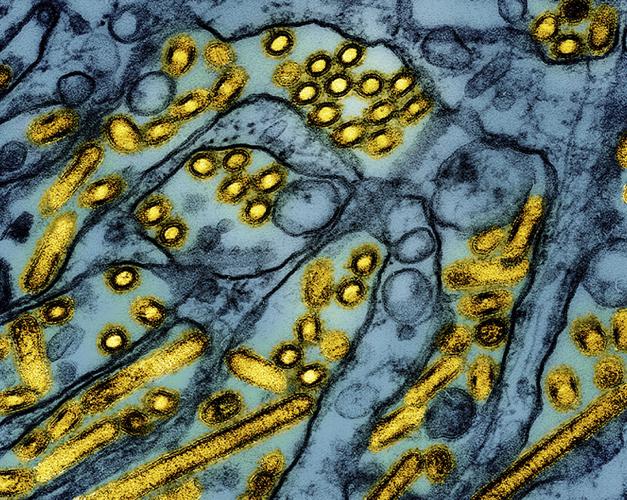
RACINE — Across the country, H5N1 highly pathogenic avian influenza, or avian flu, has spread among animals, affecting farms, zoos and wild birds.
As of Feb. 18, avian flu has affected 12,064 wild birds, 162,586,638 poultry, and 972 dairy herds since 2022.
Lindsey Long, a wildlife veterinarian at the Wisconsin Department of Natural Resources, said the virus was first detected in Wisconsin in 2022, during which it impacted one wild bird and 10,220 poultry.
But the DNR has seen the virus re-emerge this winter.
“It’s important to realize that the CDC estimates the risk to the general public to be low from avian influenza,” said Dr. Darlene Konkle, Wisconsin state veterinarian and administrator at the Department of Agriculture, Trade and Consumer Protection. “We have been dealing with a strain of H5N1 influenza in North America and in other parts of the world now for several years.”
Avian influenza, she said, is affecting wildlife populations, including birds
 |
| Konkle |
According to Konkle, Wisconsin has not seen cases in dairy cattle, but did have three cases in domestic poultry in December 2024.
Although avian flu has been around for years, this year is different, she said.
“(The United States has) seen more cases in domestic poultry earlier in the year than we did at the same time last year,” Konkle said. “The detection in dairy cattle in March of last year was also a detection in a new species. Whenever influenzas are detected in a new species, we pay attention and monitor those viruses really closely.”
In 2022, Long said cases were found in red fox, bobcat, fisher, skunk and otter.
“However, all of these weren’t considered transmitting to each other,” she said. “It’s because they were consuming waterfowl, likely that died from HPAI, so it’s not the same as the dairy cows where they’re transmitting it to each other.”
Though the risk to the general public is low, farms and zoos — including the Racine Zoo — are taking precautions.
Racine Zoo’s Dan Powell, curator of animal care and conservation, said staff had been expecting the virus to die down by now as avian flu usually peaks in the fall and spring.
“Usually, it correlates fairly well to the migration of other birds because they all group together for that migration,” he said. “Just like us, when it gets cold outside, we all huddle together, and then everybody gets the flu because we’re spending more time inside. They’re kind of the same way with their migration.”
With migration, he said, birds leave debris — such as fecal material, urine, food or bodies of birds that died from avian flu — which makes other animals susceptible.
When the virus didn’t die down this year, Powell said zoo staff members reviewed their safety practices.
Staff recently added a foot bath next to bird exhibits to clean their feet before entering.
“If you see the red tail hawk exhibit, there’s a keeper entrance door with a little vestibule, and right inside there, there’s always a foot bath or some booties to be able to put on for extra protection,” Powell said.
Two years ago, the Racine Zoo added tops to as many exhibits as possible so that fecal material from birds can’t fall into the exhibit, “which can be one of the major contributors to spreading the disease,” he said.
The zoo also put nets over the penguin exhibit to keep away ducks and geese, which would sometimes swim with the penguins.
In early February, the Milwaukee County Zoo closed its aviary to protect its birds from avian flu, but Powell said a similar step is not currently in the Racine Zoo’s plan.
“We don’t have an aviary similar to what they have, so we’re a little more spread out,” he said. “As it stands now, we don’t really feel like there’s too awful much that we need to do but definitely understand why Milwaukee made the decision they made.”
According to Konkle, separating species and increasing the distance between any domestic poultry or birds held in captivity from access to wild birds or their droppings is important.
“Each zoo is probably going to be a little different in how they assess their risk — because they’re all set up a little differently — and what they can do to increase their biosecurity and prevent introduction of disease,” she said.
Lately, Powell said, zoos have been focusing on the effects of avian flu on cat species.
“They’re quite susceptible to it, and it’s deadly to them as well,” he said.
Although preventing wild species from entering bird exhibits helps protect the zoo’s birds, avian flu can be introduced through the cats’ food supply.
“I believe the food supply for domestic cats and dogs, particularly the pelleted food, is considered very safe,” Powell said. “I can’t feed pelleted food to a tiger, and we can’t cook it. That makes it so that if it was present, then the virus would still be active.”
According to Powell, the United States Department of Agriculture recommendation for zoos is to feed animals meat that would have been for the human food supply.
The Racine Zoo confirmed with its food supply vendors that they follow the recommended practices.
“Essentially, the beef that we feed the lion or the tigers is the same beef that you would eat at home for your ground beef and that kind of stuff,” Powell said. “It’s just grabbed differently in the process and not as choice of cuts, and then cut differently so that it’s actually got a higher cartilage content.”
Racine Zoo staff also has maintained some of its COVID-19 safety practices, including wearing masks with the cats, primates and some birds, as well as monitoring their own health.
Powell said the zoo pays attention to the prevalence of the disease in Racine County and neighboring counties.
According to the DATCP, 96 birds from a backyard poultry farm were affected by avian flu in December 2024. Prior to December, there had not been a confirmed case in poultry in Racine County since 2022.
“My understanding is that birds that get it actually die really quickly,” he said. “The changes that we were making, or the things that we looked at early on, was in how we deal with found native species. So that instead of pulling those inside the building and then moving to another place for cremation or something like that later on, we just keep those separate.”
On Feb. 14, the DNR announced that laboratory tests confirmed H5 HPAI virus in a wild merganser collected in Milwaukee County.
It also received reports of sick or dead waterfowl, mostly mergansers, along the Lake Michigan shoreline in Milwaukee, Racine and Kenosha counties.
According to the DNR, the reports involved less than 50 birds.
H5 HPAI virus has been detected in Dane, St. Croix, Wood, Brown, Racine and Milwaukee counties since mid-December, with the majority of reports consisting of swans and Canada geese.
This winter, the DNR confirmed that the H5 HPAI virus was found in a Canada goose in Racine County.
Though a virus is more difficult to control when spreading among wild animals, there are response measures that can help keep domestic animals safe, depending on the virus, Konkle said.
For poultry farmers or residents with backyard chickens, Konkle said it’s important to keep the birds away from any wild birds or wild waterfowl and to use clean clothing and equipment when working with birds.
Long said residents, especially those with backyard birds or who come in contact with sick or dead wild waterfowl, should be aware of avian flu.
“In terms of mortality events with wild birds, we’ve still only been seeing a few birds involved in those,” Long said. “However, we know the virus is still circulating and can still be involved in environmental settings.”
Sunday, March 2, 2025
Friday, February 14, 2025
DNR confirms bird flu in duck found on Lake Michigan shore in Milwaukee County
The Department of Natural Resources confirmed highly pathogenic avian influenza, or bird flu, was found in a merganser recovered in early February on the Lake Michigan shoreline in Milwaukee County.
 |
| A hen red-breasted merganser feeds on a crayfish Feb. 9 in the Milwaukee harbor. Paul A. Smith |
A wild duck found in January along the Lake Michigan shore in Milwaukee County tested positive for highly pathogenic avian influenza, or bird flu, according to a Friday announcement by the Department of Natural Resources.
The bird, a red-breasted merganser, was among 21 birds taken in by the Wisconsin Humane Society's Wildlife Rehabilitation Center in Milwaukee between Jan. 2 and Feb. 10.
All were dead or so severely ill they were euthanized, said Mary Landry, WHS wildlife rehabilitator.
Bird flu was suspected in all the birds the center received. The merganser was submitted for confirmatory testing at the U.S. Geological Survey's National Wildlife Health Center in Madison.
The virus, which has circulated in wild and domestic birds in North America since late 2021, has caused the largest loss of poultry in the U.S. in at least 50 years and has killed untold numbers of wild birds.
As of Wednesday the U.S. Department of Agriculture reported 157.7 million poultry have been lost due to HPAI in the current outbreak. The toll on wild birds is much more difficult to estimate; 11,966 wild birds have tested positive for the disease so far, according to a USDA report. Experts say that number is a small fraction of the number of wild birds affected.
In 2022 Sumner Matteson of the DNR and other scientists documented the loss of at least 1,000 Caspian terns to bird flu on islands along the Door Peninsula in northeastern Wisconsin. That same year the virus was documented in dead adult and hatchling bald eagles in southeastern Wisconsin.
Internationally, many thousands of cranes have died during bird flu outbreaks in recent years at sites in Israel and Japan, according to the International Crane Foundation.
In recent regional events in wild birds, bird flu was found in a die-off of hundreds of waterfowl along the Lake Michigan shore in Chicago. From 200 to 300 dead birds, mostly red-breasted mergansers, were reported by observers in Illinois. The Michigan Department of Natural Resources has also reported 300 dead birds, mostly Canada geese, suspected with bird flu in five Michigan counties since Jan. 1.
The disease also has shown effects, but more limited, in wild birds in the Milwaukee area in recent weeks.
Since Jan. 2 the WHS wildlife staff received 21 birds suspected of having bird flu, Landry said. The total included nine red-breasted mergansers, three Canada geese, three Herring gulls, two red-tailed hawks and one each American crow, great-horned howl, mallard and ring-billed gull.
Birds that gather in flocks and breeding colonies are particularly affected by H5N1, as are raptors that scavenge on sick or dead birds infected with the virus.
Ducks, geese, swans, eagles, hawks, pelicans, cranes, gulls and terns are among the types of birds found dead and have tested positive for bird flu during the current outbreak.
The virus has also affected mammals, including dairy cows, domestic cats, red fox, otter, bobcat and fisher in Wisconsin. Human cases of bird flu, including one in Wisconsin, have been documented but the virus poses a low risk to humans, according to the Centers for Disease Control.
The most common type of HPAI seen in wild and domestic birds is H5N1. Sequencing results are pending on samples from the merganser obtained in Milwaukee. Scientists are monitoring the virus for potential changes.
Since mid-December, the DNR said HPAI has been detected in wild birds in six Wisconsin counties: Brown, Dane, Milwaukee, Racine, St. Croix and Wood. The majority of mortality reports have been for waterfowl, including various duck species, tundra and trumpeter swans and Canada geese.
"It is important to remember that avian influenza is still present in Wisconsin, and we are seeing it affect birds in isolated areas around the state," said Jasmine Batten, DNR Wildlife Health Supervisor. "However, this winter's HPAI detections in wild birds have remained relatively low. The best advice we can give is to remain aware and avoid handling wild birds as much as possible."
According to public health officials, the risk to the human health from avian influenza remains low. However health officials recommend people avoid handling sick or dead wildlife and, when possible, prevent their pets from coming into contact with sick or dead wildlife.
If you must touch a dead bird, the DNR recommends you follow guidance provided on the the agency's Avian Influenza webpage. More information on HPAI and public health can be found on the Wisconsin Department of Health Services' Avian Influenza A Virus webpage.
The DNR is interested in groups of five or more sick or dead wild birds. Depending on the specifics of the case, DNR staff will decide whether to collect a sample.
The public can report sick or dead wild birds through the DNR’s Sick or Dead Bird Reporting Form or by contacting the Wildlife Switchboard at DNRWildlifeSwitchboard@wisconsin.gov or 608-267-0866.
More information on avian influenza viruses and the ongoing response to this HPAI strain is available on the DNR’s Avian Influenza webpage. The DNR will continue to update the webpage with any future HPAI findings in wild Wisconsin birds.



 Posts
Posts

