Saturday, August 1, 2026

Racine Zoo says goodbye to Chanbai, its Amur tiger
Milana Doné


RACINE — A tiger at the Racine Zoo died July 26, outliving the average lifespan of her wild counterparts.
Changbai the Amur tiger was born at the Philadelphia Zoo on May 24, 2007, making her 19 at the time of her passing. Wild Amur tigers generally live between 10 and 15 years.
She lived at the Beardsley Zoo in Connecticut and the Columbus Zoo in Ohio before residing in Wisconsin. In Columbus, Changbai was featured in the National Geographic program, "Secrets of the Zoo."
Changbai came to the Racine Zoo in 2023.
According to a news release from the zoo, the carnivore team will remember her strong will, fierce independence, stunning beauty and elegance. She could often be found stalking the staff as they went about their days.
The zoo said Chanbai often would hide and watch keepers work, waiting for them to notice her and offer her favorite snacks. Other times, she took long naps in the sun, regardless of the outside temperatures.
According to the zoo, Chanbai would shred paper catalogs and cardboard boxes into small pieces, especially when they were sprayed with her favorite scent — root beer extract.
Zoo staff tracked Changbai's known medical issues throughout her stay and trained her to participate in her own medical care by presenting her abdomen, teeth, paws and tail, which helped staff maintain her health and detect any issues.
Changbai's health quickly declined early this summer, and she was euthanized July 26 while surrounded by her favorite staff members.

Friday, July 31, 2026
Voters bring data center, AI concerns to Wisconsin governor candidates
Francesca PicaClaudia LevensJaeha JangIsabella Russomanno Milwaukee Journal Sentinel
For a growing number of Wisconsin residents, the data center debate is personal. And that’s what they told candidates for governor face-to-face in Milwaukee July 29.
The five Democratic candidates for governor met at Turner Hall to discuss data centers and artificial intelligence at a town hall hosted by the Milwaukee Journal Sentinel. Presumptive Republican nominee Tom Tiffany was invited but declined to attend.
The primary election is scheduled for Aug. 11.
Following a debate hosted by Journal Sentinel political reporter Jessie Opoien, the candidates heard questions about data center policy and other matters directly from attendees during informal discussions.
Here’s what audience members wanted to know:
Should Wisconsin pause new data center development?
Allison Mally, 22, lives in a small village near Wisconsin Rapids, where a data center proposal surfaced in the spring. Those plans are on hold after the city passed stricter permitting requirements in May.
Meanwhile, some area residents are calling for a moratorium on new data center development – including Mally.
“The Wisconsin River is one of the most important lifebloods in the area because we have the cranberry industry just to the south of us,” Mally said. “Not to mention the possibility of rates going up with the utility and electric bills.”
Mally asked Milwaukee County Executive David Crowley, who opposes a statewide data center moratorium, what he thought about Wisconsin Rapids’ proposal. Crowley said the decision to pause data center development should rest with local municipalities, who can better weigh the risks and benefits of such projects for their residents.
If a local community doesn't want a data center and implements a moratorium, "that's perfect," Crowley said.
Mally still favors a statewide pause proposed by state Rep. Francesca Hong, the front runner.
Aryana Khan, 20, also made the three-hour trip from Wisconsin Rapids with her friend Cloey Hilliker, 23.
Khan has seen the local fervor around data center concerns in her own community. Around 500 people had attended a local town hall event on the proposal in the city, which took place in April days before the city voted on permitting requirements. Khan had volunteered at the event.
How should Wisconsin regulate AI use?
But when Khan approached state Sen. Kelda Roys' table on July 29, she wanted to know her perspective on the use and regulation of AI tools, which data centers serve as the physical infrastructure for.
Khan asked for Roys' thoughts on the “surge in Flock cameras” and other AI surveillance technology that gathers data about peoples’ likenesses.
Roys said surveillance data usage and privacy issues are critical to her campaign, one she wished the candidates had spoken more about during the panel.
Roys said her policy platform includes ways to regulate big tech companies and address everything from bots raising the prices of concert tickets to addictive social media platforms targeting kids to the weaponization of drones to protecting privacy from Flock cameras.
“I didn’t know much about (Roys) before I came here today. But by the end of it, it’s between her and Francesca,” Khan said.
“I think Kelda is focusing on broad legislative and executive actions around data centers. She has her mind on many different aspects. Whereas Francesca laser focused on a moratorium first and foremost.”
Hilliker asked former Lt. Gov. Mandela Barnes about what he’d do to address the negative mental health impacts of AI chatbots, dubbed “AI psychosis.” She also wanted to know how he’d regulate AI use to protect workers vulnerable from large-scale layoffs.
Barnes told them he’d work with state agencies to create rules about AI use that best fit the needs of different industries from health care to agriculture. He also said federal lawmakers have failed to properly address big tech’s negative mental health impacts for years.
Hilliker appreciated Barnes’ willingness to address AI from a public mental health perspective. But she's still leaning toward Hong, who she says is better able to motivate underrepresented and previously disengaged voters.
“I think we’re looking for more of a fight,” she said.
Barnes ended his campaign for governor July 30.
How should Wisconsin manage its power grid?
Logan Owens, 19, works in computing for Northwestern Mutual. He's noticed the increased attention to his field.
“It's kind of odd to watch my job become a core issue in the governor's race,” he said.
Owens wanted to test candidates’ knowledge of the power grid, including how they feel about permitting for new power plants and high-voltage transmission lines. Many of these projects are being built to service large data centers, and Owens worries they could lead to higher electric bills.
Owens said some candidates dodged the more technical aspects of utility-related questions, though he was impressed by Dept. of Administration Secretary Joel Brennan’s grasp of power grid issues. For now, he’s undecided but also likes Hong and Crowley.
“Talking to these people directly and getting to ask my kind of silly, very hyper-specific questions, I don't always expect the greatest answer, but it's just the opportunity to ask that really has value to me,” he said.
Owens said the ability to speak one-on-one with candidates allows him to see what they have to offer beyond canned soundbytes.
“Ultimately, you either see them in attack ads, you see them in ads, or you see them repeating the same slogans,” he said. “And I think it's nice to be able to throw my question in and say, hey, what do you think about high-voltage power lines?”
City seeking public input for renaming the former Cesar Chavez Community Center
Holly Gilvary
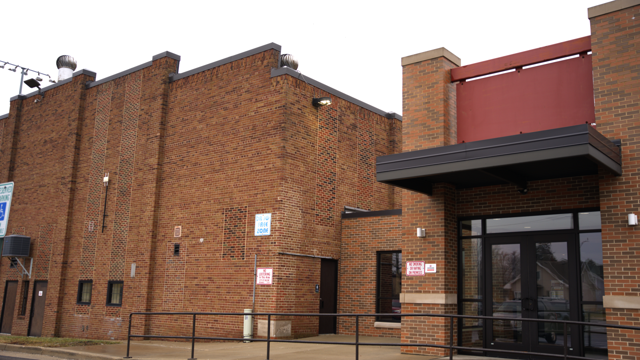
RACINE — Residents are being asked to submit suggestions for renaming the community center at Douglas Park, formerly known as the Cesar Chavez Community Center.
The city has launched of an ad hoc committee to gather public input and recommend a new name for the facility.
Following news released in March that United Farmer Workers co-founder Cesar Chavez had sexually assaulted co-founder Dolores Huerta, as well as other young women in the movement, Racine Mayor Cory Mason proposed that the city change the name of the facility to the Dolores Huerta Community Center.
"After learning about the horrific reports that Cesar Chavez sexually assaulted young women, I believe our community deserves a name that better reflects the values we hold today," Mason said in a news release. "That's why I'm asking residents to help identify a name that honors our community and the people this center serves."
Mason appointed State Assembly Rep. Angelina Cruz, D-Racine, to chair the committee.
Cruz will lead the public engagement process, including accepting name suggestions from residents and recruiting community members interested in serving on the ad hoc committee, according to the city.
Residents can email name suggestions to Rep.Cruz@legis.wisconsin.gov or call 888-534-0062. The deadline for submissions is Sept. 1.
The city is following the same process that was used during the community center's previous renaming by establishing an ad hoc committee to gather public input and develop a recommendation. The committee will review residents' responses and recommend a single name to the Racine Board of Parks, Recreation and Cultural Services.
The PRCS Board will consider the recommendation before forwarding it to the Common Council for final consideration later this fall, according to the city.
The city said it will share additional information about the ad hoc committee and the renaming process as it becomes available.

Thursday, July 30, 2026
Wednesday, July 29, 2026
Tuesday, July 28, 2026
Monday, July 27, 2026
Amid storms, flash flood warning issued for Racine and Kenosha County
Jack AlbrightCaden Perry
The thunderstorms blanketing much of southern Wisconsin have hit Kenosha and Racine, prompting the National Weather Service to issue a flash flood warning in both counties until 3 p.m. Monday, July 27.
Between 2 and 3 inches of rain have already fallen, with another 1-2 inches possible. The additional rain is expected to flood small creeks, streets — including highways — along with low-lying areas.
The National Weather Service recommends residents turn around when encountering flooded roads and not try to drive through them.
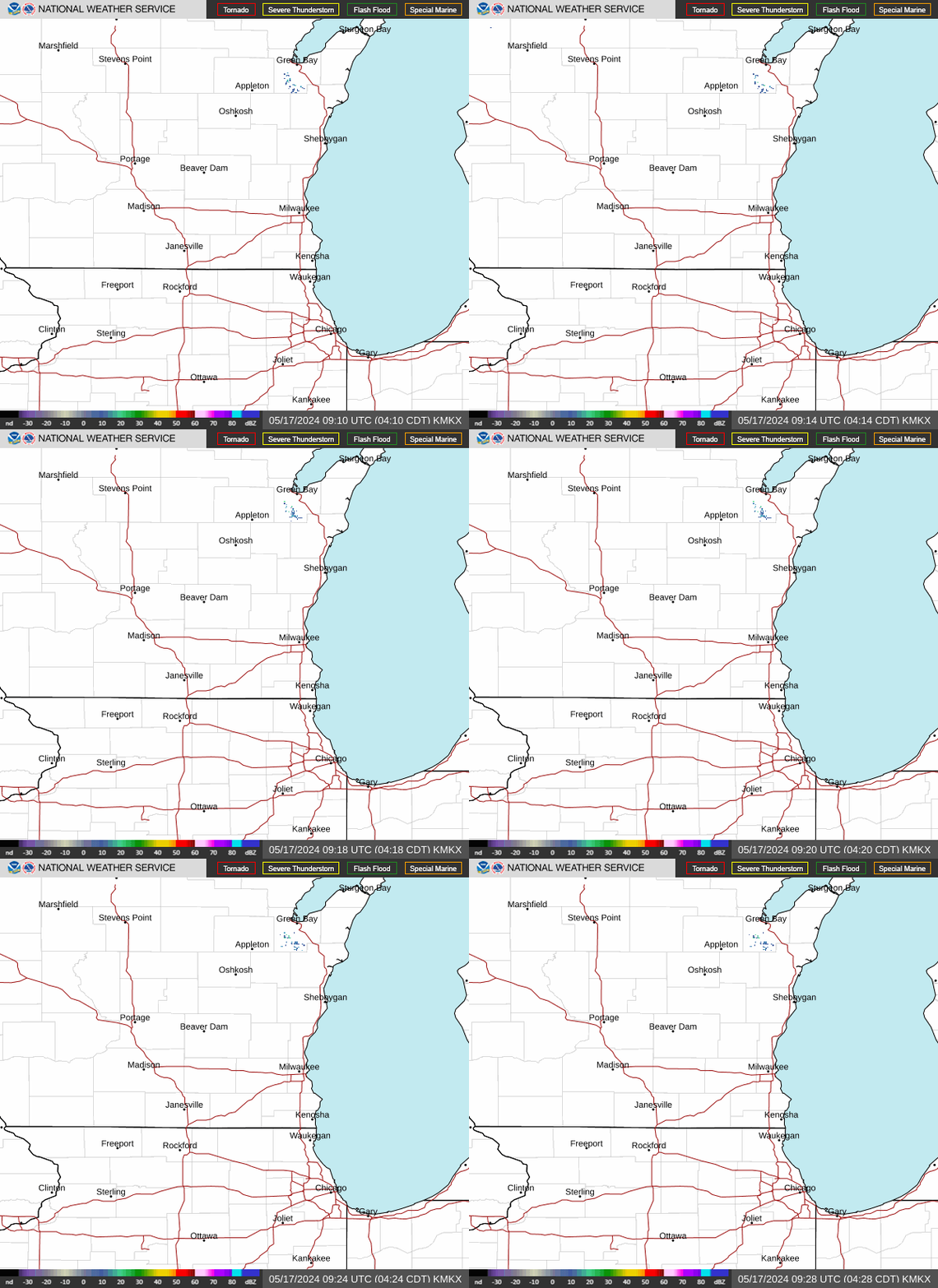
See weather radar for Racine County
What is a flash flood?
A flash flood is a flood caused by heavy or excessive rainfall in a period of 6 hours or less, according to the NWS.
Flash floods are usually characterized by sudden onset torrents that develop after heavy rains. A flash flood can take just minutes to develop and is possible in areas not immediately receiving rain.
What's the difference between a flash flood watch and a flash flood warning?
A flash flood warning is issued when a flash flood is imminent or occurring. If you are in a flood prone area and receive a warning, you should act immediately and move to high ground.
In contrast, the NWS only issues a flash flood watch when flash flooding is possible but not occuring imminently.
What to do during a flood warning
- Evacuate immediately if advised to do so.
- Use a battery-operated radio or television to get the latest emergency information.
- Do not walk through floodwater. It only takes six inches of floodwater to sweep you off your feet if it is moving swiftly.
- Turn around, don't drown; do not drive into a flooded street. Cars can be swept away by two feet of moving water. There may be unseen damage to the road as well. If you come to a flooded area, turn around and go another way. Most flood-related deaths are caused by people driving through water.
- Watch out for fire hazards.
- Move to higher ground.
- Stay alert, turn weather notifications on.
- Do not allow children to play in flowing water. Waters can hide rocks, trees and debris.


 Posts
Posts

