Monday, September 7, 2026

Tuesday, September 1, 2026
Wednesday, August 26, 2026
Sunday, August 23, 2026
Monday, June 29, 2026
Tuesday, June 9, 2026
Racine Zoo mourns loss of 5-year-old African penguin Nelson
Milana Doné
 |
Nelson, an African penguin at the Racine Zoo, passed away June 3 following a terminal illness. |
 |
According to the zoo, Nelson formed more of a bonded relationship with hiskeepers than any of the other penguins. He clung to their shoes and responded to scratches with his own “preening” of the keepers’ fingers.
The zoo said animal care staff recently noticed changes in Nelson’s behavior and appetite that indicated something was wrong.
After exams determined a terminal illness, staff considered quality of life and declining condition. Nelson was euthanized June 3 surrounded by the animal care team, who the zoo said will remember and miss him.
African penguins live along the coast of South Africa and are the only species of penguins that live on the continent.
Their typical lifespan is 15-20 years in the wild and 20-30 years or longer in human care.
From: https://journaltimes.com/news/local/article_a6fdf43b-88e6-4bfe-b2cb-929eec2ba897.html

Recent stories by Racine Journal Times reporter Milana Doné
Friday, June 5, 2026
Milwaukee health officials monitoring 3 who returned from Ebola-affected area
Madeline Heim

Milwaukee health officials are in communication with three people who recently traveled to the city from central Africa, where a fast-growing Ebola outbreak has infected more than 1,000 people.
The travelers are at very low risk of infection and there is currently no danger to the public, Milwaukee Health Commissioner Mike Totoraitis said at a June 3 Board of Health meeting.
Ebola is a virus that causes severe inflammation, tissue damage and internal bleeding. It is spread through direct contact with bodily fluids of an infected person, and has on average a 50% fatality rate.
The current outbreak, caused by a strain of the virus called Bundibugyo, is centered in the Democratic Republic of the Congo, with cases also reported in Uganda. The first case was confirmed in April.
In May, federal agencies in the U.S. put in place screenings and other security measures for people traveling back from countries affected by the outbreak. They are being rerouted to four U.S. airports for additional screening in Virginia, Atlanta, Houston and New York.
Travelers without symptoms receive information about monitoring their health for 21 days after departing the affected areas and continue to their final destinations – as was the case with the three people now in Milwaukee, Totoraitis said.
Health department staff are checking in with the three people multiple times per week, Totoraitis said. None have needed further screening or any medical attention.
The city monitored several people returning from west Africa during the last Ebola outbreak between 2014 and 2016, Totoraitis said.
According to the CDC, there have been 62 confirmed deaths in the Democratic Republic of the Congo due to the virus and one confirmed death in Uganda. Because the Bundibugyo strain is rare, initial surveillance and testing did not pick it up, leading to early uncontrolled spread.
The region is also fighting the outbreak amid active conflict and mistrust of health care and aid workers, according to World Health Organization officials.
The risk to the American public is low.
Madeline Heim covers public health and environmental issues for the Milwaukee Journal Sentinel. Contact her at 920-996-7266 or mheim@usatodayco.com.
Saturday, May 30, 2026
Thursday, May 28, 2026
Tuesday, May 26, 2026
Monday, May 25, 2026
Sunday, May 24, 2026
Sunday, May 10, 2026
Thursday, April 16, 2026
Sunday, April 12, 2026
Tuesday, April 7, 2026
Saturday, April 4, 2026
Tuesday, March 31, 2026
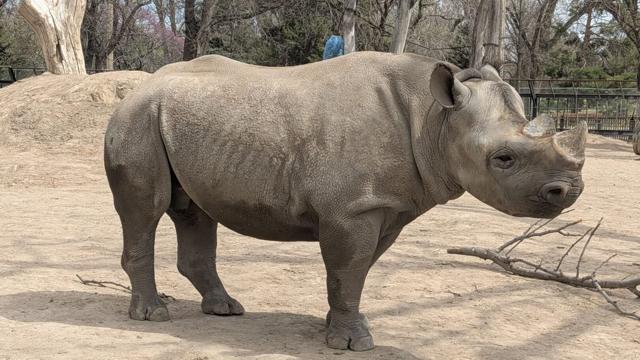
Racine Zoo preparing [to] welcome an Eastern Black Rhino
Holly Gilvary
A South African university launched an anti-poaching campaign on Thursday to inject the horns of rhinos with radioactive isotopes that it said were harmless for the animals but which can be detected by customs agents. (AP Video: Alfonso Nqunjana)
RACINE — The Racine Zoo is preparing to welcome Ayubu, an Eastern Black Rhino male, to its “Land of Giants” area.
Five-year-old Ayubu will make the journey from the Lee Richardson Zoo in Garden City, Kansas, in a few days, according to the Racine Zoo.
After his arrival, Ayubu will be cared for in the Land of Giants rhino barn for quarantine for at least 30 days before he is available to be seen on exhibit. Although the Racine Zoo has exhibited paired rhinos in the past, male Eastern Black Rhinos are often solitary animals who thrive on their own.
Ayubu is being moved based on recommendations from the Associations of Zoos and Aquariums’ Eastern Black Rhinoceros Species Survival Plan.
The Racine Zoo said it has worked closely with Lee Richardson Zoo during the past year to plan Ayubu’s trip. Racine Zoo staff prepped the enclosures this past winter while Lee Richardson staff have worked on his crate training and other behaviors needed to ensure a successful trip.
Eastern Black Rhino males are most noted for their horns, which can weigh more than six pounds and exceed 50 inches in length. The horns are comprised of a protein called keratin, and are sought after by poachers as a “remedy” for various ailments or as a status symbol, according to the Racine Zoo.
Eastern Black Rhinos are critically endangered in their wild range, with numbers dropping from around 70,000 in the 1970s to about 1,650 today.
The AZA’s Eastern Black Rhinoceros Species Survival Plan aims to conserve Eastern Black Rhinos around the world, including by maintaining important genetic diversity within the captive population.



 Posts
Posts

