Wednesday, August 12, 2026

Sunday, June 7, 2026
Monday, April 27, 2026
Wisconsin data center tax break to cost state more than $2 billion
This story was produced and originally published by Wisconsin Watch, a nonprofit, nonpartisan newsroom. It was made possible by donors like you.
Wisconsin is poised to forgo more than $2 billion in sales tax revenue to subsidize hyperscale data centers built by trillion-dollar companies such as Microsoft and Meta.
Data centers were granted a sales tax exemption in the 2023-25 state budget, which was approved by the Republican-controlled Legislature and Democratic Gov. Tony Evers as a way to attract economic development to the state.
That means the $1 billion data center in Beaver Dam, a $20 billion complex in Mount Pleasant and a $15 billion facility in Port Washington don’t have to pay the 5% state sales tax, or local sales taxes, on purchases for constructing and equipping their facilities.
When the budget passed in July 2023, the scale of the data center boom was so uncertain that the nonpartisan Legislative Fiscal Bureau did not estimate how much state revenue would be “forgone” under the exemption, aside from a hypothetical example.
But now a fiscal bureau projection is in:
The state will be out $1.5 billion in forgone state sales tax revenue during construction, which can take years, plus $369 million annually once the facilities are built.
The estimates apply to the hyperscale data centers under construction in Beaver Dam and Port Washington and the facilities under construction or planned in Mount Pleasant. A much smaller Epic project in Verona is also part of the estimate.
It’s unclear whether the data centers would have been built in Wisconsin without the tax incentive.
“Obviously it's a big number, but it’s right to think that this is not really revenue that the state realistically could have ever captured,” said economist Ross Milton, a state government tax expert at the University of Wisconsin-Madison.
“It seems quite likely that if Wisconsin wasn't providing incentives of these kinds, we wouldn't be seeing these data centers being built here.”
Highlighting the fierce competition for development, 38 states offer data center sales tax exemptions or other tax breaks, according to the National Conference of State Legislatures.

Wisconsin offers sales tax exemptions for a wide array of products and services. One of the largest exempts food bought at the grocery store, which reduced state revenue by about $920 million in 2024.
Tricia Braun, executive director of the Wisconsin Data Center Coalition, a business group that supports data center development, pointed out that the fiscal bureau projection does not include economic benefits from data centers, including taxes paid by data center suppliers.
Wisconsin Watch reported in March that just three Wisconsin companies have done more than $1 billion in business supplying data centers.
Jason Stein, president of the Wisconsin Policy Forum, a nonpartisan think tank, said “the state has good possibilities for recovering” the forgone revenue. That could come from spending by construction workers and income taxes paid by those workers, their employers and permanent data center employees, as well as corporate income taxes and utility taxes, he said.
The unexpectedly large amount of forgone revenue has helped fuel efforts for data center regulation.
State Sen. Jodi Habush Sinykin, D-Whitefish Bay, who requested the estimate, said lawmakers should discuss what the state can get in return for the exemption. She said the exemption could be tied to, for example, requirements to protect the environment.
Habush Sinykin wants the Legislature, which Republicans control, to convene what is known as an extraordinary session to discuss a variety of data center bills, rather than waiting until the next regular session in January.
Sen. Romaine Quinn, R-Birchwood, and Rep. Shannon Zimmerman, R-River Falls, introduced legislation in 2023 that led to the exemption and have proposed expanding it. They did not respond to requests for comment.
Their original legislation received more than 200 hours of lobbying support from Microsoft, power companies such as We Energies and Alliant Energy, and business groups. No one registered to lobby against the bill.
Nationally, state data center legislation has shifted from incentives to regulation.
In 2021 and 2022, 44 of the 45 data center bills introduced in states across the U.S. offered tax and economic incentives, according to an analysis released April 22. Since then, many other types of legislation have emerged. In 2026, only 61 of the 262 state data center bills covered incentives. The vast majority dealt with regulation of energy, environment and transparency.
Some states, including Minnesota, have taken steps to restrict or roll back data center sales tax exemptions.
Data center opponent Shawn Haney, a former elected town board member in Dane County, said he understands that Wisconsin created its sales tax exemption to attract economic development. But he thinks it should be modified so that the state can collect some sales tax revenue from data centers.
“I don't think anybody could have forecasted the size and magnitude of these massive data centers,” Haney said.
“You could do some good things with” the revenue, he said, tossing out a few ideas. “Look at all the roads we have to repair.”
Tuesday, April 21, 2026
Monday, April 13, 2026
Cartoon raindrop falls prettily but not accurately
ASK THE WEATHER GUYS | PRECIPITATION
 |
A large raindrop, about one-quarter of an inch across, or about the size of ahouse fly, has terminal fall speeds of about 20 mph. The smallest raindrops fall at about 2 mph. |
Question: What is the shape of raindrops?
Answer: While cartoonists typically draw raindrops like a teardrop or a pear shape, raindrops are not shaped like that.
They are drawn as teardrops to give the image of falling through the atmosphere, which they do. But as they fall, raindrops are flattened and shaped like a hamburger bun by the drag forces of the air they are falling through.
Raindrops are at least 0.5 millimeters or 0.02 inches in diameter. You will not find a raindrop bigger than about one-quarter of an inch in diameter. Larger than that, the drop will break apart into smaller drops because of the air resistance. Precipitation drops smaller than 0.02 inches in diameter are collectively called drizzle, which is often associated with stratus clouds.
The typical speed of a falling raindrop depends on the size of the drop. Gravity pulls everything downward. As an object falls it experiences a frictional drag that counters the downward force of gravity. When the gravity and frictional drag are balanced, we have an equilibrium fall speed that is known as the terminal velocity of the object. The terminal velocity depends on the size, shape and mass of the raindrop and the density of the air. Thus, it is worth talking a bit about the shape and size of raindrops.
A large raindrop, about one-quarter of an inch across or about the size of a house fly, has terminal fall speeds of about 10 meters per second or about 20 mph. That kind of speed can cause compaction and erosion of the soil by the force of impact. Since raindrops come in a variety of sizes, they fall with different speeds. The smallest raindrops fall at about 2 mph. Water droplets smaller than these smallest raindrops (known as cloud liquid water droplets) can resist falling in the atmosphere because there is upward moving air that overcomes the force of gravity and keeps them suspended in the cloud.
Steve Ackerman and Jonathan Martin, professors in the UW-Madison department of atmospheric and oceanic sciences, are guests on WHA radio (970 AM) at noon the last Monday of each month. Send them your questions at stevea@ssec.wisc.edu or jemarti1@wisc.edu.
The terminal velocity depends on the size, shape and mass of the raindrop and the density of the air.
Saturday, April 4, 2026
Friday, January 9, 2026
Wednesday, December 31, 2025
New bill would pave the way for autonomous vehicles on Wisconsin roads
Laura Schulte
MADISON - State legislators are hoping to allow driverless cars on Wisconsin roadways, with proper permitting.
A group of Republican lawmakers circulated a bill for co-sponsorship in December that would allow autonomous cars to hit the roads, and create an oversight body to license the vehicles and ensure safety for other drivers and pedestrians.
According to the co-sponsorship memo, Wisconsin does not allow driverless cars on roadways, though there are pilot programs being run at the University of Wisconsin-Madison and in Racine.
The bill, authored by Reps. Dave Maxey, R-New Berlin, and Nate Gustafson, R-Omro, as well as Sen. Rachel Cabral-Guevara, R-Fox Crossing, would create an Autonomous Driving Safety Board and a permitting process for the vehicles, which would also allow the state to hold public hearings and get the thoughts of other drivers.
The legislation would also establish safeguards for financial responsibility in the case of accidents, and require low alcohol thresholds for any human operators, along with the ability of the board to suspend permits if safety concerns arise.
The state already has an Automated Vehicle External Advisory Committee within the Department of Transportation, which has discovered that driverless cars could be helpful, particularly during inclement weather.
"Economically, the bill seeks to position Wisconsin as a competitive player in the growing autonomous vehicle industry, which could attract investments, create jobs in manufacturing, software development, and logistics, and boost related sectors like supply chain automation," the memo says.
Assembly Speaker Robin Vos said in a Dec. 30 interview that he's open to self-driving cars hitting the roads. He's never tested one, he said, but has heard from friends that "it's fantastic."
"I would rather have a regulated system in Wisconsin, so we know exactly what we're getting," he said. "So if there's a bill that does that, I'm certainly open to it."
Other states have permitted driverless cars on roadways, such as Texas, which allows driverless trucking operations, and California and Nevada, which have been testing Waymo cars, the memo says.

But those states have experienced issues, too.
On Dec. 21, a widespread power outage in San Francisco led Waymo cars to shut down, blocking traffic and angering other drivers, according to the New York Times.
Driverless cars have been spotted making illegal U-turns, while others have struck and killed pets.
But researchers have noted that the driverless cars are involved in fewer car crashes, potentially making roadways safer the more they are deployed.
Researchers with the nonpartisan Badger Institute encouraged lawmakers to take a look at the autonomous car laws in Wisconsin in July, saying that self-driving cars or shuttles could help bridge gaps in infrastructure, especially in rural areas where rideshares or taxis are expensive and hard to access.
"The time is now for officials and lawmakers to consider what self-driving vehicles can do for mobility," the July 2025 report said.
Laura Schulte can be reached at leschulte@jrn.com and on X @SchulteLaura.
Monday, November 17, 2025
Cold air plus warm water equals lake effect snow
ASK THE WEATHER GUYS | THE LAKE EFFECT
Question: What is lake effect snow?
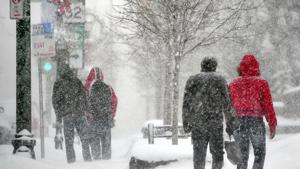
Answer: Lake effect snow forms when cold air passes over the warmer water of a lake. As cold air moves over water, the lower layers are warmed and moistened by the lake below. This makes the air mass unstable. Evaporation increases the moisture content of the air mass, which is then precipitated in the form of snow on the land downwind.
Maximum heat and moisture exchanges occur when the air is cold and the temperature difference between the air and the water is large. This condition tends to occur during early winter, when the most lake effect snow is produced. A long path across warm water by the air mass results in heavy precipitation over the land.
The longer the path, or “fetch,” the more the evaporation will increase along with greater potential for large snowfall amounts over the land on the downwind side of the lake. Hills can amplify the snowfall amounts by providing additional lifting. The location of a snowbelt along a particular lake is a function of the temperature difference between the air mass and the water, the fetch, and the terrain on the leeward side of the lake.
Lake effect snows are good for the economy of a region, particularly ski resorts. They also provide water for reservoirs and rivers. Too much lake effect snow can be hazardous, however; on Oct. 12 and 13, 2006, Buffalo, New York, was blitzed with 22.6 inches of snow in less than 24 hours. Because trees had not yet shed their autumn leaves, the snow weighed them down and broke branches. Nearly 1 million residents lost electrical power at the height of the storm because electrical lines damages by falling trees.
Lake effect snow can bombard a location as long as all the ingredients — cold winds, warm water and a long fetch — are present.
Steve Ackerman and Jonathan Martin, professors in the UW-Madison department of atmospheric and oceanic sciences, are guests on WHA radio (970 AM) at noon the last Monday of each month. Send them your questions at stevea@ssec.wisc.edu or jemarti1@wisc.edu.
Wednesday, September 10, 2025
Thursday, May 8, 2025
SCJ to host AI-focused event Thursday
Caroline Neal

RACINE — SC Johnson is hosting another Community Interest Program, with this week’s event focusing on what AI means for the future.
The presentation is scheduled for 6:30-7:30 p.m. Thursday, May 8, at the Golden Rondelle Theater, 1525 Howe St.
Attendees will gain a better understanding of how to boost creativity, analyze data and stay secure.
The program is a partnership with Badger Talks and PBS Wisconsin and will be recorded by PBS Wisconsin for later broadcast.
Patrick McDaniel, a University of Wisconsin-Madison professor and member of UW-Madison’s Speakers Bureau, will lead the event, which is structured as a presentation, although audience members can engage in the conversation, ask questions and share their experiences.
SC Johnson’s Community Interest Programs are meant to be “thought-provoking, relatable and inspiring,” and the topics are chosen by considering what the company thinks the community will find interesting.
The company said it hopes “attendees leave feeling hopeful for the future and comfortable with AI.”
Sunday, February 16, 2025
Wednesday, December 11, 2024
Kathleen Gallagher: Microsoft's AI lab a powerful opportunity for building regional growth
The moment is right, and resources are aligned to build a global manufacturing AI center of excellence here. The question is whether we’ll seize this opportunity or let it slip away once again.
I was on the Journal Sentinel team that won a 2011 Pulitzer Prize for our story about a Medical College of Wisconsin team that sequenced for the first time ever all of a patient’s genes for diagnosis. Six years later, when our book, "One in a Billion: The Story of Nic Volker and the Dawn of Genomic Medicine" was published, the Medical College hadn’t built on this historical achievement and, in fact, had lost most of the team that worked on it.
There was another chance with TomoTherapy, the company built on UW-Madison medical physicists’ new and better radiation therapy system. TomoTherapy went public in 2007, but was acquired in 2011 by Accuray, a California company whose technology wasn’t as good. That time the team stuck around, but the company left. A different twist on the same story.
Time and time again, we get a foothold in a trending technology, maybe even launch a company, then watch the potential to leverage it into something bigger evaporate.
This time should be different.
Maybe you’re thinking the key to becoming a manufacturing AI powerhouse is Microsoft’s $3.3 billion Racine County data center complex. Nope.
Data centers are server warehouses that support AI, nothing more. And they’re ubiquitous. Iowa, with its cheaper electricity prices, has 56 data centers. It would take a long time to catch up -- and I’m not sure why we’d even want to try.
AI innovation lab at UWM presents a big opportunity
The real opportunity, and the heart of this matter, lies in the Microsoft AI Co-Innovation Lab taking shape at University of Wisconsin-Milwaukee.
At the lab, Microsoft’s AI experts and developers will help manufacturers and supply chain companies design and prototype AI and cloud solutions.
This is Microsoft’s third such lab in the U.S. and seventh in the world -- and the only one focused on manufacturing. It’s set up to help companies automate production processes, better collect and analyze data and find new business opportunities and markets. Imagine the competitive advantage with an AI system that detects a predicted snowstorm along a key route and suggests ordering critical components ahead of schedule.
But remember, we’ve got this habit of failing to build on top of good starts while others move forward.
Without strategically connecting local resources and developing a robust, shared platform, there’s no far-reaching, lasting economic growth. No rising standard of living. No one plus one equals five.
Key local partners have lined up to help fund lab
Some local organizations that should be part of building our manufacturing AI ecosystem are obvious and thankfully they’re involved.
Microsoft and the Green Bay Packers partially fund the lab. Wisconsin Economic Development Corp. (WEDC) is providing $1.1 million: $600,000 for TitletownTech and $500,000 for UWM to build out space in its Connected Systems Institute (CSI).
CSI, which is focused on advanced manufacturing, is headed by Joe Hamman, previously a senior director at Regal Beloit Corp. And here’s a key detail: Rockwell Automation is a founding partner of CSI.
Building momentum requires technology and domain expertise, plus significant collaborative innovation – solo performances won’t get the job done.
Microsoft has technology expertise. And Rockwell, the world’s largest company focused on industrial automation and digital transformation, has the all-critical domain expertise. The two companies last month announced an expanded strategic collaboration that offers manufacturers advanced cloud and AI products to capture critical insights without extensive retrofitting, enable use of natural language prompts for code generation and troubleshooting, and more.
TitletownTech will help recruit companies, projects
Now add TitletownTech, which will recruit companies and help them prepare projects for the AI lab, and you’ve got the magical piece that so often eludes us: the ability to drive more collaborative innovation.
TitletownTech, the $95 million venture firm launched by Microsoft and the Packers in 2019, has built a collaborative network of 27 corporate venture partners, more than half of whom engage with its portfolio companies. They provide feedback, test new ideas, co-develop technology, become pilot customers and/or invest resources and capital. Amerilux International, for example, has worked with three of Titletown’s portfolio companies. Schneider National also has worked with several, and in 2022 led a funding round for ChemDirect. This is new to mainstream Wisconsin venture capital.
And it’s a great way to accelerate development and commercialization to achieve first mover advantage. Microsoft’s AI lab isn’t just a place where companies can work on new technologies; it’s a place where they can connect into a network that helps them evaluate commercialization models, identify early adopters, engage strategic partners, and examine funding options.
Kathryn Clouse, who was senior manager, transformative innovation at Kohler Corp. and senior design engineer at Pierce Manufacturing, will lead Titletown’s work at the lab.
Microsoft’s AI lab won’t be for everyone. Some companies, victims of the “not invented here” syndrome, will continue to over-value internal ideas and dismiss new, outside ideas. Others won’t want to commit to Microsoft Azure as their cloud platform, despite Microsoft’s commanding lead in generative AI.
And many will wrestle with a gnawing question: Who owns the data that comes to the AI lab? Typically, companies own their data unless they sign agreements giving it to the service provider, say for extended hours for analysis or other work.
Microsoft’s AI Co-Innovation Lab and the ecosystem developing around it represent an ambitious undertaking with no guarantee of success. But this is an opportunity to change the narrative from “win-lose” to “win-win.”
If it works, we’ll have a manufacturing AI center of excellence, a model for company engagement with startups that drives later-stage funding, and a shining example of cooperation that improves our state and region’s economic competitiveness and prosperity.
Kathleen Gallagher was a business reporter at the Milwaukee Journal Sentinel and the Milwaukee Sentinel for 23 years. She was one of two reporters on the team that won a 2011 Pulitzer Prize for the One in a Billion series. Gallagher is now executive director of 5 Lakes Institute, a nonprofit working to grow the Great Lakes region's high technology entrepreneurial economy and culture. She can be reached at Kathleen@5lakesinstitute.org.
Friday, October 11, 2024
Tuesday, September 17, 2024
With change in alcohol policy at Badgers football games, have ejections and arrests gone up?
JR Radcliffe
After three games of the 2024 Badgers football season, a change in alcohol policy at Camp Randall Stadium doesn't appear to be radically altering the number of arrests and ejections at the stadium, at least compared to last year.
The university began offering alcohol to general-seating sections for the first time this year, starting with the season opener against Western Michigan. UW has since hosted games against South Dakota and Alabama, the high-profile nonconference game Saturday that ended in Wisconsin's 42-10 defeat.
The first three home games last year at Camp Randall Stadium, which included a buzzy first contest for new head coach Luke Fickell, yielded 85 ejections over the three games (65 UW students), according to regular reports from UW-Madison police. There were 53 arrests at those games, of which 40 were students.
By comparison, this year's games featured a slight uptick in ejections with 93 (74 students) and a downturn in arrests with 39 (35 students). The vast majority of citations and ejections relate to alcohol, including attempting to use a fake ID.
Announced attendance is slightly up this season (75,850 fans per game) for the first three games compared to last year (75,537). The game times were notably different, with last year's games including a 2:30 p.m. start and two 11 a.m. starts, whereas this year's games featured an 8 p.m. kickoff on a Friday night, a 2:35 p.m. start and one 11 a.m. start. The Rutgers game in 2023 took place during Homecoming.
2023 first three home games
- Sept. 2 vs. Buffalo (2:30 p.m. CT): 14 ejections (11 students), six arrests (six students)
- Sept. 16 vs. Georgia Southern (11 a.m.): 29 ejections (21 students), 21 arrests (16 students)
- Oct. 7 vs. Rutgers (11 a.m.): 42 ejections (33 students), 26 arrests (18 students)
- Total 2023 first three games: 85 ejections (65 students), 53 arrests (40 students)
2024 first three home games
- Aug. 30 vs. Western Michigan (8 p.m. CT Friday): 27 ejections (22 students), 10 arrests (seven students)
- Sept. 7 vs. South Dakota (2:30 p.m.): 47 ejections (37 students), 18 arrests (18 students)
- Sept. 14 vs. Alabama (11 a.m.): 19 ejections (15 students), 11 arrests (10 students)
- Total 2024 first three games: 93 ejections (74 students), 39 arrests (35 students)
Monday, August 26, 2024
Racine native LaTrevion Fenderson commits to Greg Gard, Wisconsin men's basketball
Mark Stewart
MADISON – Wisconsin men's basketball coach Greg Gard scored his first commitment for the 2026 class Sunday afternoon.
LaTrevion Fenderson, a 6-foot-4 guard/forward from Racine, announced his commitment to the Badgers on X.
Fenderson attends DME Academy at St. John’s Northwestern in Delafield. He played his sophomore and junior years of high school ball at The Prairie School near Racine and his club ball with Wisconsin Playground.
He averaged 21.7 points, 11.1 rebounds and 2.3 assists for The Prairie School last season. He was a first-team all-conference selection in the Metro Classic and first-team Division 4 all-state by the Wisconsin Basketball Coaches Association.
Wednesday, August 4, 2021
Republican-led committee votes to block UW campuses' COVID-19 requirements; UW-Madison immediately issues mask mandate
MADISON - University of Wisconsin officials who want to ward off a rising COVID-19 caseload now must get permission from the Legislature to implement masking, testing or vaccination requirements, according to a plan Republicans adopted Tuesday.
Within hours, UW-Madison's chancellor tested the issue by imposing a mask requirement without saying whether she would seek the approval of lawmakers.
The Joint Committee for Review of Administrative Rules voted remotely without holding debate on the motion to require legislative approval for COVID policies on campuses. All six Republicans voted for the proposal and all four Democrats voted against it.
Republicans say the vote means the UW System must now get approval from lawmakers before putting in place any COVID rules. Democrats dispute that, saying the system still has the power to act on its own.
UW-Madison Chancellor Rebecca Blank signaled she believed she could act on her own by issuing a campuswide mask mandate soon after the committee vote.
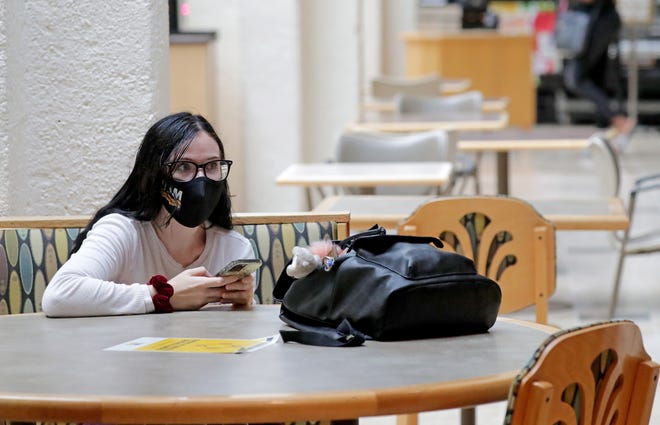
Her order will require people — whether vaccinated or not — to wear masks when they are in campus buildings, in campus buses or riding with others in university vehicles. There are exceptions for when people are eating and drinking, in their dorm rooms or alone in offices. It takes effect Thursday.
"Today’s action feels like a political statement; our focus is to ensure we are doing what needs to be done now to safely open for in-person teaching this fall," UW System spokesman Mark Pitsch said of the committee's vote.
Republican Sen. Steve Nass of Whitewater introduced the motion last week, which directs the UW Board of Regents to issue any current or future systemwide or campus-by-campus COVID-19 requirements as emergency rules, which the committee could block in part or whole.
Monday, September 14, 2020
UW students describe chaos as COVID-19 raged through residence halls, leading to lockdown
Devi Shastri

Students were running to the Walgreens across the street and the nearby Fresh Market, stocking up on food and supplies. They had been told they had just a few hours before they would be isolated in their dorms for two weeks, inciting panic.
"There were people buying gallons of milk, boxes of cereal, tons of food, cases of water, just stocking up for this quarantine," Tamborino said.
Teachers started emailing her to say deadlines on homework assignments were being pushed back. Students were told if they left the dorms after the 10 p.m. lockdown, they would not be allowed back in.
And all of this was unfolding on Wednesday, one week to the day after classes started.
UW-Madison officials sent out information about when meals would be delivered and promised medical care, mental health support and strict enforcement of restrictions on gatherings.
"We know you want to be here and we hope this necessary step will help us achieve the goal of remaining on campus all year," said a message to students in Sellery and Witte halls.
Watching the chaos, Tamborino knew one thing: She did not want to be here.



 Posts
Posts

