1
Patricia J. Hanson, District Attorney
Office of the District Attorney
730 Wisconsin Avenue
Racine, WI 53403
262-636-3172
fax: 262-636-3346
September 18, 2019
Chief Matthew Soens
Mt. Pleasant Police Department
8811 Campus Drive
Mt Pleasant, WI 53406
RE: Racine Police Department Case 19-26477
Officer Involved Death involving Sergeant Giese
Dear Chief Soens,
When there is a use of deadly force by a police officer, Wis. Stat. sec. 175.47(5) requires that the District Attorney review the incident and determine whether a privilege under Wisconsin Law applies. If the use of deadly force was privileged, no charges are filed. If it was not privileged, a decision should be made to charge the officer criminally.
Wis. Stat. sec. 175.47(5)(a) The investigators conducting the investigation under sub. (3) (a) shall, in an expeditious manner, provide a complete report to the district attorney of the county in which the officer-involved death occurred.
(b) If the district attorney determines there is no basis to prosecute the law enforcement officer involved in the officer-involved death, the investigators conducting the investigation under sub. (3) (a) shall release the report, except that the investigators shall, before releasing the report, delete any information that would not be subject to disclosure pursuant to a request under s. 19.35 (1) (a).
The privilege to use force is governed by legal standards set forth in the 4th Amendment and subsequent case law from the United States Supreme Court. That case law has been adopted by Wisconsin at Wis. Stat. sec. 939.45 (2017-2018).
§939.45 Privilege
“The fact that an actor’s conduct is privileged, although otherwise criminal, is a defense to prosecution for any crime based on that
2
conduct. The defense of privilege can be claimed under any of the following circumstances:
1. When the actor’s conduct occurs under circumstances of coercion or necessity so as to be privileged under §939.46 or §939.47; or
2. When the actor’s conduct is in defense of persons or property under any of the circumstances described in §939.48 or §939.49; or
3. When the actor’s conduct is in good faith and is an apparently authorized and reasonable fulfillment of any duties of a public office; or
4. When the actor’s conduct is a reasonable accomplishment of a lawful arrest.”
5. (sic) Parental Privilege
6. When for any other reason the actor’s conduct is privileged by the statutory or common law of this state.
It is within these legal standards that I will examine the facts presented to me in this case to determine if on June 15, 2019, Sergeant Giese’s conduct was a privileged use of force under one of the reasons outlined above, or whether it was not privileged and Sergeant Giese should be charged with a crime.
STATEMENT OF FACTS
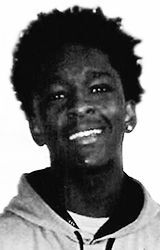
On June 15, 2019, Tyrese West was fatally wounded after resisting arrest while armed with a handgun, by Mt. Pleasant Police Officer Sergeant Giese. Eric Giese, after a failed attempt to stop Mr. West on a bicycle.
On the evening of June 14, 2019, Mr. West went to Kenosha for a party and while there, had contact with police. At approximately 8:00 pm, Mr. West and several other young people were in a car that had been reported as stolen from Racine when Kenosha Police located and tried to stop the car. A short pursuit followed and the occupants of the car fled on foot. Four people were located and one, the driver was arrested. The driver was identified as BRS.
On July 17, 2019, Inv. Klinkhammer and Inv. Kupper, both from the Racine Police Department, interviewed BRS. BRS stated that Mr. West was his “brother”. He stated that he and three other individuals were in the car that was stopped by Kenosha Police. He stated that they had picked Mr. West up on Marquette Street in Racine at the
3
basketball court. BRS stated that they went to Kenosha for a party at a girl’s house on 14th Street. BRS stated that when the police car got behind them in Kenosha, there was a chase. When the car stopped, they all got out and ran. BRS and three young men from the car were stopped at the scene, but Mr. West was not. BRS saw Mr. West run away in the opposite direction from everyone else and assumed he went to his Aunt’s house in Kenosha, based on his direction of travel. BRS stated that shortly after he was apprehended, he was sitting in the back of a police car and saw Mr. West riding Northbound, away from the scene of the traffic stop of the stolen car, on a bicycle. BRS was asked if he saw Mr. West with a gun that night and he said “if he would have had a gun, he would have told me. If he had a gun, he would not pull it on police.” BRS did not believe anyone in the car had a gun because some of them were on probation. BRS thought that if Mr. West had a gun, he would have run and tried to throw it if stopped by police.
Mr. West was captured running away on video surveillance from a business in Kenosha.
Sergeant Giese. Giese Interview
While on patrol on June 15, 2019, at approximately 1:30 am, Sergeant Giese was approximately 300 yards from Highway 32 and Racine Street when he observed a bike
4
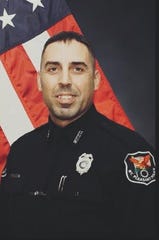
operating northbound on the East sidewalk of Racine Street. He could not see who the operator of the bike was when he first saw it, but could tell that the bike was operating without lights, as required after darkness. Additionally, Sergeant Giese was aware that since school had ended for the summer, Mt. Pleasant was experiencing problems with vehicle break-ins and quality of life issues. Sergeant Giese was operating a fully marked Mt. Pleasant Police Department (MPPD) SUV and wearing a full MPPD uniform.
As Sergeant Giese made the turn Northbound onto Racine Street, he could see the bike Northbound on the sidewalk. He activated his emergency lights and rolled down both of the passenger side windows on his squad. He moved to the curb lane to make contact with the bicycle rider. Sergeant Giese then observed the rider was a black male wearing dark clothing. Sergeant Giese believed he initially said “Hey, stop!”. The operator, later identified as Mr. West, picked up speed and continued Northbound. Mr. West made no eye contact with Sergeant Giese or the squad, and in no way acknowledged the officer. Sergeant Giese notified dispatch that he was attempting to stop a bike, but that the operator was not stopping.
After dispatch was called, Sergeant Giese again tried to make voice contact with Mr. West, and believed he said “Stop, or I am going to send my dog”. Sergeant Giese is currently a K-9 officer and he had his dog with him that night. Sergeant Giese advised that the threat of the dog was a ruse to try and get Mr. West to stop. Under the circumstances, Sergeant Giese did not believe that there was legal authority to use the dog for this kind of stop. Mr. West continued to ride on, not acknowledging Sergeant Giese in any way, and sped up again.
5
Sergeant Giese reports that the two have now reached 25th Street. Mr. West leaves the sidewalk and rides into the street, turning Eastbound on 25th Street. Sergeant Giese believed, that based on the actions of Mr. West, that Mr. West was going to continue on and either flee from Sergeant Giese on the bike, or on foot, to avoid the stop. To prevent this from happening, as Mr. West’s conduct had made Sergeant Giese more suspicious that there was potentially some kind of criminal conduct associated with Mr. West, he pulled his squad ahead of Mr. West, turning in front of Mr. West in an attempt to block his path. The emergency lights were still activated on the squad.
As Sergeant Giese stopped, Mr. West hit the brakes on the bike and stopped several feet west of the squad. Mr. West dropped the bike, turned, and began to run in a westbound direction on 25th Street, away from Sergeant Giese. Sergeant Giese got out of the squad he was in and again yelled, “Stop, police!”. Sergeant Giese estimates that Mr. West was 40 feet in front of him when he began to pursue him. While Sergeant Giese is running, he attempts to make radio contact with dispatch, however, he had just been issued a new radio from MPPD and did not have a lapel microphone for the new radio. Sergeant Giese is accustomed to wearing the lapel microphone, but in this situation, he was forced to remove the radio from his duty belt and keep it in his hand to activate the talk button to communicate with dispatch.
Sergeant Giese recalled running Westbound and gaining ground on Mr. West as he pursued him. Mr. West continued into Racine Street before heading South on the West side of the street and then onto the grass covered, undeveloped area, on the West side of Racine Street. When Sergeant Giese believed he had gotten within 20 feet of Mr. West, he withdrew his Taser from his duty belt with his right hand and activated it for use. His radio was still in his left hand. Sergeant Giese aimed the Taser at Mr. West and deployed it, but the prongs did not make contact with Mr. West.
As Sergeant Giese hears the “pop” of the Taser, Mr. West gives what Sergeant Giese described as a target glance back at him. Sergeant Giese goes on to describe that a target glance allows a suspect to become aware of an officer’s position. As Mr. West looks back, he began to lose his footing. Sergeant Giese then sees Mr. West reaching with both hands to the left waistband of his pants. Sergeant Giese has seen this maneuver many times, and based in his training and experience, now becomes
6
concerned that Mr. West is reaching for a gun. Sergeant Giese throws his Taser and now draws his duty weapon. Sergeant Giese states that based on his belief that Mr. West was armed with a gun and after seeing what he believed was a the target glance, he was afraid that Mr. West knew his position and may have been preparing to fire on him.
Sergeant Giese saw Mr. West continue to stumble with his hands near his left front waistband area then saw what he believed was Mr. West making a two-handed, underhand throwing motion, in a westbound direction. Sergeant Giese did not see what Mr. West had in his hands, but heard a distinct metallic sound on the 8’ high, chain link fence, they were running next to. Three feet from the fence on the ground, Sergeant Giese can now see a handgun. He then sees Mr. West fall to his stomach and knees and land with his hands out in front of him. Mr. West’s left hand is 1-3 inches from where the handgun landed. This area is well lit, due to being directly in the area of a flood light on the building behind the fence. The area is wide open. There are no breaks in the fence or buildings to obstruct vision. There is also no place in that area to provide cover for Sergeant Giese from an armed subject.
Sergeant Giese has caught up and is now standing above Mr. West. Based on the proximity of the gun on the ground to Mr. West’s hand, Sergeant Giese uses his left foot to step on Mr. West’s hand to prevent him from grabbing the gun. Sergeant Giese is now straddling Mr. West’s body while using his weight to keep Mr. West from reaching for the gun and trying to maintain his own balance. Sergeant Giese describes Mr. West as immediately attempting to push up underneath him, between his legs.
7
As Sergeant Giese is straddling Mr. West on the ground, he still has his radio in his left hand and his gun in his right hand. He is trying to call for additional squads. With both hands full, Sergeant Giese could not utilize any of the additional tools he carried on his utility belt to end the situation. Sergeant Giese was asked if he could have kicked the gun away from where he was with Mr. West, but he stated that he could not have kicked the gun away as he feared he might lose his balance allowing Mr. West to overpower him and get to the gun on the ground first.
Sergeant Giese during this time, is giving loud commands to Mr. West, saying things similar to “Don’t move!”, some of which can be heard on his radio transmissions. Sergeant Giese states that Mr. West continued to attempt to pull his left hand, the one closest to the gun, from underneath his boot, and continued to attempt to push up to a position that would cause Sergeant Giese to lose his balance. Sergeant Giese increases to a stronger level of verbal command, ordering Mr. West, “Don’t reach for the gun! I’m going to shoot you!” These additional commands have no effect on Mr. West as he continues to try to free his hand and push himself up, a maneuver that would lead to overturning Sergeant Giese. Sergeant Giese believes this went on for 10-12 seconds. Based on his training and experience, Sergeant Giese knows that if Mr. West is able to get his hand free and obtain the firearm, due to their close proximity, Mr. West will be able to fire the handgun at him.
Sergeant Giese describes then how Mr. West is finally able to push up to his knees and gain his balance, and that Mr. West is then able to pull his left hand free from under Sergeant Giese’s boot. Mr. West now has access to the gun and Sergeant Giese makes the decision to put space between them and that he must now use deadly force. Sergeant Giese pivots on his left foot to change his position and create space between himself and Mr. West. Sergeant Giese’s goal is to make it more difficult for Mr. West to shoot and kill him as he has the advantage of time from the ground. Sergeant Giese refers to his training in his interview and says he knew he needed to act vs. react to protect himself. Once Sergeant Giese pivots and is set, he estimates he is 3’ from Mr. West. He then fired three rounds and stopped firing to assess the situation. Immediately after firing the three rounds, he saw Mr. West slumped to the ground. Sergeant Giese maintained cover over Mr. West, but believed he was no longer able to reach for the gun. Sergeant Giese
8
then began calling in to dispatch, advising them of the situation and calling for rescue. Sergeant Giese described the situation as the most intense and stressful situation of his life. Sergeant Giese was later taken to the Racine Police Department and his duty weapon was turned over to investigators. His weapon was missing three rounds.
Autopsy
The autopsy was conducted at the Milwaukee County Medical Examiner’s Office on June 17, 2019. Mr. West suffered from two fatal gunshot wounds to the head, both of which entered the left side of his forehead. The trajectories of both were front to back and downward. One came to rest in his left cheek, and one came to rest in the tissue of the anterior neck. From this evidence, it was clear that Mr. West looked upward from where he was on his hands and feet, towards Sergeant Giese.
The third wound was a perforating gunshot wound of the left shoulder and chest. The trajectory of this wound entered the left shoulder, exited the left shoulder, then entered the left chest and exited again through the left chest. This wound was left to right and downward. The bullet entered and exited the chest area, on the front of Mr. West as it travelled. The wounds were superficial and were not the cause of death. There were no injuries to Mr. West’s back.
Toxicology was examined and the only substance in Mr. West’s blood was tetrahydrocannabinol, or marijuana.
Physical Evidence
The physical evidence in this case available to me that was relevant was the weapon found at the scene, body camera from Officer C.S. of the MPPD, photos taken after the shooting, and dispatch transmissions.
9
There are no relevant squad recordings. Sergeant Giese was using a reserve squad as his was being repaired. The reserve squad was equipped with a video recorder, however, because it was not connected to MPPD’s current squad video system, the video on the drive of the camera had not been uploaded in a very long time and there was no memory available at the time of this incident. The squad video might have shown the beginning of the bicycle stop, but based on how the squad was ultimately parked, this recording device would not have captured the shooting of Mr. West. Had the squad camera been working, it would not have provided relevant information regarding Sergeant Giese’s use of force.
Sergeant Giese was wearing a body camera on his chest at the time of this incident, however, he failed to activate the device to begin the recording so it was not working during any part of this incident. MPPD policy does not require that the body worn camera be activated for every encounter by police with citizens.
30.2.0 GENERAL PROVISION (MT. PLEASANT POLICE DEPARTMENT POLICY MANUAL)
1. The Mt. Pleasant Police Department will provide Officers with portable video equipment. Officers are encouraged to check out a Portable Video Equipment when available.
2. Mt. Pleasant Police Department Supervisors will oversee the proper use of Portable Video Equipment.
3. Unauthorized use, duplication, and/or distribution of Portable Video Recording files are prohibited and shall remain property of Mt. Pleasant Police Department.
4. Personnel shall not remove, dismantle or tamper with any hardware/software component or part of the Portable Video Recording Equipment.
5. All involved officers shall activate their camera prior to making contact in any of the following incidents, when safe and practical:
a. Probation & Parole search
b. Service of a search or arrest warrant
c. Before / during any other incident at their discretion.
6. Once activated, the recording shall not be intentionally terminated until the conclusion of the encounter. The encounter is not concluded until the Officer physically leaves the scene.
10
7. Officers shall not use any Portable Video or Audio Recording Equipment recording functions to record any conversations of or between another member/employee/officer, except when on a call for service.
Sergeant Giese was questioned about why he did not activate his body camera and whether or not it was intentional. Sergeant Giese explained per the MPPD body camera policy the body camera is not a required equipment item, but officers are encouraged to use the body camera on any arrest incident. Sergeant Giese stated he regularly utilizes a body camera while on patrol. Sergeant Giese explained the body camera must be manually activated by sliding a switch on the top/front of the unit to activate it. The unit is not activated with the squad car’s light system or in any other way. Sergeant Giese has used the body camera several times in the past and activated it during several recent incidents. Sergeant Giese explained that he has had other recent instances when the body camera has not properly activated or did not properly record, for various reasons.
Sergeant Giese believed he was not able to manually activate his body camera due to him watching Mr. West’s location, beginning his foot pursuit, and attempting to make contact with dispatch on his portable radio. Sergeant Giese explained he was recently issued a new portable police radio and did not yet have a lapel microphone, which is his normal radio equipment. Due to not having the lapel microphone, Sergeant Giese had to remove his portable radio from his duty belt and activate the talk button. Sergeant Giese explained that as he was attempting to make radio contact during the foot pursuit, but he was unsure if his transmissions were going through, due to not having the lapel microphone.
Sergeant Giese’s body camera was sent to the Division of Criminal Investigations tech unit to be certain that the camera had not recorded any information, however, no video from this incident was recovered.
There is no question that a body camera recording would have been helpful to an analysis of this case and given a more definitive picture of the events that occurred on June 15, 2019, however, the lack of body camera recording does not automatically indicate an inappropriate use of force. In light of the other evidence recovered, I can find
11
no indication that the failure to start the body camera in this incident was intentional or done for any other nefarious purposes.
Found on the scene when processed were three shell casings belonging to Sergeant Giese and an SCCY CPX-2, 9mm semiautomatic handgun. The SCCY CPS-2 handgun was the weapon carried by Mr. West. It was originally purchased by a woman who resides in Milwaukee. The purchaser was interviewed and reported the gun had been taken from her home three years prior to police speaking to her. She also said she had no ties to anyone in Racine County.
Testing was completed on the gun, searching for DNA to prove possession. Ultimately, multiple DNA profiles were located on the gun, but there were too many DNA profiles mixed together that they could not extract a single sample that could be defined and matched to any one person.
12
The dispatch transmissions help to paint the picture of what was happening and give things a time frame. From the time that Sergeant Giese calls out that he is going to stop Mr. West on the bike, until the time shots are fired, 95 seconds elapses. Sergeant Giese’s voice starts out calm, escalates during the foot pursuit, and is frantic when he is calling out that shots are fired and rescue is needed. This incident escalated and occurred very quickly, and was indicative of an officer who was reacting to events as they were unfolding. In the next 30 seconds of the dispatch transmission, Sergeant Giese is calling out additional information to dispatch and you can hear in his voice that he is out of breath
13
and has been under stress. These recordings corroborate the order of events as
described by Sergeant Giese.
Redacted Dispatch 0000_0245.mp3
Officer C.S from the MPPD was the first officer to arrive on scene to assist
Sergeant Giese. The body camera from Officer C.S. shows the original position of Mr.
West in proximity to the weapon on the ground. The body camera also records some
statements made by Sergeant Giese about his perceptions about what had happened.
Those statements that night, spontaneously made in the presence of other officers, were
consistent with the statements he gave several days later when being interviewed by
Racine Police Department investigators.
Redacted Smith BWC.wmv
Last, the photos taken the night of the shooting and the morning after, show the
places where the parties, the bike, the handgun, and other physical evidence was located.
The Wisconsin State Patrol was called to the scene and mapped the area providing
measurements. The bike was 287 feet from where Mr. West came to rest.
Sergeant Giese’s Background
Sergeant Giese. Giese was hired by the MPPD in October of 2006. Prior to his
employment with the MPPD, Sergeant Giese served 22 years in the Army National Guard
and 4 years active Marine Corps.
Sergeant Giese attended the Wisconsin Basic Recruit Police Training Academy in
2007, after being hired by the Mount Pleasant Police Department. Sergeant Giese spent
the majority of his career as a patrolman with an approximate 10 month temporary
assignment as an investigator. Sergeant Giese was promoted to the rank of Sergeant on
01/01/2018, assigned to third shift, and currently holds this assignment. Sergeant Giese
has not been the subject of an officer involved shooting in the past.
14
Sergeant Giese holds several Wisconsin Law Enforcement Training Instructor certifications including:
Taser instructor as of 03/16/2010.
Firearms instructor as of 03/19/2012.
Defensive and Arrest Tactics (DAAT) as of 09/09/2013.
EVOC Driving instructor as of 09/09/2013.
Tactical Response instructor as of 06/29/2014.
Law Enforcement Basic instructor as of 12/01/2014.
Law Enforcement Scenario instructor as of 02/20/2018.
The above-mentioned training was documented in Sergeant Giese’s training records file at the MPPD. Sergeant Giese is one of approximately ten trainers at the MPPD and has been instructing in-service training and shift level training for approximately nine years. After completing the State of Wisconsin Law Enforcement Training Standards DAAT training at Gateway Technical College, Kenosha, WI. Sergeant Giese instructs DAAT for MPPD approximately one time a year. Sergeant Giese instructs live fire range periods for MPPD approximately five times a year. Sergeant Giese maintains his State of Wisconsin certifications by regularly attending Instructor Updates and submitting his training records to the State of Wisconsin Law Enforcement Training Standards board. Sergeant Giese is also employed by Gateway Technical College as a Law Enforcement Instructor. Sergeant Giese has worked for Gateway since 2011, and instructs for the basic recruit academy approximately thirty days a year. Sergeant Giese instructs for firearms, scenarios, DAAT, EVOC, and tactical response as part of the recruit training.
Mr. West’s Background
Mr. West was 18 years of age at the time of his death. The last information available to me was that he was a student at the Turning Point Academy, but there are no records to indicate that he graduated. It is believed that he was employed at McDonald’s at the time of his death, but this is based only on a newspaper report and has not been verified. Mr. West had a juvenile delinquency history and was a convicted felon at the time of his death. Mr. West was prohibited from possessing a firearm. For
15
purposes of this review, I am considering prior police contacts Mr. West had that involve fleeing from the police and/or weapons, as this specific kind of prior conduct is what I must consider when trying to make a determination about what his intentions with respect to the gun he was carrying might have been the night of this encounter.
11/5/14 – Mr. West brings a pellet gun to McKinley Middle School.
12/8/15 – Racine Police Department receives a call that Mr. West is armed with a firearm.
5/3/16 – Racine Police Department has an encounter with Mr. West where he flees from a uniformed officer.
10/17/16 - Racine Police Department has an encounter with Mr. West where he flees from a uniformed officer.
7/18/17 – Mr. West is a passenger in a car that is involved in a drive by shooting between rival gangs in Racine.
8/10/18 – Runs from a Racine Police Department officer and then physically resists arrest. The officer in this incident is standing over Mr. West while he is on the ground on his hands and knees and Mr. West refuses his commands to lie on the ground and be still.
5/15/19 – Mr. West is convicted of Operating a Vehicle Without the owner’s Consent. He was placed on 2 years of probation
6/3/19 – A home in the City of Racine is burglarized. Stolen from the home is a pair of Air Jordan sneakers, a computer, and a Denali Cobra .380 semi-automatic handgun. Fingerprints are found at the point of entry of the home and were later found to be those of Mr. West.
16
Legality of the Traffic Stop
There was adequate reason for Sergeant Giese to execute a stop of Mr. West. Wisconsin Statutes make it illegal to operate a bicycle at night without a headlamp. The bicycle Mr. West was operating did not have a headlamp.
347.489 Lamps and other equipment on bicycles and other vehicles and devices.
(1) No person may operate a bicycle, motor bicycle, personal delivery device, electric scooter, or electric personal assistive mobility device upon a highway, sidewalk, bicycle lane, or bicycle way during hours of darkness unless the bicycle, motor bicycle, personal delivery device, electric scooter, or electric personal assistive mobility device is equipped with or, with respect to a bicycle or motor bicycle, the operator is wearing, a lamp emitting a white light visible from a distance of at least 500 feet to the front of the bicycle, motor bicycle, personal delivery device, electric scooter, or electric personal assistive mobility device. A bicycle, motor bicycle, personal delivery device, electric scooter, or electric personal assistive mobility device shall also be equipped with a red reflector that has a diameter of at least 2 inches of surface area or, with respect to an electric scooter or an electric personal assistive mobility device, that is a strip of reflective tape that has at least 2 square inches of surface area, on the rear so mounted and maintained as to be visible from all distances from 50 to 500 feet to the rear when directly in front of lawful upper beams of headlamps on a motor vehicle. A lamp emitting a steady or flashing red light visible from a distance of 500 feet to the rear may be used in lieu of the red reflector.
Records from the District Attorney’s office show that in January of 2019, Sergeant Giese, among others, responded to the call of a hit and run homicide for a young man on
17
a bicycle without a light who was struck at night on Sheridan Road and killed. This is an area near where this incident occurred that ended with dire consequences. This is a legitimate stop for the purpose of community safety.
What happened after Mr. West failed to comply with Sergeant Giese’s attempt to execute a stop of his bicycle, had little to do with the bicycle light, and was entirely about Mr. West’s resisting arrest while being armed with a firearm.
USE OF FORCE AND OFFICER TRAINING
In Wisconsin, every new police officer must go through the same training at an approved police academy. The Wisconsin Department of Justice develops and approves the curriculum for these academies via the Wisconsin Law Enforcement Standards Board.
Defensive and Arrest Tactics (DAAT) is a training used Nationally and in Wisconsin to instruct officers on how to protect suspects, themselves, and others by encouraging voluntary compliance with lawful commands. The first paragraphs of the training manual describe the purpose of the method.
As a law enforcement officer, you will come in contact with people in a wide variety of contexts. Some encounters are much like ordinary social or business contacts. In some situations, however, your duties may require you to exert control over people by giving them orders, directing their movement, or even taking them into custody. Your goal always is to get subjects to comply voluntarily. If they do, you will have achieved your objective without making the encounter unnecessarily adversarial and without any risk of injury to officer or subject.
Unfortunately, even the best efforts of the most skilled officer to gain voluntary compliance do not always work. Sometimes you will have to use physical force to achieve control and accomplish your legitimate law enforcement objective. In Defensive and Arrest Tactics (DAAT), you will learn when and how to use physical force to control people. DAAT techniques are psychomotor skills, which mean that they involve both the brain and the muscles. For that reason, you will spend much of your time in DAAT actually practicing the techniques—learning the skills first in isolation, and then eventually applying them in simulations. But before you learn how to use force, you must learn when it is appropriate to use force.
Defensive and Arrest Tactics: A Training Guide for Law Enforcement Officers. Wisconsin Department of Justice Law Enforcement Standards Board, June 2017, Page 1.
18
The DAAT Training Manual teaches intervention options for Law Enforcement Officers who are involving themselves in a lawful stop or arrest. They are divided into five modes, each reflecting the need for an increased level of force to gain control. Although the intervention options are divided into five modes, an officer can begin with any mode and move from one mode to any other mode as appropriate—intervention options are not necessarily a sequential progression. Officers are authorized to use the amount and level of force that is reasonably necessary to control a subject. If dialog—talking with a person—is enough to control him or her, then an Officer need not use more force. On the other hand, some situations may be so extreme that an Officer needs to use deadly force. The five modes each serve a different purpose and include different tactics and techniques. DAAT Training Manual at Page 13:
1. Presence
The first mode, Presence, reflects the fact that sometimes all that is needed to control a situation is the presence of an officer. The purpose of this mode is to "present a visible display of authority."
2. Dialogue
The second mode, Dialogue, covers the range of tactical communication from very low-level questioning to very directive commands. The purpose of dialogue is to persuade subjects to comply with an officer's lawful directives.
3. Control Alternatives
The third mode, Control Alternatives, includes a wide range of tactics and tools for controlling subjects. These are divided into four groups: escort holds, compliance holds, control devices, and passive countermeasures. This mode includes both empty-hand techniques such as applying an escort hold or directing a subject to the ground and tools such as Oleoresin Capsicum (OC) spray, commonly called “pepper spray,” and electronic control devices (ECDs) also known as Tasers. The common thread is that all these tactics and tools are used to control subjects who are resisting or threatening to resist.
4. Protective Alternatives
The fourth mode, Protective Alternatives, include tactics and tools to protect an officer while also overcoming continuing resistance. The tactics include focused strikes that temporarily disrupt a subject’s ability to continue to resist or assault, a diffused strike that can cause an immediate—though temporary—cessation of a subject’s violent behavior and the use of baton strikes to impede a subject. The difference between Protective Alternatives and the Control Alternatives category just discussed is that with Protective Alternatives the purpose is not only to control the subject, but also to protect the officer.
5. Deadly Force
19
The fifth mode, Deadly Force, represents the highest level of force available to law enforcement officers.
There are five key rules for use of force, DAAT Training Manual at Page 11:
1. The purpose for use of force is to gain control in pursuit of a legitimate law enforcement objective. If verbalization is effective in gaining control, it is always preferable to physical force.
2. You may initially use the level and degree of force that is reasonably necessary to achieve control. You need not escalate step-by-step through the intervention options.
3. At any time, if the level of force you are using is not effective to gain control, you may disengage and/or escalate to a higher level of force. This involves transitioning to a different level of force or different tactics based on the totality of circumstances.
4. Once you have gained control of a subject, you must reduce the level of force to that needed to maintain control.
5. You must always maintain a position of advantage.
Use of Force in Close Combat With a Subject Down on the Ground
The critical question in this case is whether the use of deadly force was necessary with a suspect who was on the ground, under these facts and circumstances. It is clear to me that there was a legal basis for Sergeant Giese to stop Mr. West. It is clear that Mr. West obstructed Sergeant Giese’s efforts by failing to follow commands and fleeing. It is clear that Mr. West resisted arrest. It is clear that Sergeant Giese appropriately followed the force continuum that is trained to law enforcement officers around the state. It is clear that Mr. West was armed with a loaded handgun that he did not abandon his weapon when he had opportunities to do so. What was not clear to me as a lay person, is why was there a need for Sergeant Giese to protect himself with deadly force while Mr. West was on the ground under him. For the answer to this question, I felt it necessary to turn to experts in the area of what has come to be known as Force Science, and scientific research for answers. The Racine County Sheriff’s Office has deputies who have been through Dr. William Lewinski’s Force Science School. In this case, I consulted with two
20
of them to help me understand and apply the concepts of action vs. reaction and the Force Science studies and principals.
The closer one is to an adversary, the less time you have to act, and before you can begin to counter a suspect’s act, you must perceive the act, identify the need to react and decide to react. This interval, during which your brain is receiving and processing information, is called the reactionary gap. For most people, the reactionary gap is at least ½ to ¾ of a second, and often much longer. If you are only reacting to another person’s action you can never catch up. This is more commonly known as action vs. reaction. 1
Dr. William Lewinski is a leading behavioral scientist whose work has focused on the intensive study of human dynamics involved in high stress, life-threatening encounters. Dr. Lewinski’s research has impacted law enforcement officers and agencies worldwide and has revolutionized the way force investigations and training are conducted. He is the director of The Force Science Institute. Force Science is the research and application of unbiased scientific principles and processes to determine the true nature of human behavior in high stress and deadly force encounters. The Institute is dedicated to promoting the value of knowledge through empirical research in behavioral science and human dynamics. The Force Science Institute develops and disseminates high quality scientifically grounded education, training, and consultation to support fact-based investigations, inform decision processes, enhance public safety, and improve peace officer performance in critical situations.
In 2016, Dr. Lewinski and his team conducted a research study to try to determine the speed in which a prone subject can pull up and fire a weapon.2 The study focused on people in a prone position with his hands underneath him and the speed with which a gun in their hidden hands could be fired, relative to an officer’s ability to react and use deadly force to protect himself. Each participant’s initial area of body movement and time to weapon discharge was recorded. Results suggest that participants can fire a weapon from the initial movement of any body part to discharge in a little over half a second (M =
1 Tobin, E.J. and M.L. Fackler, "Officer Decision Time in Firing a Handgun" Wound Ballistics Review, Vol. 5, No. 2 (2001)
2 Lewinski, William & O'Neill, Dawn & Redmann, Christa & Gonin, Madeleine & Sargent, Scott & Dysterheft Robb, Jen & Thiem, Patricia. (2016). The Speed of a Prone Subject. Law Enforcement Executive Forum. 16. 10.19151/LEEF.2016.1601f.
21
0.61 s), and the time from first object sighting (noting something was in the hands) to discharge was approximately one-third of a second (M = 0.36 s). Repeated measures analysis indicated that the fastest shooting times occurred in the chest up position. Given the data from previous researchers on reaction time and decision making, it is anticipated that an officer will take anywhere from 0.37 to over 0.56 s to perceive a threat and initiate a reaction (Lewinski et al., 2013, 2014). As demonstrated by the results of this study, a prone subject is likely able to move and fire before the officer would even be able to initiate movement.
In this case, Sergeant Giese and Mr. West were in a close combat situation. Mr. West’s hands were not underneath his body, and his left hand was 1-3 inches from the weapon lying out on the ground, making his reaction time potentially faster than the Lewinski study samples. Mr. West was also in a chest up position, based on the entry wounds and the direction of travel of the projectiles from Sergeant Giese’s gun, again making his ability to very quickly fire his weapon even faster.
Sergeant Giese was in a compromised position in terms of his balance, standing over Mr. West who was moving below him. Sergeant Giese was also disadvantaged in that he was reacting to Mr. West’s actions, right up until the moment of the shooting. Mr. West had multiple opportunities to throw his weapon away from himself or drop it on the ground and eliminate the weapon as a factor in the encounter, but he did not. Even while struggling with the Sergeant Giese, Mr. West continued to reach for the gun. This made Sergeant Giese’s belief that Mr. West retained the gun in order to use it, a reasonable one. It was clear from Sergeant Giese’s interview, that he was aware of the action vs. reaction principles and that he was at a disadvantage even though he was standing over the top of Mr. West who remained within inches of his gun. The area where this occurred was out in the open, leaving no place for Sergeant Giese to disengage from Mr. West and find a place of safety to protect himself. Sergeant Giese had to stay with the struggle to protect himself.
Summary
First and foremost, my job in this case is to search for the truth with the evidence that was made available to me. In addition to interviews and the gathering of physical
22
evidence by the Racine Police Department with the assistance of the Wisconsin Division of Criminal Investigations, Special Investigations Bureau, I relied on the reports and information from various experts in this case. The Medical Examiner, a DNA Analyst, and two Force Science trained deputies all helped with their specific areas of expertise. After a review of all of these facts, and based on what the law requires me to consider, it is my opinion that Sergeant Giese’s actions in this case fall under the privilege of self-defense under Wisconsin Statutes §939.45.
The need for self-defense in this case arose in a matter of seconds. When Mr. West made the decision, whatever his motivation, for him to flee from Sergeant Giese, his choice escalated this situation. It is clear that Mr. West made it a habit to flee when confronted with police, however minor or serious the situation. On this night, Mr. West had multiple reasons to run. He had just run from the stop of a stolen vehicle in Kenosha, he had recently been put on community supervision with the Department of Corrections, and he was carrying a loaded handgun. Had he complied here, this case would have had consequences for him, but a far less serious outcome.
In addition, his choice to possess the handgun, changed the dynamics of what occurred and made his encounter with Sergeant Giese more dangerous for them both. It is Important to note, that it is my opinion, that the gun was of some importance to Mr. West. It appears as though he was intent on possessing it. Due to his recent felony conviction and community supervision, Mr. West would have been facing felony Possession of a Firearm by a Felon charges and possible revocation for being in possession of a firearm. As soon as he became aware that there was a police officer interested in him, he had ample time to dispose of the weapon to prevent getting caught with it. Mr. West could have thrown the gun while pedaling Northbound on Racine Street. He could have thrown the gun when he got off of his bike at 25th Street. He could have thrown the gun while he was running nearly 100 yards away from Sergeant Giese, back down Racine Street. All of these missed opportunities lead me to believe that Mr. West had no intention of separating himself from the weapon.
Sergeant Giese reported that Mr. West continued to reach for the weapon, despite being given commands to lay down and stop reaching for the gun. Mr. West made a choice not to comply with the lawful commands of a police officer, his actions put Sergeant
23
Giese at a disadvantage that he could not overcome by other means. Mr. West’s movement while under Sergeant Giese, interfered with Sergeant Giese’s balance and ability to handle this situation with alternate means. Sergeant Giese was trained and tried to use less lethal force, that did not work. Sergeant Giese was trained to disengage if possible and seek cover, that was not possible. Ultimately, the use of lethal force was the only alternative he had left to exercise. These are factors that I cannot ignore when evaluating Sergeant Giese’s response.
For these reasons, no charges will be filed against Sergeant Giese in this case. My deepest sympathies go out to the West and Person families for their loss, but legally and ethically, this is the decision I must come to in this case.
Dated this 18th day of September, 2019.
Patricia J. Hanson
Racine County District Attorney









 Posts
Posts

