Friday, April 3, 2020

Behold the First Erect Penis Ever Found Preserved in Amber


Researchers working in Burma have uncovered the fossilized remains of a 99-million-year old male daddy longlegs with its penis fully extended and erect. It’s possibly the oldest—and longest held—erection in the history of science.
What a way to go. This daddy longlegs, also known as a harvestman, died with its proverbial pants down. Its penis was still extended to half its body length. Unlike their spider and scorpion cousins who use modified legs to transfer sperm, daddy longlegs sport penises. Apparently very long penises.
When it died, this ancient creature was clearly in a state of arousal, and possibly in the vicinity of a female. How it went from a potential union to paleontological posterity is anyone’s guess. Perhaps it fell into oozing resin amid all the sexual excitment. Alternately, the male daddy longlegs may have accidentally fallen into some tree resin as it was going about its daily business, and as it was struggling, its blood pressure rose, forcing its penis to squeeze out accidentally.

Regardless, the beautifully preserved specimen is providing paleontologists with a remarkable opportunity to study this poorly understood animal—and its penis.
“This is the first record of a male copulatory organ of this nature preserved in amber and is of special importance due to the age of the deposit,” write the researchers in their study, which now appears in the Science of Nature. “The penis has a slender, distally flattened truncus, a spatulate heart-shaped glans and a short distal stylus, twisted at the tip.”
In fact, the penis is so unique that the specimen has been slotted into its own family of arachnids and now bears the name Halitherses grimaldii. These animals have been around for more than 400 million years, and they’re notoriously difficult to differentiate. But this particular animal’s penis—its characteristic heart-shaped head and twirled tip—shows it’s different than any other species.
Embarassing for the harvestman, cool for science.

Jimmy Kimmel’s Quarantine Monologue – Alcohol Sales Spike, Trump is #1 & O.J. on the Tiger King

Face-to-face meetings are off for now, but the fellowship of Alcoholics Anonymous continues on Zoom and other platforms

From JSOnline:

Anonymous

The Alcoholics Anonymous Big Book lays out the 12 steps that people in AA follow in recovery. (Photo: Liz Dufour)

Alcoholics Anonymous meetings simply don’t get canceled, not during a snowstorm or a heatwave or on holidays like Christmas or Thanksgiving (in fact the holidays are when an AA meeting may be most needed).
But the coronavirus pandemic did what nothing else could: It led to the abrupt cancelation of thousands of AA meetings in Wisconsin and across the country and world.
Having been a part of this fellowship for more than 13 years, I couldn’t quite believe it when a fellow AA member texted to say the church where we meet once a week was closed and our meeting with it. As I sit here today, it makes perfect sense, but when I first saw that text, a couple of weeks ago, it seemed unthinkable.
I panicked. How would I survive?
But I soon realized I was selling us short. As a group, it’s been noted, alcoholics are often over-achievers. And resourceful. If nothing else, we are determined. When not channeled for good, some of us have wound up in gutters, sometimes quite literally. We find ways to get what we want — whether it’s drugs or alcohol or something positive.
Knowing that our sobriety — and our lives — depended on the fellowship, we pivoted when this crisis arose. Immediately.
What followed with our group and many like it was truly inspiring: AA groups quickly launched virtual meetings on apps like Zoom. One of the meetings I attend got it together so swiftly that we didn’t miss a week.
I was thrilled but a little skeptical. On that first night as I waited for the Zoom room to fill, I wondered how well we could relate over screens. But as the familiar faces appeared, one after the other, I experienced a great comfort, seeing the folks I have become so accustomed to sitting with every week. The talk was deep and powerful.

"Knowing that our sobriety — and our lives — depended on the fellowship . . ."  I stopped going to AA meetings after 11 years.  I've been sober for nearly 27 years now.  Meetings are not crucial to sobriety, nor does the Big Book state so.

Todd Snider - Conservative Christian, Right Wing, Republican, Straight, White, American Male

Mini Truckin fueled by Kid Rock

Open Blog - Friday


Happy happy.

Thursday, April 2, 2020

Wisconsin Democrats apoplectic over governor's handling of Tuesday primary

Paid volunteers on Tuesday help sort absentee ballots by ward to be opened on election day in Brookfield, Wis.

Wisconsin Gov. Tony Evers’ refusal to push for a delay of his state’s Tuesday primary has infuriated fellow Democrats in the state, who are now openly accusing him of failing to prevent an impending train wreck.
As the nation hurtles toward 5,000 coronavirus deaths and governors across the country take extreme steps to keep people at home, Wisconsin is forging ahead with the election despite having its own stay-at-home order. The likely outcome is that Wisconsinites will wake up on election day being told to stay put at the same time they're greenlighted to head to crowded polling sites.

Other Democrats in the state say the conflicting signals will disenfranchise voters. Already, the sanctity of the vote has been called into question by snafus with early voting: In Milwaukee, some voting sites were closed for a period of the designated voting before being reopened.

“There’s this enormous conflict between what we need to do in a democracy in the midst of a pandemic. You can’t have a stay-at-home order but then tell millions of people to go stand in line and congregate near one another across the state,” said Racine Mayor Cory Mason. "Having an election in the middle of a stay-at-home order makes no sense. It did not have to be this way.”

The intraparty conflict in Wisconsin is a bad look in a state that's central to the party's hopes of beating President Donald Trump in November. It also doesn’t bode well for a unified message in the run-up to the Democratic convention in Milwaukee, an event that was just pushed back a month to August.

While Democrats across Wisconsin have called for postponing the election, pointing to health concerns and the inability to staff polling sites, Evers has cited his limited authority to impose a delay against Republican resistance in the Legislature.

Evers has advocated that residents vote by mail and called on lawmakers to ease up on election day requirements to allow more flexibility on when ballots could be turned in and counted.

Read more: https://www.politico.com/news/2020/04/02/tony-evers-wisconsin-democrats-primary-election-161423

1 cow, 2 muskies, 3 badgers and other Wisconsin ways to measure social distance

From JSOnline:

, Milwaukee Journal Sentinel

Crowds get fresh air and exercise near Veterans Park on Lake Michigan in Milwaukee on Wednesday, the first full day after Gov. Tony Evers issued a stay at home order to stop the spread of the coronavirus. People were taking advantage temperatures in the 50s. (Photo: Mike De Sisti, Milwaukee Journal Sentinel)
Judging from my few journeys outside my home the past few weeks, many people aren’t eyeballing it very well. 
For some context: Many sidewalks in Milwaukee are 5 feet wide. So if you’re passing someone, and you're both still on concrete, you’re not 6 feet apart. 
If you and a friend can reach out and touch each other’s hands, you’re not 6 feet apart — unless you’re an Antetokounmpo. Even then, you shouldn't be touching hands anyway.
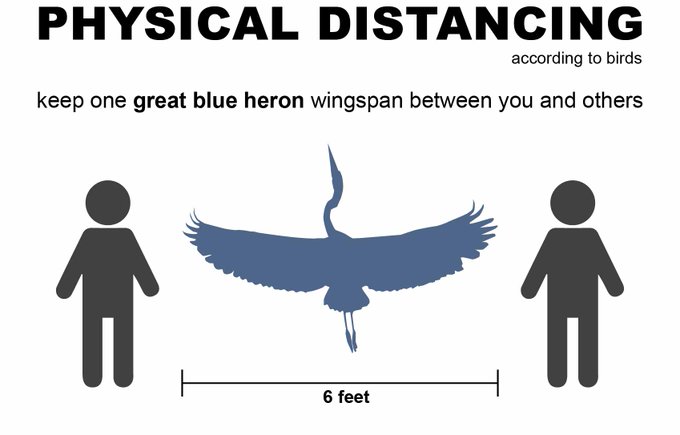
Social media is here to help you estimate social distance.  
The University of Wisconsin-Madison reminds you to keep one cow — or two calves — between you and other people. 
The university’s social media accounts reposted a graphic from an Instagram user, benzandbougie, of a cow standing between two people to illustrate six feet of social distance. 
If you’re more familiar with birds, consider keeping one great blue heron’s wingspan between you and other people, according to a tweet from Milwaukee’s Urban Ecology Center.  
Here are some other Wisconsin ways to measure 6 feet of social distance: 

1 Christian Yelich slide 

1 fallen Italian Sausage 

2 muskies  

3 badgers 

4.5 kegs standing upright 

5 cheeseheads 

5 kringles 

12 brats

Contact Chelsey Lewis at clewis@journalsentinel.com. Follow her on Twitter at @chelseylew and @TravelMJS and Facebook at Journal Sentinel Travel.
From: https://www.jsonline.com/story/life/2020/04/02/social-distance-wisconsin-measure/5111767002/

Trump tells CNBC he spoke to Putin, MBS and expects Saudis, Russia to announce 10 million barrel cut

Social Security recipients won’t need to file taxes to get stimulus check

Treasury Secretary Steve MnuchinAP

Treasury Secretary Steven Mnuchin said Social Security recipients won’t have to file a tax return to receive a coronavirus stimulus check.
“Social Security recipients who are not typically required to file a tax return do not need to take an action, and will receive their payment directly to their bank account,” Mnuchin said in a statement released Wednesday.
People who receive Social Security benefits and are eligible will receive the $1,200 payment, “as a direct deposit or by paper check, just as they would normally receive their benefits.”
The about-face comes after a group of Democratic senators sent a letter to Mnuchin asking him to change the guidelines included in the rescue plan passed by Congress last week, which say people who weren’t required to file returns for 2018 or 2019 would have to file a return to get a payment.
They said it would place a “significant burden” on seniors who collect Social Security benefits and are not typically required to file a tax return.
The coronavirus rescue bill will provide $1,200 checks to individual adults making less than $75,000 a year and $2,400 to married couples who file jointly and earn less than $150,000.

'We'd like to get this into patients as soon as possible': Researchers in Pittsburgh have developed a potential coronavirus vaccine

From JSOnline:

, Milwaukee Journal Sentinel


A potential vaccine for COVID-19 has been developed and tested successfully in mice, researchers at University of Pittsburgh School of Medicine reported Thursday.
The announcement, more than three months into a pandemic that has killed 50,000 people and sickened almost 1 million, presents an urgent challenge to government regulators, who must weigh just how much to speed up the vaccine approval process.
Vaccines often take years to receive approval from the U.S. Food and Drug Administration. Yet on March 16 the first four healthy volunteers in Seattle received a different potential COVID-19 vaccine, made by a company called Moderna and administered in a small clinical trial at Kaiser Permanente Washington Health Research Institute.
While the vaccine being tested in Seattle uses a new, faster but untested technology, the one developed in Pittsburgh employs the same technique used in flu shots. The vaccine uses lab-made viral protein to build a person's immunity to the virus. 
The scientists in Pittsburgh hope they won't be far behind the Seattle researchers in getting their vaccine into trials. Tests in mice found that the vaccine developed by the team in Pittsburgh spurred a wave of virus-fighting antibodies within two weeks. 
"We'd like to get this into patients as soon as possible," said Andrea Gambotto, associate professor of surgery at the University of Pittsburgh School of Medicine and co-author of a paper announcing the vaccine in the journal EBioMedicine. 
"We would like to think a month, give or take. Maybe two months. We just started the process," said co-author Louis D. Falo Jr., professor and chairman of the Department of Dermatology at the University of Pittsburgh. Their paper represents work by 11 other scientists, including two from Erasmus Medical Center in Rotterdam, the Netherlands. 
The potential COVID-19 vaccine follows up on research Gambotto and Falo did back in December 2003 when they were poised to proceed to clinical trials with a vaccine for another coronavirus, Severe Acute Respiratory Syndrome. At the time, the journal Nature reported, "SARS vaccines speed toward clinic." 
But the outbreak had already waned. The World Health Organization declared SARS contained in July 2003.
Funding for the SARS vaccine vanished.
"SARS CoV-2 is teaching us that it is important to react and (follow) all the way through," Gambotto said. "Yes, it was a mistake not to test the vaccine back then."
Other scientists have suggested that a vaccine for one coronavirus would likely have offered at least some protection from all of them.
The two researchers also previously developed a vaccine to treat Arabian camels for another coronavirus, Middle East Respiratory Syndrome (MERS). Like SARS and COVID-19, MERS jumped from animals to people, infecting almost 2,500 and killing just under 860 since its discovery in 2012. 
Gambotto said they adapted techniques they had developed previously for coronaviruses to create one specifically designed for the virus that causes COVID-19; the process of translating their work for use on COVID-19 took the scientists just 10 to 12 days.   
Gambotto and Falo said their potential COVID-19 vaccine would be delivered to the upper arm, but would not require a shot from a needle as the flu vaccine does.
Instead, the scientists have developed a finger-tip sized patch that contains 400 tiny needles, each just half of one millimeter. The two scientists compared the patch to a Band-Aid and said it would feel a lot like having Velcro pressed against the skin.
The needles, made from sugar and protein pieces, would penetrate the upper level of skin, absorb moisture from the skin and release molecules. The molecules would prompt the immune system to make antibodies that attack the virus.
The Pittsburgh researchers touted two advantages to the vaccine they call PittCoVacc.
Most important, the vaccine does not have to be frozen when stored or transported; it can sit at room temperature. That would make the vaccine much cheaper to deliver to poorer countries.
While the researchers could not say exactly how much a dose of the vaccine will cost, they estimated that the patch of needles used to deliver the vaccine would likely cost less than $10 a patch.
Also, the technique employing the tiny needles, releases a highly concentrated, much smaller amount of viral protein. The scientists said a single person would be able to make hundreds of vaccine patches a day.
The vaccine was developed without using the live virus that causes COVID-19. Scientists used DNA molecules made in the lab.
When released from the patch the vaccine, exploits the crucial part of the virus that latches onto human cells, the Spike protein.
The virus' Spike protein usually acts like a key opening up human cells and allowing the virus to invade. The vaccine acts a little like gum in a lock, preventing the key from working and keeping the virus from entering human cells.
Early in the pandemic health officials took pains to stress that a vaccine would probably take 18 months to develop, test and ready for human use. Whether or not the first vaccines will take that long to reach people is not known.
In the meantime, scientists have been working furiously to develop two possible treatment methods: the use of plasma from recovered COVID-19 patients; and use of drugs that have been found safe already for use in people, such as the anti-malarial drug chloroquine.

Hospitals have already begun using survivor plasma on a compassionate, experimental basis.
From: https://www.jsonline.com/story/news/2020/04/02/researchers-pittsburgh-have-developed-potential-coronavirus-vaccine/5107907002/

Jimmy Kimmel’s Quarantine Monologue – April Fools’ Day Pranks & What’s Left at the Grocery Store

Don Lemon says Trump is gaslighting you and rolls the tape

Cuomo to Dr. Gupta: You were right about this Covid-19 symptom

Coronavirus: How we broke the 'pandemic playbook' story


Read more: https://www.politico.com/news/2020/04/02/coronavirus-governors-2024-election-160125

Engineer Arrested For Derailing Train Near USNS Mercy, Claimed Ship Part Of 'Government Takeover'

10 Craziest Escape Plans In History

Open Blog - Thursday


Seize the Thursday.

Wednesday, April 1, 2020

Jackson Browne - Somebody's Baby (Fast Times At Ridgemont High) (1982)

Tavern lobby asks lawmakers to allow bars to deliver alcohol to homes during coronavirus shutdown

From JSOnline:

, Milwaukee Journal Sentinel


MADISON - One of the state's most powerful lobbying groups is asking lawmakers to allow bars and restaurants to deliver alcohol to people staying in their homes under Gov. Tony Evers order to stay inside. 
It's one of a dozen requests the Tavern League of Wisconsin is putting to lawmakers as they draft relief packages with Evers for the state suffering economic losses as the coronavirus outbreak forces people to stay put and closes scores of businesses. 
"Taverns and restaurants in Wisconsin will have been closed to regular business for 38 days after the current Executive Order expires," Tavern League President Chris Marsicano, who owns The Village Supper Club in Delavan, said in a Tuesday letter to lawmakers. "Without the additional help of state government the hospitality industry will suffer significant permanent loss."

"One of the state's most powerful lobbying groups . . ."  You know the Tavern League.  They're the guys who keep lobbying the state legislature to NOT increase the penalties for drunk driving in Wisconsin.  Their primary product is a corrosive, addictive substance that destroys families and lives.  As they kill people, they claim to be in the "hospitality industry."  In reality, they are in the alcoholism industry.  Party on, Tavern League!

Racine checking early-voters' temperatures, taking other safety precautions

From CBS 58:


RACINE, Wis. (CBS 58) -- The City of Racine is encouraging all voters to vote absentee.

Registered Racine voters can vote absentee through the mail, but if they want to do it in person they can vote at City Hall, where the city is taking several steps to ensure voter health and safety.

Early voters are being greeted by health care workers who will take the voters’ temperature and ask them about symptoms before allowing them inside to vote.

The Mayor of Racine says if they determine the voter has a fever or symptom, the resident can still vote curbside from their car.

It’s just an extra level of protection that our public health administrator thought would help make sure that we’re not admitting people in City Hall that might have symptoms already,” Mayor Cory Mason said.

Racine City Clerk Tara Coolidge says all of Racine’s city employees are also checking their temperature daily.

If admitted inside to vote, squares on the floor are used for social distancing and the City Clerk says they also have a full-time cleaning staff making their rounds of the building.

City Hall is open for in person, early absentee voting weekdays until Friday, April 3 from 8 a.m. - 5 p.m. and Saturday April 4 from 11 a.m. - 3 p.m.

The biggest election challenge Mayor Mason says the city is facing is getting people to work the polls on April 7.

The mayor says at minimum they need 135 people to run an election and right now the City Clerk says they still need about 60-75 more people.

Workers will get $135 for the day.

To be a poll worker in Racine you must live in the county. Lunch and dinner are provided. The city is encouraging high school students over the age of 16, college students, teachers, and bartenders and services workers out of work to apply.

Applications can be found here. You can also email clerks@cityofracine.org or call/text 262-822-9692 and let them know you are interested in applying.