Showing posts with label Delta-8. Show all posts

Friday, April 10, 2026

Is driving with hemp or THC legal in Wisconsin? OWI rules to know

From JSOnline:

Gina Lee Castro
Milwaukee Journal Sentinel

Hemp and its many intoxicating products have been legal in Wisconsin for eight years. But driving around with hemp products could still put you in hot water with the law, said Milwaukee attorney Andrew Mishlove.

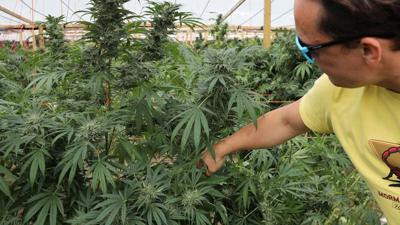
Hemp looks and smells identical to marijuana, and both come from the Cannabis sativa L plant. But hemp is legal – for now – and marijuana is not.

When hemp users drive with these products in their cars, a police traffic stop can spiral into citations or even jail time, said Mishlove, who specializes in defending people charged with operating while intoxicated.

“It’s a mess,” he said. “Hemp is legal. Wisconsin law hasn’t caught up with that reality at all.” 

 Here's what we learned about why hemp can still put Wisconsin drivers at risk of an OWI.

Is it legal to drive with hemp in my car in Wisconsin? 

Yes, but it’s a risk, Mishlove said. 

If police officers catch a whiff of weed from a car or see it in the car, they can easily gain probable cause to make an arrest for possession of a controlled substance or begin an investigation into operating while intoxicated, Mishlove said. 

Overall, state law doesn't say much about driving with hemp. Wisconsin doesn’t have an open container law for hemp the way it does for alcohol, Mishlove said. Nor is there a limit on how much hemp an individual can possess, or any laws on how drivers can lawfully transport hemp. 

In contrast, in Illinois, where cannabis is legal, the product must be sealed in a child proof container and inaccessible to the driver.   

Is it illegal to drive with hemp in my system in Wisconsin?

Yes. Wisconsin law does not allow drivers to have any THC in their blood. Any amount above one nanogram per milliliter is considered evidence of operating while intoxicated.

Although hemp is restricted to trace amounts of THC - the component in cannabis that makes users feel high - some products contain THC in amounts comparable to states where marijuana is legal.

In fact, a recent Milwaukee Journal Sentinel investigation found that many hemp products in Wisconsin contain THC above the federal legal limit, with consumers none the wiser. Some gummies and drinks below the federal legal limit still packed over 10 milligrams of THC per serving.

In addition, some hemp products contain a compound known as delta‑8 THC that is so similar to traditional THC that it appears chemically indistinguishable in blood testing, Mishlove said.

The THC blood test has been criticized by some scientists and lawmakers who say the limits are arbitrary and do not necessarily constitute impaired driving.

How does law enforcement determine impairment?  

The Wisconsin State Laboratory of Hygiene conducts blood testing for law enforcement agencies across the state. Kayla Neuman, director of forensic toxicology, said the test cannot determine whether a person is impaired, nor can it show when THC was last consumed. The test only confirms that THC is present in a person’s system. 

Neuman said observations from officers and results from roadside impairment tests contribute to evidence of impairment. 

Chronic, daily THC users are more likely to have detectable levels of THC in their blood at all times and can exceed the one‑nanogram legal threshold, Neuman said.

But due to Wisconsin's zero-tolerance policy, people can be charged with an OWI even if they are sober, Mishlove said.

“It doesn’t matter whether you are impaired or high on this stuff or not,” he said. “You can’t have it in your system and drive.” 

What are the laws in other states around THC and driving?

The Michigan Impaired Driving Safety Commission has said there is no scientifically supported threshold of THC in the body that proves impairment. As a result, Michigan doesn’t have a legal limit for THC. Instead, a series of roadside sobriety tests must prove the driver is impaired. 

In some states where marijuana is legal, like Illinois and Colorado, the limit is five nanograms of THC, to account for chronic users.   

How can hemp users in Wisconsin steer clear of legal trouble? 

If you're a hemp user and plan to drive, try to keep documentation on you.

For example, Milwaukee Police Lt. Matthew Kaltenbrun said showing officers a certificate of analysis – a third-party lab test of the specific hemp product – is good evidence that the product in question is hemp, not marijuana.

Mishlove added that keeping the product's original packaging and receipt of purchase can prove the product was bought legally in Wisconsin.

As for how frequent users can prove they aren't currently impaired by THC, that's a tricky one.

"I advise people to not break the law," Mishlove said. "The law says don't drive with a restricted substance in your system. Don't use those products and drive in Wisconsin."

Gina Castro is a Public Investigator reporter for the Milwaukee Journal Sentinel. She can be reached at gcastro@usatodayco.com.

From: https://www.jsonline.com/story/news/investigations/public-investigator/2026/04/10/heres-why-using-legal-hemp-in-wisconsin-could-still-lead-to-owi/89503353007/

Wednesday, September 24, 2025

Marijuana is illegal in Wisconsin, so why do other THC products get a pass?

From The Journal Times.com:

KIMBERLY WETHAL


Most people know you can’t legally consume marijuana in Wisconsin, regardless of whether it’s for medical or recreational purposes.

So what’s with all those “legal weed” billboards along the highways, and how are these shops advertising delta-8 products in their windows still allowed to sell the cannabis compound?

Put simply: Because unlike delta-9, the main psychoactive compound in marijuana, other compounds like delta-8 are not regulated by the state. When concentrated and altered, these compounds can produce a similar effect on the body as pot, if only a slight one.

Most delta-8 also comes from hemp, which is legal to grow in Wisconsin.

What’s the difference between marijuana and hemp?

Marijuana and hemp are the same plant, cannabis sativa. But whether it’s legally considered marijuana or hemp comes down to how much THC, or delta-9, the plant contains. The current limit for the amount of THC content for hemp is 0.3%, which is a trace amount, UW-Madison professor of pharmaceutical history Lucas Richert said.

To keep the crop’s THC within the legal limits, farmers have to stay vigilant. Typical plant stressors like droughts, floods or temperature extremes can lead to spikes in THC content.

If the percentage of THC is higher than 0.3%, it’s considered marijuana and becomes illegal to sell. Farmers whose crops contain a percentage higher than the legal limit have to destroy them — sometimes, ironically, by burning them. Crop insurance often doesn’t cover losses when the THC potency is too high.

Assuming the THC level in the hemp is within limits, the buds can then be turned into CBD oil or further processed into compounds like delta-8 or THC-V.

Why is hemp now legal?

Hemp had been a staple crop in Wisconsin for more than 100 years before the federal government decided to regulate cannabis plants, Richert said.

But by the 1930s, most states had some form of regulation for marijuana. The federal government first put regulations and taxes on the plant in 1937 under the Marijuana Tax Act. The law allowed the government to charge an annual tax of $24 (about $551 in today’s dollars).

While the taxes were meant to reduce the amount of recreational marijuana use, they also decimated the industrial hemp industry. In 1957, the last legal hemp crop was grown in Wisconsin. By the 1970s, the federal government had listed marijuana as a Schedule I drug, an illegal drug with no accepted medical use and highly susceptible to abuse.

That all changed in 2018, when the federal farm bill carved out a legal definition for hemp for the first time, Richert said. The bill only set a legal limit for delta-9, however, leaving the plant’s other isomers and compounds, such as delta-8 and delta-10, legalized and unregulated at the federal level. In creating the definition of hemp, federal lawmakers set the legal limit of THC at 0.3%.

“It's been very recently that people are starting to think about closing some of those loopholes,” Richert said.

What’s the difference between all of these cannabis products on the market?

Delta-9 remains the main psychoactive compound people think of as marijuana, and is illegal in Wisconsin.

But by extracting cannabidiol from hemp plants and subjecting it to chemical reactions in a lab, called isomerization, scientists can rearrange the molecular structure of cannabidiol to create compounds like delta-8, delta-10, THC-V and THCA.

“You're one molecule away from a misdemeanor,” Richert said. “Those chemical differences are tiny, but they can mean really big legal consequences.”

Are compounds like delta-8 safe to consume?

Each of the products extracted from hemp plants can have differing effects on the body, and testing on those products is often less rigorous than traditional marijuana products, Richert said. In general, the psychoactive effects are milder, meaning the high and other side effects someone might feel are less pronounced than if they were ingesting marijuana.

The federal Centers for Disease Control says consumption of cannabis-related products is not risk-free. A de-regulated market without testing standards makes it more difficult for consumers to know whether what they’re consuming is safe.

The biggest misconception Richert sees around the THC market is that all of the different products with varying CBD derivatives will have the same effect on a person.

Two delta-8 products made by two different companies could have different impacts on a person because there are no testing standards.

“It's really important that the consumer have a good understanding of variability in the marketplace and that they are seeking to understand the type of products that they're they're purchasing outside of a regulated cannabis market,” Richert said. “Because we don't have a regulated personal use market in the state, we don't have a really robust way of protecting the consumers.”

What is the state doing to regulate any of this?

Lawmakers on both sides of the aisle have attempted to regulate these products.

Democrats like Gov. Tony Evers would like to see marijuana legalized and regulated for both medical and recreational use, with Evers having attempted to include it in recent budget proposals.

Republicans in the Legislature got close to allowing medical marijuana for people with chronic illnesses like cancer last session, but infighting on how to regulate it stalled the bill. Senate Republicans balked at the idea of state-run dispensaries through the Department of Health Services, arguing that was not the government’s responsibility.

Two-thirds of Wisconsinites believe marijuana should be legalized, a Marquette Law School poll from June showed.

From: https://journaltimes.com/news/state-regional/government-politics/article_bef613bb-ff8e-5df1-bc4d-79e9c7fba30e.html#tracking-source=home-the-latest

Tuesday, July 15, 2025

Milwaukee council places age restrictions on the sale of delta-8, other hemp products

From JSOnline:

Sophia Tiedge
Milwaukee Journal Sentinel


Wisconsin has no age restriction on the sale of hemp products, but after an incident from August of 2024 in which two children were hospitalized after being sold "THC gummies," city officials have found a way to crack down on the sale of hemp-derived THC products.

Common Council members backed a proposal July 15 to restrict the purchasing of hemp-derived products to anyone under 21 years old.

Those include products with names such as delta-8 and delta-10 — chemical cousins to marijuana. The legislation does not apply to "any non-intoxicating cannabinoids," including CBD.

To hold establishments accountable, anyone violating the ordinance would receive a citation ranging from $400 to $1,000. They could also be prosecuted for the offense.


An investigation last year by the Milwaukee Journal Sentinel, The Examination and AL.com found the products are causing a sharp rise in reports of children and adults getting sick. Those findings are alarming doctors and public health researchers.

Such products can be traced to Congress' legalization of the sale of hempdelta-9 and products extracted from it in the 2018 Farm Bill. Hemp is a type of cannabis plant with low levels of the psychoactive compound that gets people high, known as delta-9 THC.

A city committee voted unanimously to support the legislation earlier this month, and now that Common Council backed the potential ordinance, Mayor Cavalier Johnson would need to sign off before it can be enacted.

From: https://www.jsonline.com/story/news/local/milwaukee/2025/07/15/milwaukee-places-age-restrictions-on-sale-of-delta-8-hemp-products/84539532007/

Monday, July 7, 2025

Milwaukee council committee backs regulating chemical cousins to marijuana, including delta-8

From JSOnline:

Alison DirrSophia Tiedge
Milwaukee Journal Sentinel

It was August 2024 when two kids arrived at Children's Wisconsin, having snacked on newly purchased gummies before the woman caring for them realized what they had eaten was not an innocuous sugary candy.

As the children wandered through a convenience store while the woman shopped, they were munching on what was later described as "THC gummies."

She told police the candy looked just like what they normally got in grocery stores, down to the Trolli branding. When she realized what they were eating, she took them directly to the hospital.

The store clerk told police he gave the candy to the woman after she purchased it, though surveillance video showed the clerk getting the gummies from under the counter and handing them directly to the two children, according to a Milwaukee police report.

Alderperson JoCasta Zamarripa was alarmed that police could not issue a citation because there is no age restriction in Wisconsin for hemp products, including on the sale of those that can get users high.

"The truth is that he was within his rights to hand those gummies to a child," Zamarripa said of the clerk on May 20, when the store owners came before the Common Council's Licenses Committee, which she chairs.

Manwinder Singh Bhagat, one of the owners of Rama Foods, 6730 W. Villard Ave., told the committee he believed there was a miscommunication. The employee had been fired, he said, and the store sells such products only to people over 21, as listed on some of the packages.

Now, council members led by Zamarripa and Alderman Peter Burgelis want to see that minimum age become more than optional in Milwaukee.

"There was no violation of city ordinance or state law; it is wholly unregulated," Burgelis said during a July 3 meeting of the council's Public Safety and Health Committee. "This ordinance will fix that and give an age restriction to these products."

Milwaukee council members seeking minimum age for delta-8, other hemp derivatives

Council members have put forward legislation to prohibit selling or providing hemp-derived THC products to anyone under 21 years old.

Those include products with names such as delta-8 and delta-10 — chemical cousins to marijuana. An investigation last year by the Milwaukee Journal Sentinel, The Examination and AL.com found the products are causing a sharp rise in reports of children and adults getting sick. Those findings are alarming doctors and public health researchers.

Such products can be traced to Congress' legalization of the sale of hemp and products extracted from it in the 2018 Farm Bill. Hemp is a type of cannabis plant with low levels of the psychoactive compound that gets people high, known as delta-9 THC.

The city legislation would carry fines of between $400 and $1,000.

It does not apply to "any non-intoxicating cannabinoids," including CBD.

The committee backed the ordinance, which is expected to go to the full Common Council for a vote at its July 15 meeting.

Alison Dirr can be reached at adirr@jrn.com.

From: https://www.jsonline.com/story/news/politics/2025/07/07/milwaukee-council-committee-backs-regulating-delta-8/84430410007/

Thursday, December 19, 2024

Wisconsin didn't move ahead on marijuana legalization in 2024. Will 2025 be different?

From JSOnline:

Hope Karnopp
Milwaukee Journal Sentinel

Assembly Speaker Robin Vos is keeping the door open for another medical marijuana proposal in the state Legislature's upcoming session. But differences between Assembly and Senate Republicans that killed the bill last year may not change in 2025.

Vos said he still prefers a model with state-run instead of private dispensaries — an idea that many Republicans dismissed last year — in order to avoid recreational legalization in Wisconsin.

"A red line for us is that we do not want, like it has in almost every other state, medical marijuana to lead to recreational marijuana," Vos said Wednesday in a year-end interview with the Journal Sentinel. "I think there is a legitimate, compassionate purpose for medicinal, I don't really see any reason for recreational."

Senate President Mary Felzkowski, a Republican from Tomahawk, said this week she hoped both chambers could come to a consensus but indicated state-run dispensaries remain a non-starter for many Republicans.

Wisconsin is among a shrinking minority of states that do not have a recreational or medical-use marijuana program. About half of states have legalized small amounts of marijuana for recreational use, according to the National Conference of State Legislatures, including neighboring Minnesota, Illinois and Michigan.

"I really hope that we see some real interest from our Republican colleagues in working on this issue," Assembly Minority Leader Greta Neubauer, a Democrat from Racine, told the Journal Sentinel in a year-end interview. "We know that both medical and recreational marijuana legalization are very popular."

Here are other notable developments on marijuana in Wisconsin this year, and a look ahead at what could happen when the Legislature convenes in January.

State-run dispensaries likely to remain a sticking point for medical bill

In early January, Vos introduced a bill that would have created a medical marijuana program — marking the first time an effort to legalize cannabis has been pushed by at least one Republican leader in the state Legislature.

The bill would have created five-state run dispensaries, rather than paving the way for private dispensaries. The proposal would have allowed forms like concentrates, pills and edibles, but users would not have been able to smoke marijuana.

Other lawmakers quickly rejected the idea, including Senate Majority Leader Devin LeMahieu, who said his caucus didn't want to grow the size of government. Democrats also criticized the bill as too restrictive. By mid-February, Vos said the bill was likely dead for the session given the opposing positions from Republicans.

The bill didn't receive a public hearing in 2024. Felzkowski — who is now in a leadership position as Senate president — previously authored a different medical marijuana bill that did get a hearing in 2022.

At a virtual WisPolitics forum Tuesday, Felzkowski said there's "really one person that has seemed to be an obstacle to the medical marijuana bill passing" who "has some pretty strict ideas on how that bill should be drafted."

Felzkowski confirmed she was referring to Vos. Felzkowski said "there were a lot of really good things" in the proposal from Vos and Assembly Republicans, but creating state-run dispensaries was a sticking point for Republicans in both chambers.

"We're hoping to have a conversation in early January to see if there isn't a way that we can come to a consensus between Assembly Republicans and Senate Republicans to negotiate a compromise, and maybe move a medical marijuana bill this session," Felzkowski said.

Vos told the Journal Sentinel he would "probably not" be willing to remove the state-run dispensaries idea from a future bill but is "open to listening" to other proposals that would still prevent opening the door to recreational marijuana.

"We spent almost 100 hours in this room with lawyers and legislators and activists, trying to find a consensus. And we found one," Vos said. "The Senate hasn't gone through that same process. They have not generated a consensus in their own caucus."

Marquette polling in January showed continued support for legalization

Democrats in Wisconsin have long pointed to polling that shows the majority of the state's population supports marijuana legalization, and some new numbers came out in 2024.

The Marquette University Law School poll most recently asked about the subject in January of this year and found 63% of respondents support legalizing marijuana. That level of support is similar to 2022, when Marquette asked the same question, but support reached as low as 42% in a 2014 poll.

In the January poll, 86% of those surveyed said medical marijuana should be legal in Wisconsin with a doctor's prescription. That's only the second time the question has been asked in the history of the poll. In 2019, support for medical marijuana was at 83%.

While the polling indicates majorities of Wisconsinites support marijuana legalization, Wisconsin does not have a process where voters can initiate putting the issue on the ballot.

Elsewhere in the country, voters in Nebraska approved legalizing both recreational and medical marijuana in November, while voters in Florida, North Dakota and South Dakota rejected legalizing recreational marijuana.

Potential bipartisan movement on regulating delta-8, or banning it

Earlier this year, Vos told the Journal Sentinel he wanted to ban delta-8 and similar cannabis products and planned to take up the issue in the state Legislature in 2025.

"I think that's the wise move," Vos said at the time. "But I think it's super unlikely with Democrats wanting to go in the opposite direction and legalize recreational marijuana, so we're kind of in a quandary."

Two Democrats told the Journal Sentinel they oppose banning delta-8 but raised concerns about the lack of oversight of the fast-growing industry. They noted hemp producers and processors are looking for the government to step up with regulations.

The bipartisan interest followed an investigation by the Milwaukee Journal Sentinel, The Examination and AL.com, which found chemical cousins to marijuana — known as delta-8, HHC, THCH and more — are causing a sharp rise in reports of children and adults getting sick, raising concern among doctors and public health officials.

"(It's) not a very regulated industry. We don't really know what's in it, and that's not a good thing. So I hope that we are able to have a really rigorous conversation," Neubauer told the Journal Sentinel.

In his year-end interview with the Journal Sentinel, Vos said he hopes lawmakers can "at least try to find a consensus."

"This idea that you would have cannabis-infused drinks for sale in every convenience store and grocery stores across the state, I don't think that's right. But I certainly don't think it's right for kids," Vos said.

More:'Don't get rid of it': Future of delta-8 in question as lawmakers and hemp industry square off

More:Those who opened doors for delta-8 in Wisconsin say they had 'no idea'

Democrats didn't flip control of Legislature, but GOP majority is narrower

Like in previous years, a large group of Democratic lawmakers pitched a sweeping bill in 2023 that would have legalized marijuana, regulated production and processing, and expunged or lowered past convictions related to marijuana.

However, Republicans who control the Legislature did not hold hearings for the bill in 2024. Democrats hoped to gain control in November under new legislative maps and pass policies like marijuana legalization. They picked up several seats, narrowing the Republican majority, but fell short of taking control of the Assembly or Senate.

"Under the gerrymander, we really only had a handful of folks that were truly accountable to their constituents in the Assembly, in the sense that if they voted a way their constituents didn't like, they could remove them," Neubauer said at the WisPolitics forum.

"We have a lot more people who are in that position now, and that's very good for democracy. And I think that that is going impact this (marijuana) conversation, in particular, in a real way," she said.

The Legislature has also lost one of its most active Democratic lawmakers on marijuana legalization. Former state Sen. Melissa Agard left the statehouse and is now the Dane County executive. Other Democrats — including newly-elected lawmakers and those who authored the legalization bill last year — could step up and become even more vocal on the issue.

Laura Schulte of the Milwaukee Journal Sentinel contributed to this story.

From: https://www.jsonline.com/story/news/politics/2024/12/19/did-wisconsin-come-any-closer-to-legalizing-marijuana-in-2024/77028450007/