


Arlene Inger Maxwell, 87, of Kenosha – Obituary
19 hours ago

RACINE — Mayor Cory Mason is proposing that the Common Council consider renaming the Cesar Chavez Community Center to the Dolores Huerta Community Center.
He made the proposal Thursday after Dolores Huerta, who co-founded the United Farmer Workers alongside Chavez, accused Chavez of sexual assault.
A New York Times investigation Wednesday found Chavez also groomed and sexually abused young girls who worked in the movement.
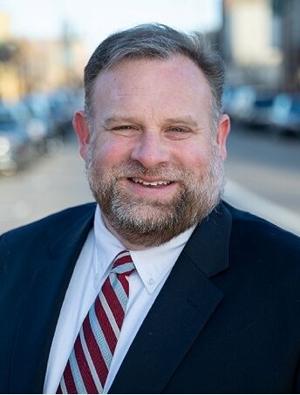 |
| Mason |
A resolution to rename the community center will be introduced at the Common Council meeting April 20.
The Cesar Chavez Community Center is on Racine’s north side at 2221 Douglas Ave.


MADISON - The sexual grooming of children is now a felony crime under legislation Gov. Tony Evers signed into law this week.
Evers also signed a second bill into law that requires school districts to establish rules for how school staff communicate with students in an effort to prevent school employees from creating a situation where a student could be groomed.
"We have an important obligation to make sure our kids can feel secure, supported, and cared for by educators and staff in our schools — adults they should be able to trust and depend on — while also providing more clarity about what interactions with students are inappropriate and unacceptable and enhancing punishments for adults who violate that sacred trust," Evers said in a statement.
“Defining grooming is a critical step to give law enforcement and local school districts the tools they need to hold bad actors accountable for hurting our kids, and I’m glad the Legislature took this seriously this session and passed bipartisan legislation to get this done."
Under one bill, it would be a felony offense for an adult to engage in "a course of conduct, pattern of behavior, or series of acts with the intention to condition, seduce, solicit, lure, or entice a child" for the purpose of engaging in sexual intercourse or sexual contact, or to create and distribute child pornography.
Examples of behavior that could constitute grooming under the legislation include written or spoken communications as well as physical contact.
If convicted, a person could face between 10 and 25 years in prison, depending on who the person is to the child and whether the child has a disability, among other factors that could increase penalties. Those convicted of grooming would be required to register with the Department of Corrections as a sex offender.
According to an analysis from the nonpartisan Legislative Reference Bureau, the crime does not apply to a person who is 18 or under if it involves a child who is not more than four years younger than the person, unless the violation involves force, coercion, or abuse of a position of trust or authority over the child.
The second bill Evers signed Friday, March 6, requires all schools to adopt by Sept. 1 a policy on appropriate communication among employees and volunteers and students.
The law requires the policy to include a range of consequences for policy violations, including termination of employment. It also requires the policy to apply to communications at any time of day or night.
The bills were authored by Republican lawmakers Rep. Amanda Nedweski of Pleasant Prairie and Sens. Jesse James of Thorp and Romaine Quinn of Birchwood.
The measures were drafted last fall as State Superintendent Jill Underly came under scrutiny over how the state education department handles allegations of grooming and sexual misconduct by licensed school staff.
The focus was triggered after the Capital Times reported on 200 cases of such incidents since 2018, including instances of teachers who were able to later reapply for a license.
The details of the cases were not proactively made public beyond being made available for review for anyone who files a request under the state's public records law.
Molly Beck can be reached at molly.beck@jrn.com.
MADISON – An effort to criminalize and prevent the sexual grooming of children is on its way to Gov. Tony Evers' desk for his signature.
The state Senate voted unanimously to pass the measure Wednesday, and a spokeswoman confirmed the governor plans to sign it.
Under the bill, which passed the Assembly last month with six Democrats voting no, it would be a felony offense for an adult to engage in "a course of conduct, pattern of behavior, or series of acts with the intention to condition, seduce, solicit, lure, or entice a child" for the purpose of engaging in sexual intercourse or sexual contact, or to create and distribute child pornography.
Examples of behavior that could constitute grooming under the legislation include written or spoken communications as well as physical contact.
Bill author Sen. Jesse James, R-Altoona, said that adding the definition would assist law enforcement in fully prosecuting such cases.
"My time as a law enforcement officer has shown me that grooming is frequently a deliberate, gradual process that causes substantial harm and trauma," James told reporters before the vote on Feb. 11. "I am a grandpa. I can't bear to think of the many dangers my grandkids will face. However, with this bill, I can sleep just a little bit better. This has a powerful deterrence effect and says our kids are not targets."
If convicted, a person could face between 10 and 25 years in prison, depending on who the person is to the child and whether the child has a disability, among other factors that could increase penalties. Those convicted of grooming would be required to register with the Department of Corrections as a sex offender.
According to an analysis from the nonpartisan Legislative Reference Bureau, the crime does not apply to a person who is 18 or under if it involves a child who is not more than four years younger than the person, unless the violation involves force, coercion, or abuse of a position of trust or authority over the child.
In testimony on the bill last month, co-author Rep. Amanda Nedweski, R-Pleasant Prairie, commended previous efforts to crack down on sexual misconduct against children, including a bill signed into law by Gov. Tony Evers in 2024 criminalizing sexual misconduct committed against a student by a school staff member or volunteer.
But she noted there are still cases where prosecutors have lacked the proper authority to pursue strong penalties against predatory adults. This bill builds on that law by making grooming a crime "not just in schools, but in any other situation in which it may apply."
The bill "puts a clear definition" into law and gives law enforcement tools "to keep our kids safe," Sen. John Jagler, R-Watertown, said before the vote.
Jessie Opoien can be reached at jessie.opoien@jrn.com.
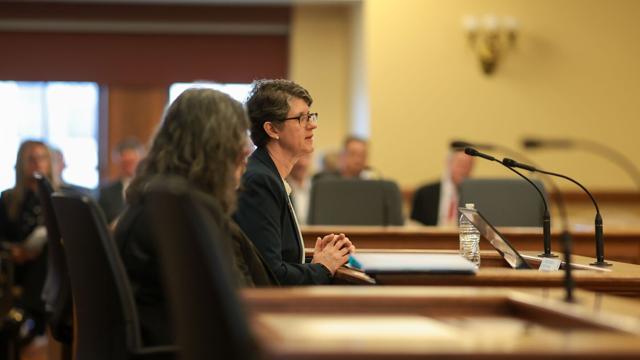
Lawmakers will audit the state Department of Public Instruction’s process for granting and revoking licenses for educators as the criticism over how the agency investigates cases of teacher misconduct continues.
The Legislature’s joint audit committee voted unanimously Wednesday to task the nonpartisan Legislative Audit Bureau with investigating nearly a dozen aspects of DPI’s licensing process, including how it investigates allegations of educator misconduct, the steps it takes to revoke or suspend licenses and if the department is following its state laws and its own policies as it does so.
The audit follows an October investigative report by The Cap Times that found that, between 2018 and 2023, DPI investigated about 200 public school teachers, substitutes, aides and administrators for alleged sexual misconduct or grooming behaviors toward students.
Republican lawmakers in particular have homed in on the report, stating DPI’s offers of voluntary revocation early in the investigation process is evidence they don’t investigate incidents fully.
DPI officials, including State Superintendent Jill Underly, said the license investigation process is transparent and the agency does not seek to hide any information from the public. Rather, DPI officials argue, there’s gaps in state law making it harder to hold accountable the people who are "grooming” children, widely known as courting a child’s favor and affection for eventual sexual gain, as well as other legal limitations the agency faces in investigating accused staffers.
Underly said Tuesday there’s room for improvement, though, and said the agency is working on creating a specific database where the public can search for suspended or revoked licenses. Future iterations could include reasons why an educator had their license revoked.
Underly told lawmakers Wednesday she thinks the department could supply all of the data the audit bureau will be seeking.
Earlier this week, lawmakers introduced two bills that would define an umbrella of behaviors that constitute grooming and would require school boards to set limitations on how staff communicate with students.
MADISON - The sexual grooming of children would be a felony crime in Wisconsin under a new bill from Republican lawmakers.
The proposal comes as State Superintendent Jill Underly is under scrutiny over how the state education department handles allegations of grooming and sexual misconduct by licensed school staff.
The focus comes after the Capital Times reported on 200 cases of such incidents since 2018, including instances of teachers who were able to later reapply for a license.
The details of the cases were not proactively made public beyond being made available for review for anyone who files a request under the state's public records law.
A new bill authored by Rep. Amanda Nedweski, R-Pleasant Prairie, and Sen. Jesse James, R-Thorp, defines grooming in state law — a move law enforcement, Gov. Tony Evers and Department of Public Instruction officials have said would help to go after culprits.
"As a mom, I know the extent of trust that parents place in the people who care for their children," Nedweski said in a statement. "When that trust is betrayed and those adults prey on our children’s innocence, the consequences should be severe and certain."

The proposal bans anyone from engaging in "a course of conduct, pattern of behavior, or series of acts with the intention to condition, seduce, solicit, lure, or entice a child" for the purpose of engaging in sexual intercourse or sexual contact, or to create and distribute child pornography. The draft bill provides examples of such behavior that could constitute grooming, including "verbal comments, suggestions, or conversations of a sexual nature," "inappropriate or sexualized physical contact," or "written, electronic, or digital communications" aimed at seducing, soliciting, luring, enticing or isolating a child.
If convicted, a person could face between 10 and 25 years in prison, depending on who the person is to the child and whether the child has a disability, among other factors that could increase penalties. Those convicted of grooming would be required to register with the Department of Corrections as a sex offender.
According to an analysis from the nonpartisan Legislative Reference Bureau, the crime does not apply to a person who is 18 or under if it involves a child who is not more than four years younger than the person unless theviolation involves force, coercion, or abuse of a position of trust or authority over the child.
James, a Cadott police officer, said the stories detailed in the Capital Times story prompted him to pursue the legislation.
"While I am proud to join my colleagues in authoring this bill, I am disgusted by the stories that have made legislation like this so necessary," he said.
Since the Capital Times story was published last month, Republican lawmakers have called on Underly to overhaul the DPI's approach to investigating teacher licensing to be more transparent. One Republican candidate for governor called on Underly to resign.
Underly has disputed some of the reporting and has asked the publication for a public correction.
Lawmakers on Oct. 23 held a public hearing in the state Capitol to hear testimony from Kenosha law enforcement officials about their experience with investigating such situations and to question DPI officials about their actions to keep dangerous teachers away from children.
Members of the committee from both political parties criticized Underly for choosing to accept an alumni award at Indiana University instead of appearing before the committee to answer questions about student safety for the public that have arisen because of the Capital Times reporting.
Chris Bucher, a spokesman for DPI, said in response to the criticism that Underly "takes the responsibility of protecting Wisconsin students seriously."
"She is willing to discuss licensing processes that protect students and to engage in constructive discussions on how to strengthen those protections further," Bucher said at the time.
Bucher did not immediately say whether Underly supported the new bill. A spokeswoman for Evers did not immediately say whether he would sign the proposal into law.
On Oct. 28, Evers told reporters a bill to define grooming in state law would help to deter offenders.
"(If) they come up with a way to define grooming that gives lawmakers or gives police officers and local people a way to (address it)? Well, that would be a huge thing," Evers said. "I don't think it exists in many places in the country, so we'll just continue to do the best we can to make sure that kids are taken care of. But this issue is really difficult because there's no really good definition of what's grooming, and that's the basis of it."
The proposal is being circulated among lawmakers for co-sponsorship and has not yet been formally introduced.
Nedweski and state Sen. Romaine Quinn, R-Birchwood, also have drafted a second proposal that would require school boards to develop policies on appropriate communication between students and school staff or school volunteers during the school day or outside of school hours.
Laura Schulte of the Milwaukee Journal Sentinel contributed to this report.
Molly Beck can be reached at molly.beck@jrn.com.


 Posts
All Comments
Posts
All Comments


