Friday, July 24, 2026

Sunday, July 12, 2026
Saturday, July 4, 2026
City installs audible traffic signals, updates traffic signal timing Downtown
Holly Gilvary
RACINE — The city on Wednesday completed the installation of audible traffic signals at six intersections and implemented new traffic signal timing along Main Street between State and Seventh streets.
In a news release, the city said the two measures will improve pedestrian safety and encourage slower vehicle speeds through Downtown Racine.
The audible pedestrian signals provide locator tones and audible walk indications to assist pedestrians who are blind or have low vision in crossing the street safely, according to the city.
The updated traffic signal timing is designed to calm traffic by encouraging drivers to travel at a slower and more consistent speed. Because of the timing of the lights, drivers who try to accelerate between intersections to avoid a red light will encounter longer waits at the next signal, the city said.
The city evaluated several options in response to downtown businesses' and community stakeholders' concerns about vehicle speeds on Main Street. One alternative would have rerouted State Highway 32 off Main Street, which was estimated to cost more than $1.5 million and, according to the city, would not have directly addressed speeding concerns.
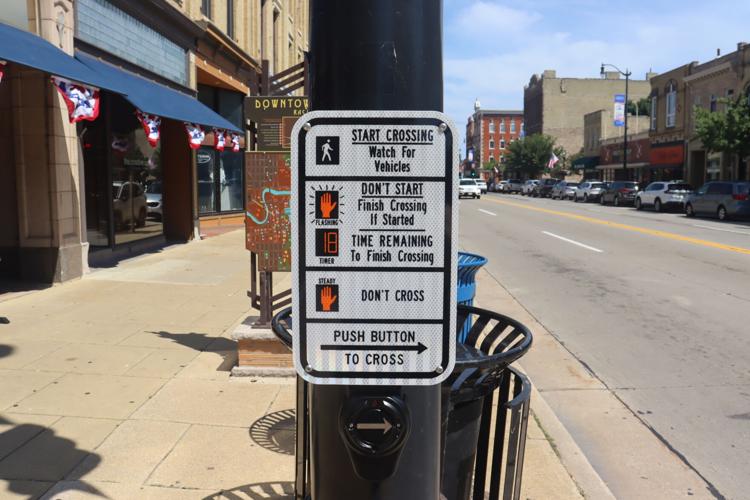 |
The Racine Department of Public Works installed new signage at intersections with the audible pedestrian signals, such as this one at Fourth and Main. |
Previously, driving between State and Seventh streets during peak traffic periods took an average of 83 seconds. With the new traffic signal timing, the trip will take about 50 seconds longer on average, which the city said will create a safer environment for pedestrians and reduce incentives to speed through downtown. Traffic analysis found the revised timing would increase travel through the corridor to about two minutes while maintaining acceptable traffic operations.

Tuesday, June 23, 2026
Saturday, June 20, 2026
Wednesday, May 27, 2026
Sunday, May 10, 2026
Monday, April 27, 2026
Sunday, April 26, 2026
Sunday, April 19, 2026
Friday, April 17, 2026
Monday, April 13, 2026
Cartoon raindrop falls prettily but not accurately
ASK THE WEATHER GUYS | PRECIPITATION
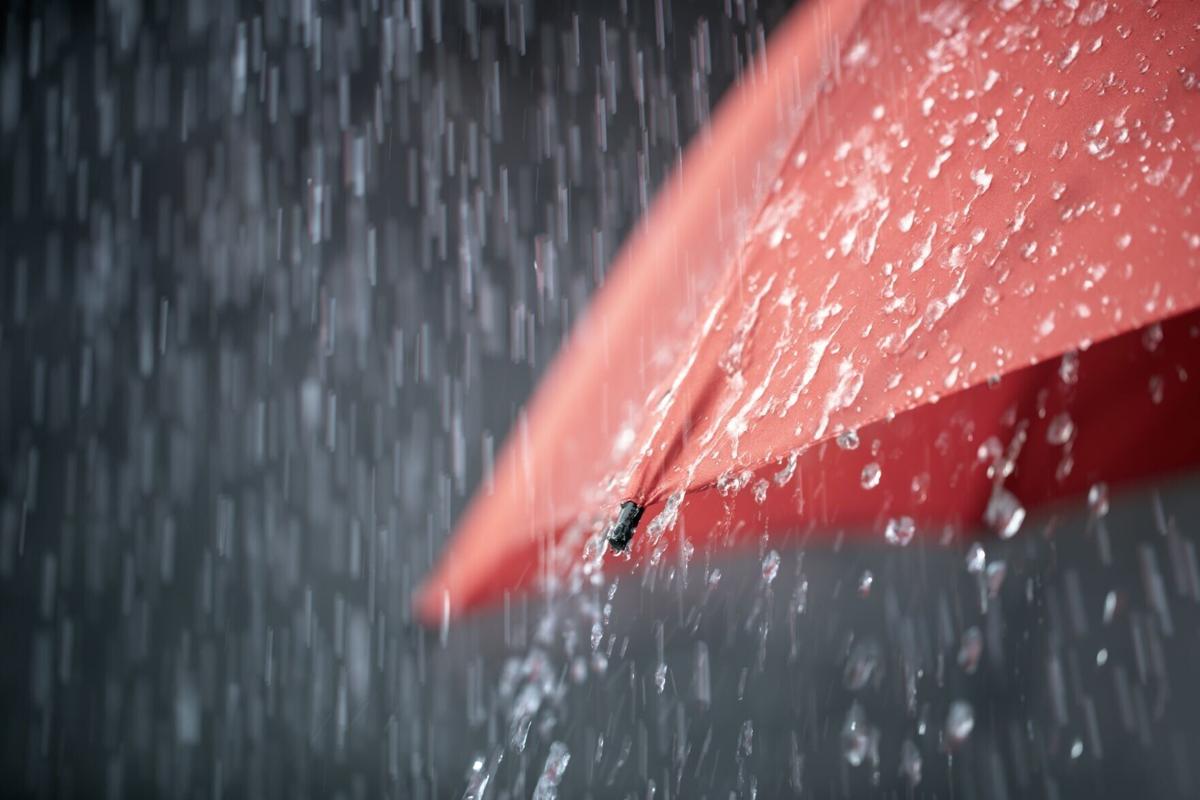 |
A large raindrop, about one-quarter of an inch across, or about the size of ahouse fly, has terminal fall speeds of about 20 mph. The smallest raindrops fall at about 2 mph. |
Question: What is the shape of raindrops?
Answer: While cartoonists typically draw raindrops like a teardrop or a pear shape, raindrops are not shaped like that.
They are drawn as teardrops to give the image of falling through the atmosphere, which they do. But as they fall, raindrops are flattened and shaped like a hamburger bun by the drag forces of the air they are falling through.
Raindrops are at least 0.5 millimeters or 0.02 inches in diameter. You will not find a raindrop bigger than about one-quarter of an inch in diameter. Larger than that, the drop will break apart into smaller drops because of the air resistance. Precipitation drops smaller than 0.02 inches in diameter are collectively called drizzle, which is often associated with stratus clouds.
The typical speed of a falling raindrop depends on the size of the drop. Gravity pulls everything downward. As an object falls it experiences a frictional drag that counters the downward force of gravity. When the gravity and frictional drag are balanced, we have an equilibrium fall speed that is known as the terminal velocity of the object. The terminal velocity depends on the size, shape and mass of the raindrop and the density of the air. Thus, it is worth talking a bit about the shape and size of raindrops.
A large raindrop, about one-quarter of an inch across or about the size of a house fly, has terminal fall speeds of about 10 meters per second or about 20 mph. That kind of speed can cause compaction and erosion of the soil by the force of impact. Since raindrops come in a variety of sizes, they fall with different speeds. The smallest raindrops fall at about 2 mph. Water droplets smaller than these smallest raindrops (known as cloud liquid water droplets) can resist falling in the atmosphere because there is upward moving air that overcomes the force of gravity and keeps them suspended in the cloud.
Steve Ackerman and Jonathan Martin, professors in the UW-Madison department of atmospheric and oceanic sciences, are guests on WHA radio (970 AM) at noon the last Monday of each month. Send them your questions at stevea@ssec.wisc.edu or jemarti1@wisc.edu.
The terminal velocity depends on the size, shape and mass of the raindrop and the density of the air.


 Posts
Posts

