


Sarah Ballman, 50, of East Troy – Obituary
2 hours ago
Infotainment - Racine, Wisconsin, USA
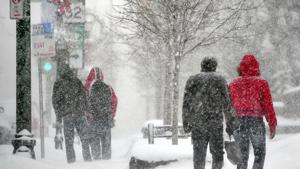
Question: What is lake effect snow?
Answer: Lake effect snow forms when cold air passes over the warmer water of a lake. As cold air moves over water, the lower layers are warmed and moistened by the lake below. This makes the air mass unstable. Evaporation increases the moisture content of the air mass, which is then precipitated in the form of snow on the land downwind.
Maximum heat and moisture exchanges occur when the air is cold and the temperature difference between the air and the water is large. This condition tends to occur during early winter, when the most lake effect snow is produced. A long path across warm water by the air mass results in heavy precipitation over the land.
The longer the path, or “fetch,” the more the evaporation will increase along with greater potential for large snowfall amounts over the land on the downwind side of the lake. Hills can amplify the snowfall amounts by providing additional lifting. The location of a snowbelt along a particular lake is a function of the temperature difference between the air mass and the water, the fetch, and the terrain on the leeward side of the lake.
Lake effect snows are good for the economy of a region, particularly ski resorts. They also provide water for reservoirs and rivers. Too much lake effect snow can be hazardous, however; on Oct. 12 and 13, 2006, Buffalo, New York, was blitzed with 22.6 inches of snow in less than 24 hours. Because trees had not yet shed their autumn leaves, the snow weighed them down and broke branches. Nearly 1 million residents lost electrical power at the height of the storm because electrical lines damages by falling trees.
Lake effect snow can bombard a location as long as all the ingredients — cold winds, warm water and a long fetch — are present.
Steve Ackerman and Jonathan Martin, professors in the UW-Madison department of atmospheric and oceanic sciences, are guests on WHA radio (970 AM) at noon the last Monday of each month. Send them your questions at stevea@ssec.wisc.edu or jemarti1@wisc.edu.


↓


 Posts
Posts

